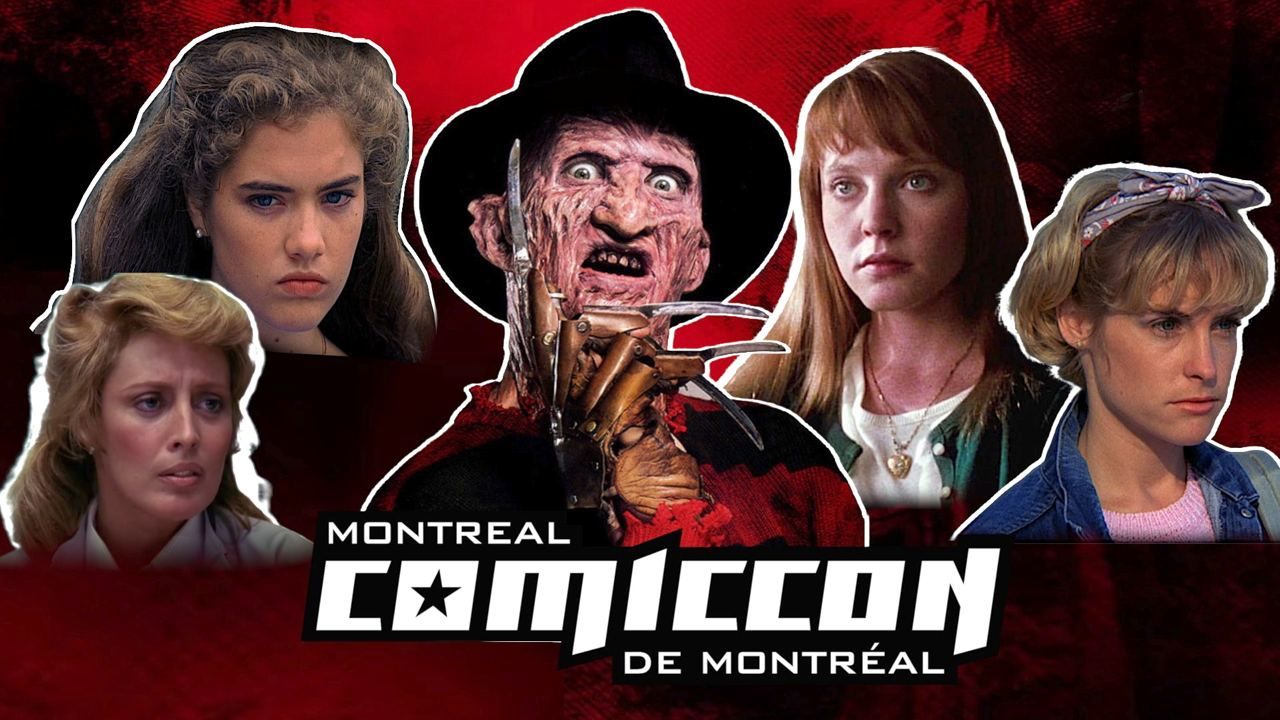
2024 marks the 40th anniversary of the original Nightmare on Elm Street and as such, the Montreal Comiccon put together a panel celebrating the Scream Queens of the franchise by bringing in Heather Langenkamp, Ronee Blakley, Amanda Wyss, and Lisa Wilcox to the stage to talk about their time in the franchise.
The cast, who have acted in different films across the franchise, with Langenkamp being the most prominent and Wilcox only joined with A Nightmare on Elm Street 4: The Dream Master, were naturally asked right away what it was like celebrating the 40th anniversary of the iconic franchise. Langenkamp started by iterating that acting is a rather lonely profession, despite how busy it can be, so to become friends with her fellow scream queens and remain friends over decades was something she didn’t expect to come out of taking the job. She cites the women on stage with her as being her support, even after all these years, and how she can still count on them.
Considering how iconic Elm Street is, fans were curious as to what they thought of horror films from the last decade or so, relative to the 80s horror they helped shape. Wyss stated that while she loves making horror films, she actually can’t watch them due to being scared. In fact, she screamed her way through Langenkamp’s indie horror film (she didn’t mention which one) and ruined the experience for the audience. Langenkamp revealed she only watches horror on airplanes due to the smaller screens, which limits her exposure. But she also stated that based on her experience working with Wes Craven, who created sympathetic characters for Elm Street, that modern horror tends to skew more towards the scares and the gore, rather than the character.
Wyss doubled down on this, stating that you should be able to cut out all the supernatural and scary bits from a horror film and still be left with a great story with great characters, and many (not all) modern horror films tend to forget this. Blakley stated that while she’s not a big fan of the genre in general, she does prefer the works of Hitchcock, as well as classic horrors like Poltergeist and Excorist. When reading the Elm Street script, she had a feeling it was going to be big, but not that big. She showed her mom the script in order to get approval to take the job, assuming her mom wouldn’t grant it, but surprisingly, her mother thought it was great and encouraged her to take the job. Wilcox, unlike her fellow Elm Street alum, actually loves horror films and watched them regularly was a kid, starting off with the old black and white films on Saturday afternoons. She saw the original film when she was 20, so to join the franchise as of the 4th film in the lead role was a dream, despite the anxiety that came with the expectations.
While it’s almost expected these days to take props from the set, back in the 80s that wasn’t really a thing. Despite that, some of the cast members did get to bring some of Elm Street home with them. Langenkamp stated that due to budgetary constraints, taking things wasn’t encouraged, in incase there were reshoots at a later date, but she ended up becoming the custodian of Nancy’s bloodied pyjamas at the request of the film’s producers and at the time, she didn’t think much of it, but is glad to have them in her life after all these years. Wilcox, likewise, has her pyjamas from Elm Street 4. Blakley took the chalk drawing from Nancy’s bedroom in the first film…because she was the one who painted it! She, unfortunately, lost it a few years ago and didn’t think things like film memorabilia would be something she should consider.

The cast was then asked what was the hardest experience with VFX in their careers. Langenkamp stated it was when Nancy had to fall backwards from the chair into the mattress in Elm Street 3. It was one of the earliest plate shots in film history she stated, so the effects department was still learning the ropes while shooting the film. It took all day to get the shot and she kept wondering, if this special effects nonsense was even worth it, as it was so long and arduous just for one shot. She also gave a shoutout to the iconic bathtub scene from the first film and talked about how they shot that scene, even though it was a practical shoot. In short, she was actually sitting on a platform with a stunt performer in scuba gear wearing the glove on a platform below her. To the side of the tub, director Wes Craven would slam on the tub’s side when he wanted the hand to breach the surface. Langenkamp states she was in there for the better part of the day and her body was a giant prune by the end.
Wilcox gave an anecdote about how a mirror exploded in her face while filming Nightmare on Elm Street 4. In concept, the mirror was simply supposed to crack thanks to small explosives around the frame, but instead, the whole thing blew up and flew off the wall, causing candy glass to fly in her face. She was so scared that she was sent home for the day to recover. Langenkamp reinforced this story and stated that back then, VFX crews on smaller-budget films would often give phoney credentials just to get the experience, which resulted in many unsafe working environments.
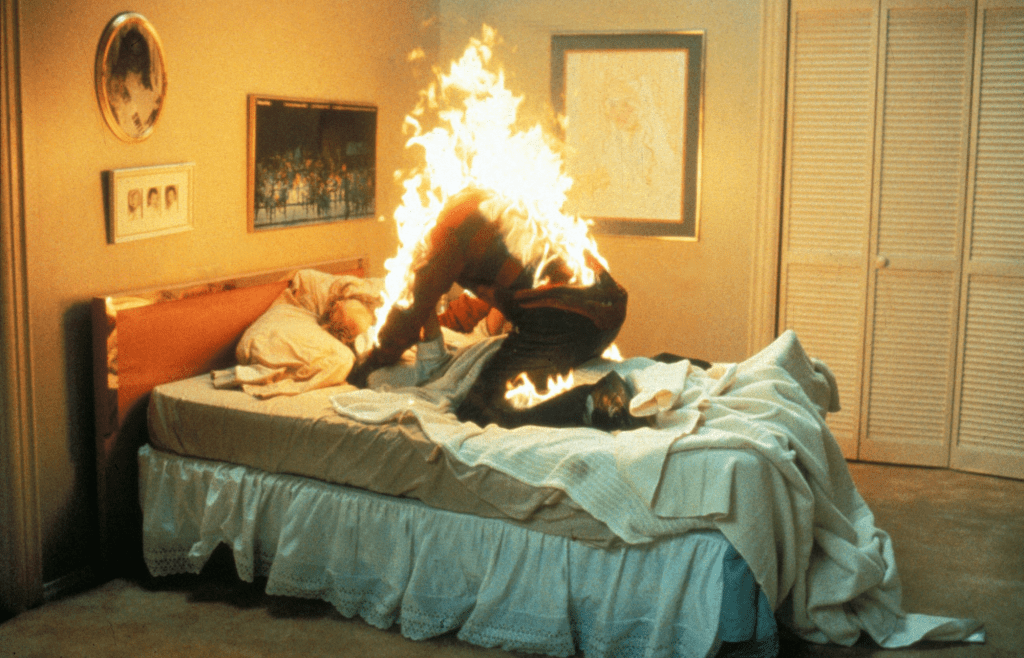
Wyss’ story naturally focused on her character’s death scene in the original film, where her character gets dragged on the ceiling and ultimately dies in a spectacularly bloody fashion. Due to the amount of blood, the movie only had the budget for a few takes, so there was a lot of rehearsal. Despite that, Wyss thought she was actually going to die shooting the scene due to its intensity. Blakley talked about the fire in the original film and how it actually helped her get over her fear of fire from her childhood. But despite being involved in a controlled fire on set, they couldn’t use most of the footage they shot with her, as it turns out the shots they got were illegal based on the insurance the production had, so they had to insert reshoots with a stunt double who could actually be set on fire.
It wouldn’t be Elm Street without some love for the late, great Wes Craven, who wrote and directed the first film. Earlier in his career, Langenkamp stated that he felt the pressure from producers to get the job done quickly and on budget, which created a much more collaborative experience. As such, he was a far more serious director on the first film. By the time of Wes Craven’s New Nightmare ten years later, with fame and notoriety, he was a far more deliberate director, less open to collaboration as he knew what his vision was to be before the film began production. But he was also more looser and animated later on in his career relative to the first film. Speaking of New Nightmare, when she got the call to play Nancy again with Craven directing, she immediately said yes. But she said it was weird playing a version of herself playing Nancy in that movie and that the Heather seen in the film is oddly nothing like the real her. In fact, she almost lost the role because she thought she was being underpaid and the studio was willing to replace her, even though only Langenkamp could play Nancy in an Elm Street movie, she argued. But the urge to work with Craven yet again, who hadn’t directed since the second entry, was too strong and she caved to the studio’s request, but with the benefit of hindsight, regrets not making more of a stand.
While there are no plans of a 40th-anniversary box set on the horizon, Lagenkamp did reveal that there will be a 4k release of the original film coming later this year and that she has seen it at a festival, stating the quality was fantastic. So keep an eye on that release! We thank the Elm Street cast for coming to Montreal to talk with us!

