Note: This is our spoiler review. For our spoiler-free thoughts, click here.
“That’s a whole lot of movie”, was the first thought that crossed my mind when the credits began to roll on Christopher Nolan’s The Odyssey. The iconic director clearly put a lot of passion and dedication into bringing Homer’s epic poem to the big screen while also making it both accessible and modern, but distinctly his own. It may not be perfect, and I certainly have some issues with it, but it’s also an experience that should be seen.
One thing I will say, before diving into specifics, is that I do think The Odyssey could have benefited by being split into two parts, just to let some of those beats and visits get explored more fully. Many segments are abridged or cut entirely from the poem, to the point where I think two two-hour films may have served it better.
What I Liked
The thing I liked the most about this movie was the edit. This is a three-hour movie, and it didn’t feel like it. As it tradition with Nolan movies, The Odyssey plays heavily with time in the edit, opening at the end of the film, before reverting to a “present day” story, set in two locations. From Odysseus’ point of view, he’s recalling his adventures to Calypso, who has kept him captive on her island for seven years against his will. There are flashbacks within flashbacks within the framing, and moments that are teased with quick flashes earlier on eventually get paid off.
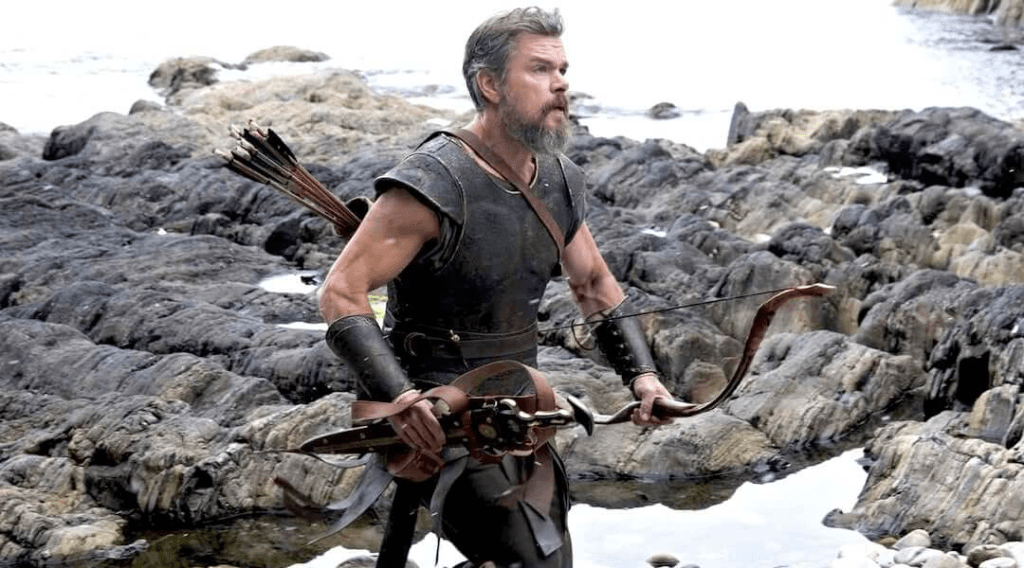
I was worried about Boston’s finest Matt Damon stepping into the role of Odysseus. But I really shouldn’t have worried, as he was great in the role. Nolan’s Odysseus is portrayed as a man haunted by guilt and ambition. Damon really steps into the role, straddling the line between weary traveller, vain leader, and a haunted man. The movie makes a really big deal about “Zeus’ Law”(Xenia), the concept of hospitality. By having the Trojans invite the Greeks unknowingly into their city, the Greeks committed the biggest violation of Zeus’ Law ever. This act has led to a prophetic rumour about the fall of civilization by “men from the sea” who regularly lambast and ignore the rule of hospitality. All this happens, of course, when the Suitors are taking up residence in Ithaca, being righteous jerks about hospitality by attacking the poor and slandering their host. So the rumours may not be so false.
What is of note is that the “men from the sea” are, in fact, Odysseus and his men coming back from Troy and bringing calamity with them. Odysseus knows this and carries that guilt and shame with him, and the further he goes on his quest, the more he realizes the consequence of that one “glorious” act. He then violates the law yet again by the end of the movie by slaughtering dozens of the suitors in his own house, sealing the deal on a one-two hit of ticking Zeus off, who sends rumbling thunder whenever he has a vested interest in the plot below. What’s more interesting, from a historical point of view, is that Nolan is basically attributing this one act to the very real fall of the Bronze Age, with strong implications that humanity never really recovered from that betrayal to this day. It never spells it out that this is a modern reality, but the fear and the dread in the prophecy and the intended consequences do make you think of today’s state when looking at it through the concept of hospitality vs war and greed. All this being done in Agamemnon’s name is only exacerbated by the fact that he remains a faceless shadow throughout the movie, disassociated with the consequences despite driving them.
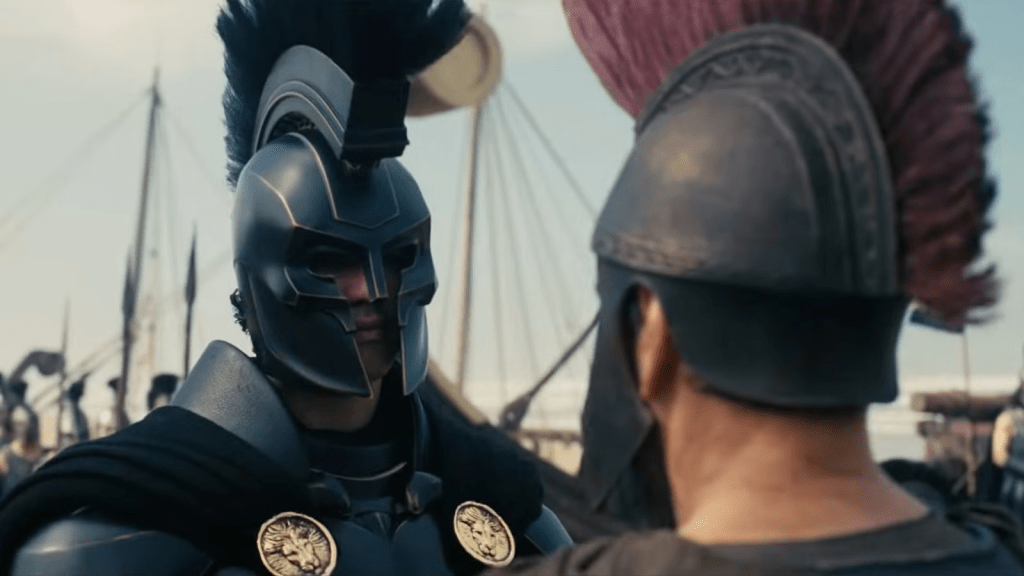
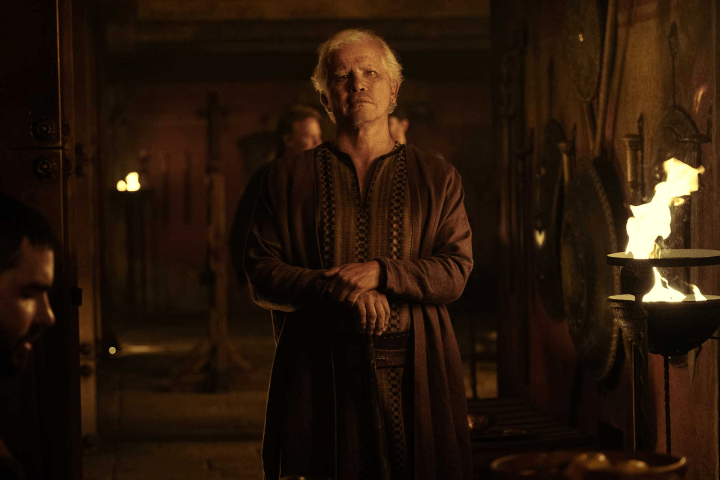
Many of the cast do great work, even if they sometimes only appear for a few minutes on screen. Apart from Damon, Robert Pattinson is wonderfully slimy and cowardly as Antinous, John Leguizamo as Eumaeus, Odysseus’ blind servant, Himesh Patel as Eurylochus, Odysseus’ second in command, and Elliot Page as Sinon, a character who isn’t in The Odyssey poem (he’s in The Aeneid) but still delivers a haunting turn during a sequence in the Underworld, where he critizes Odysseus’ grand plan that ultimately got him killed at Troy. Sure, they won the war, but at what cost? Sinon is not too pleased to be dead.
There’s two horror sequences in this movie that are also fantastic. One is the cyclops sequence that plays with shadows and sound wonderfully. The massive creature’s arms extend out of the darkness and grab soldiers, consuming them in the firelight in the dark cave with casual indifference. It’s horrifying. But the true horror comes from Circe’s pig sequence. Instead of simply waving her hands and casting a spell to turn the soldiers into pigs, she moulds them with her hands, creating a nightmare-fuelled body horror sequence. I really liked this, as humans were “moulded” by Prometheus from clay. So Circe is basically performing pottery on them. Couple that with Ludwig Göransson’s score and you have perhaps one of the freakiest sequences in recent horror memory. Nolan should really look into doing a horror movie next.
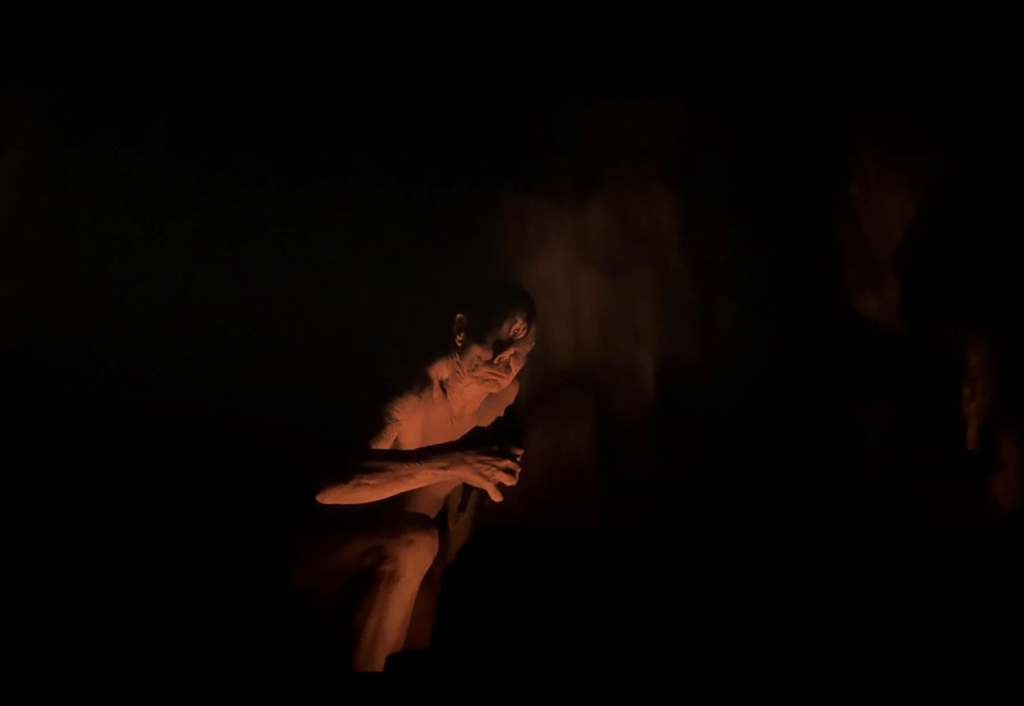
Speaking of Ludwig’s score, I quite liked it-for the movie. I think it often heightened the movie, specifically with tension. I’m not sure I would listen to it on its own, but as an integral piece of the movie, it worked, opting to reject a traditional Hollywood sound for a more primative sound.
What I was Indifferent to
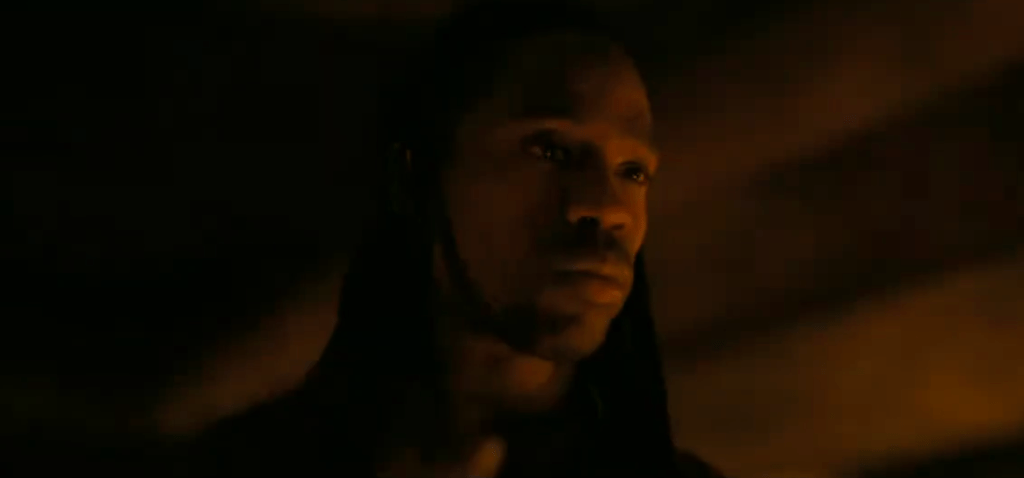
One thing that I ended up being indifferent towards, but thought I wouldn’t like, was the accents of the main actors. Instead of going for a more classical British theatre approach that so many epics use, Nolan had his cast use American accents (even though many of his cast members are decidedly not American). It threw me for around ten minutes or so, but I finally settled into it. I think it was a bit jarring at the front, as the film opens with Travis Scott’s The Bard slam poetrying his way into the start/end of the movie, and he comes in like a wrecking ball of auratory emphasised by his accent. Once things get settled, it basically becomes a non-issue though, especially as so many of the actors do great work. I don’t think anyone does anything particularly award-worthy, but everyone still did solid work and the worry about the accents faded away. It did take around fifteen to twenty minutes for me to settle into the movie, as it’s so exposition-heavy at the front and rather clunky with the writing that I was worried about the rest of the film. But the film finds its groove once it pivots to Odysseus and leaves the exposition behind.
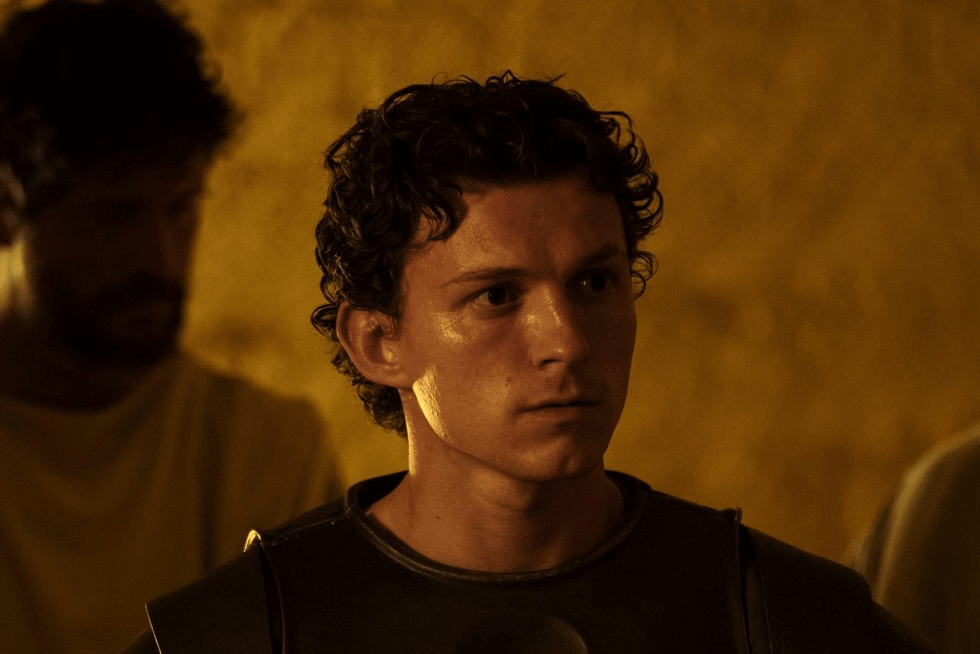
I was a bit indifferent towards the dialogue in some parts of the movie. The Odyssey got a lot of flak for its anachronistic dialogue, which bugged me more than the accents did, but it’s so infrequent overall that it’s not a huge deal. What’s a bigger thing is how inconsistent it is. Telemachus goes from saying “dad” to “mother” over the course of the movie, and it just felt like Nolan couldn’t decide how modern to be with his dialogue, so he opted to be both very modern and a bit more classical. It created an inconsistent style; I think Nolan (the sole writer), should have stuck with one style throughout. It’s not a huge deal though, and it never took me out of the movie, but it was noticeable. I also thought some actors coasted by, chiefly Jon Bernthal as Menelaus, who felt just like Bernthal playing Punisher without doing anything different with his delivery.
This aspect straddles the line between indifferent and didn’t like, but in the end, it’s more of an indifferent, as I’m not sure how I would’ve done it differently considering half this movie takes place on a boat or on little islands, but the movie quite often feels small in scope. It’s epic in vision, but it lacks the grandeur of its contemporaries. I think what personified this was how small Troy looked. Their walls were said to be impregnable, but they lacked the imposing height that made the city feel like a fortress. I was like, “In ten years they couldn’t scale that wall?” But so much of this movie is practical, and we go to real locations that I at least felt transported, and the sense of scale didn’t bother me as this is a far more personal and human tale, one not carried by glory or scale.
While the depiction of the Cyclops was awesome, thanks to all sorts of practical designs, the same couldn’t be said for Scylla. I know Nolan is a master of the practical, but the rendition of Scylla was not great. The VFX felt wildly out of place, and the creature design was unfulfilling to say the least. I would almost put this in didn’t like, but the scene only lasted a few seconds in the end, making it feel more like a footnote that ultimately didn’t leave any sort of impression. Also, shockingly, I didn’t have an issue with the clearly Viking longship being used, as it was great to see a real ship on the water with the actors onboard. I do wish they could’ve dressed it up a bit more, but I’d take a practical ship over a CG ship any day.
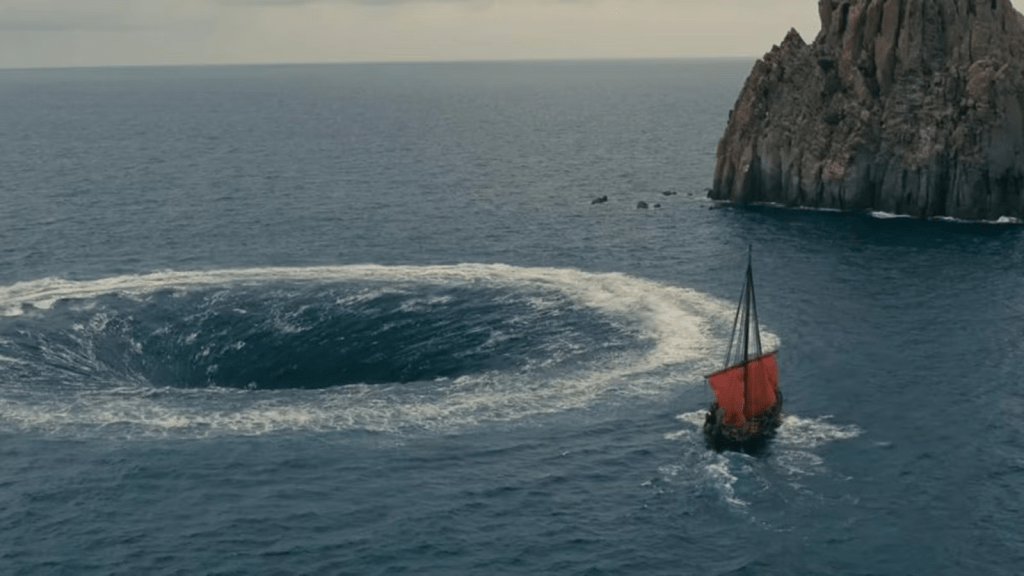
And while this doesn’t make or break the movie, I think The Odyssey could’ve pushed its R-rating further. It feels like it carries the rating purely for Circe’s scene, but the violence is otherwise largely bloodless, and the few f-bombs could’ve easily been removed to get a PG-13, had it not been for Circe. But since they had it, and clearly were intending it going in, I would’ve liked to have seen the horrors of war more realized to emphasize Odysseus’s guilt and shame.
What I Didn’t Like
What I didn’t like largely feels superficial, but those who fancy themselves scholars or fans of either Homer or Greek Myths and Legends may raise some eyebrows as well. Most of these are never enough to ruin the movie, but they did bring them down a few notches for me personally. Maybe you won’t care about these as much as I did.
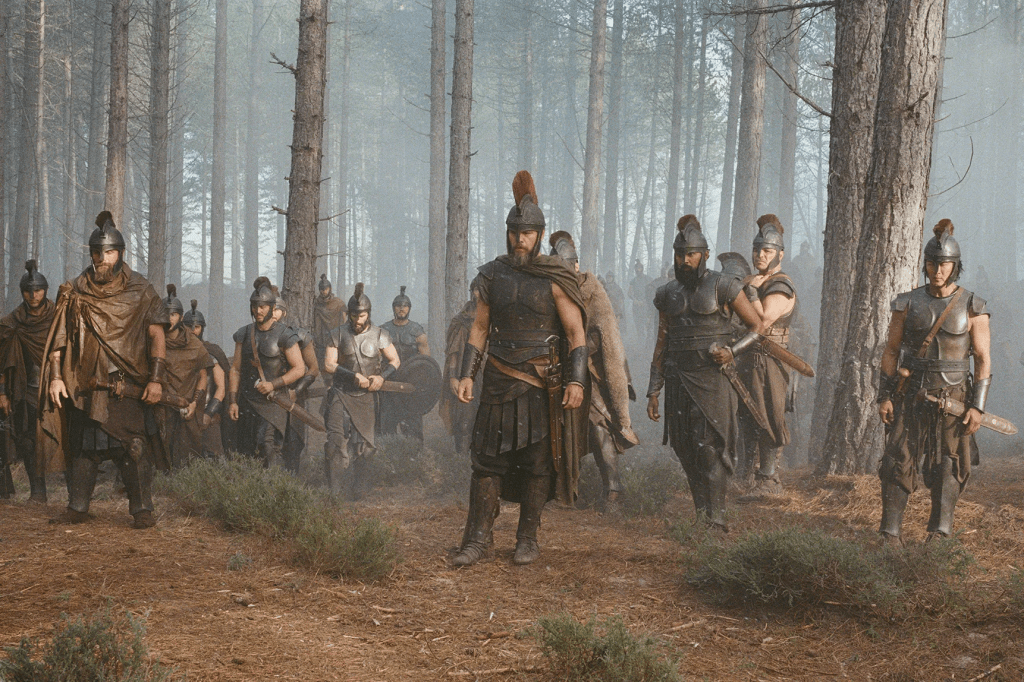
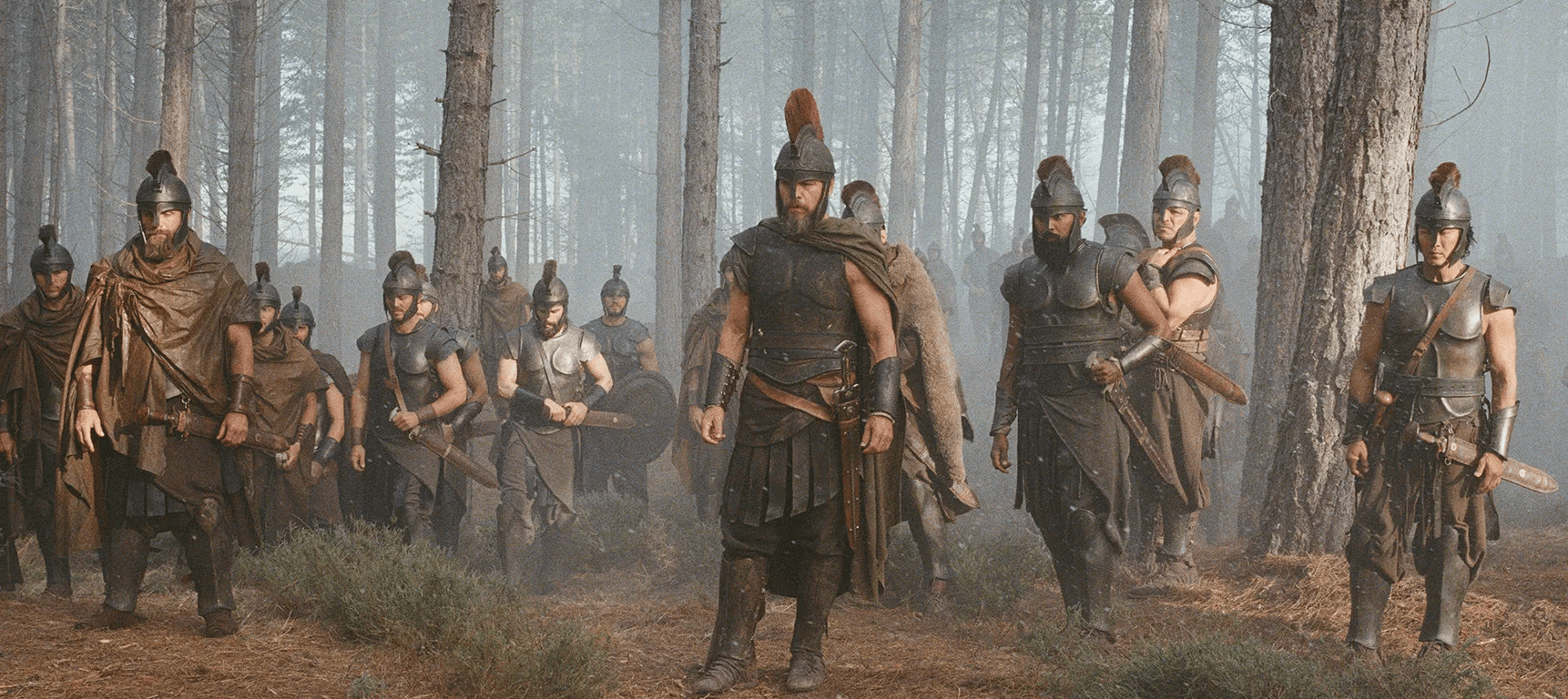
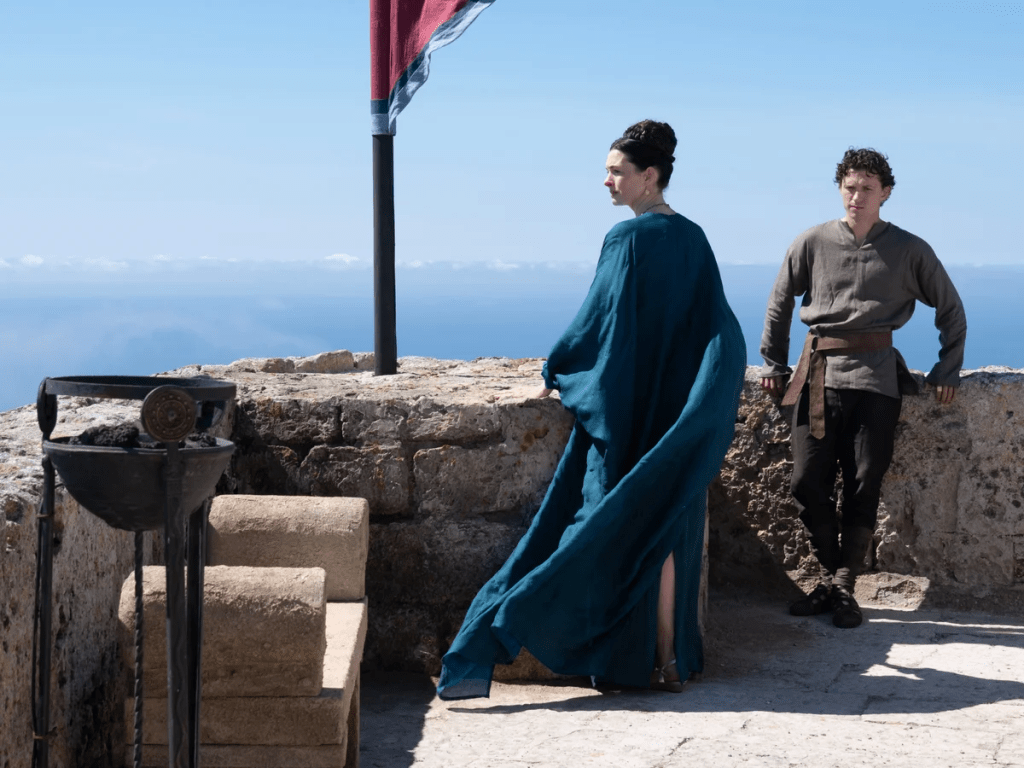
But one thing I really did not like was the costume design in this movie. It largely felt like the cast were wearing grey rags and rubber armour. When Damon’s Odysseus is exiting the Trojan Horse, it looked like he was getting ready to hit the gym, complete with sweatpants and shoes. I’m not exaggerating. Many of the costumes are monotone and drab, and one scene with Jon Bernthal’s Menelaus had me wondering if he was supposed to be in a Robin Hood adaptation instead. The only character who displays any sort of bright colourization with their costuming was Anne Hathaway as Penelope. Ancient Greece was shockingly colourful, and this movie just felt so drab and monotone. It just felt wrong and out of place for a story that’s supposed to take place in the late Bronze Age. Yes, The Odyssey is a fantasy, but it’s rooted in a real place at a real time.
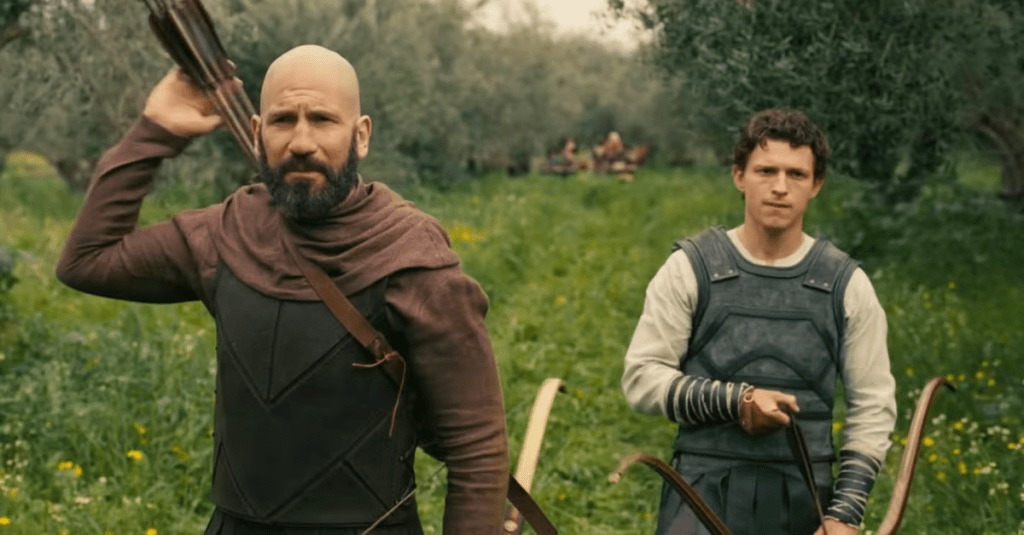
Another thing that I didn’t like much was that the film didn’t feel Greek/Mediterreanean for most of the runtime. Quite often, when Odysseus and his crew would land on an island, I couldn’t help but think to myself, “well, that’s just the UK”. Sometimes, this approach worked well, such as using Iceland to double for Hades. But going to Circe’s island to the island of the Laestrygonians, etc etc, just felt so out of place, especially as the ships approached the shoreline. This is particularly noteworthy, as The Odyssey was filmed in six countries, including Greece, Italy, and Scotland, on top of the aforementioned Iceland (and US soundstages). Couple that with the darker colour palette and the lack of sunshine (this is a really cloudy movie), and you have a movie that just doesn’t feel like it takes place where it’s supposed to, despite the locations being used. There are moments where it begins to feel like it’s set in Ancient Greece, but they feel few and far between. Again, it’s so superficial, but it did take me out of the movie as I didn’t buy that Odysseus was crossing the Aegean, despite the attempts by Nolan and his team to do that.
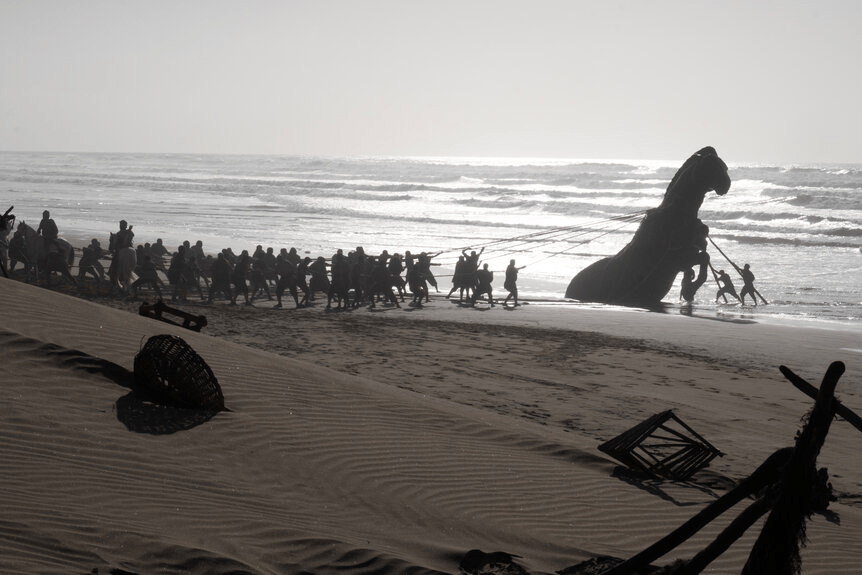
This isn’t Homer’s The Odyssey, but rather Christopher Nolan’s The Odyssey. Is it his best film? No. Is it “absolute cinema”? Also no. But it’s worth seeing on the big screen for the spectacle, the journey, and the vision.


One thought on “Christopher Nolan’s ‘The Odyssey’ Spoiler Review – ScreenHub Entertainment”