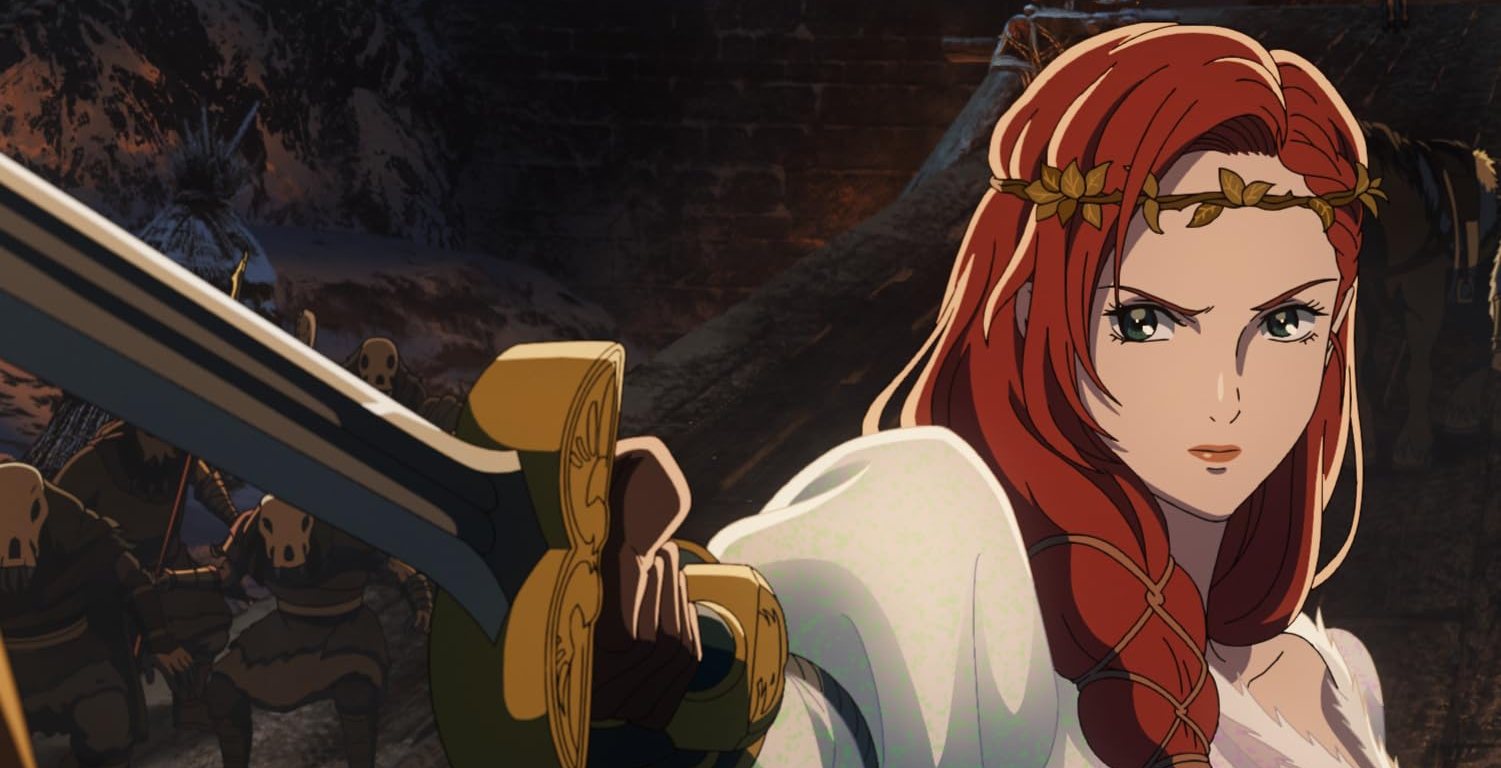
It seems I was one of a small handful of people who actually saw the latest Lord of the Rings film in cinemas over the weekend. The anime picture, executive produced by Peter Jackson and Fran Walsh of the original trilogy, was an unmitigated box office disaster for the franchise, bringing in less than $5 million. But regardless of that, how was the movie in it of itself? I think that depends on your tolerance for anime and your interest in Tolkien’s works. If you’re a fan of both, you’re in for a solid, if derivative, time, but there’s not much to sell you if you’re not a fan of one or both.
War of the Rohirrim is an anime film directed by Kenji Kamiyama and is set some 200-odd years before Biblo finds the One Ring. As the title would suggest, the film takes place in the Kingdom of Rohan and chronicles the conflict between them and the Dunlending. The film is narrated by Éowyn (Mirando Otto) and we get to see the conflict unfold through the point of view of the King’s daughter, who is unnamed and uninvolved in Tolkien’s Legendarium. But the film acknowledges this pretty early on, with Éowyn mentioning that Héra’s (Gaia Wise) heroics would be unsung through the ages, allowing the filmmakers to tell Tolkien’s story from the point of view of an original character, and it works. Héra is both likable and doesn’t break the canon, so everyone wins.
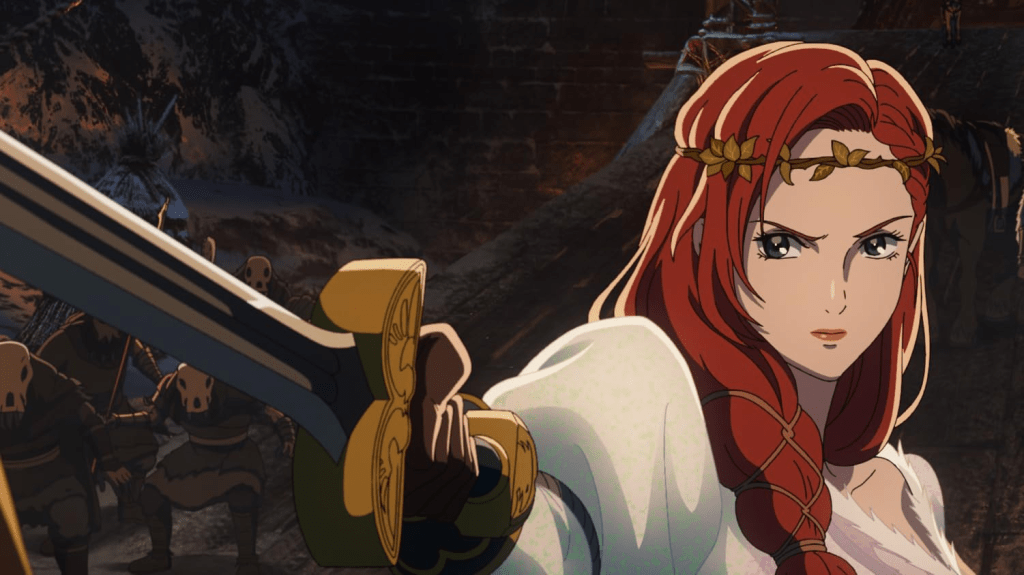
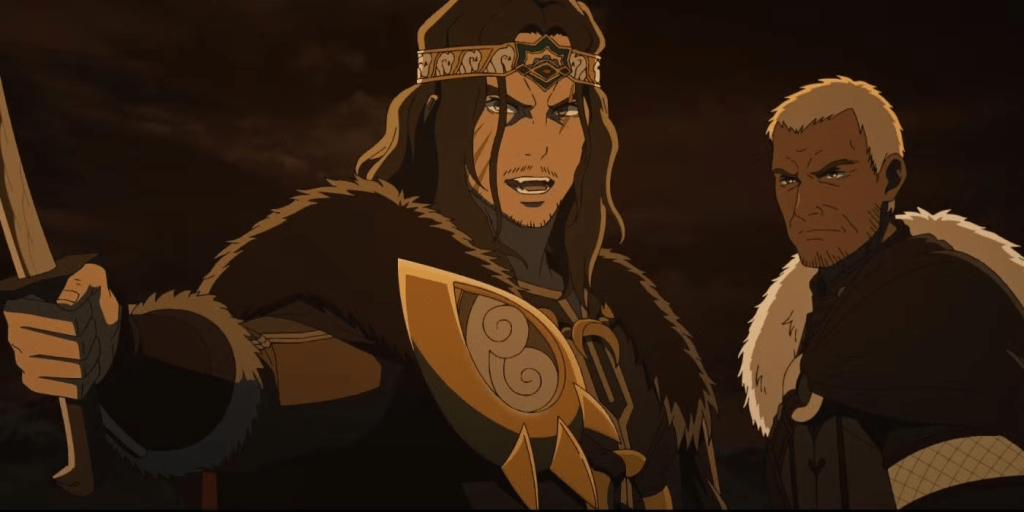
The main conflict arises when Freca, a Dunlending lord, presents his son Wulf as a candidate to marry King Helm Hammerhand’s daughter, Héra. But Helm is not interested in this; she’ll be married to Gondor and secure the alliance between the two Kingdoms. Héra, meanwhile, is completely disinterested in the arrangement and is livid that she has no say in her own life, being more content exploring and adventuring. Helm suspects Freca is making a play for the throne and challenges the Dunlending to an unarmed duel. But the King one-punch man’s Freca to death, causing Wulf to swear vengeance on Rohan.
Compared to the War of the Ring, the conflict between Rohan and Wulf is a much smaller one. So much so that I can’t help but wonder if this movie should have been live-action. Yes, this movie was made expressly so New Line and Warner Bros could retain the Middle-earth license, so using animation helped them cut costs, but maybe they should’ve thought of the deadline sooner and planned accordingly. There’s no wizard magic or vast armies in this conflict, so returning to the old sets and locations I think would’ve been an easier sell for audiences, whereas adapting elements of The Silmarillion would lead itself better to animation.
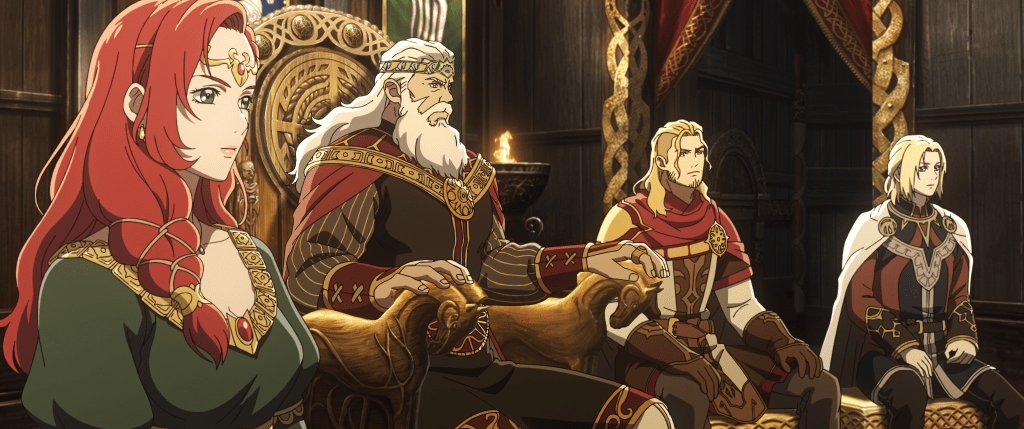
That said, the art design is pretty great-especially the locations. Edoras and the Hornburg, otherwise known as Helm’s Deep, look exactly how they did in the Peter Jackson films, and the detailing is impressive. There’s some animation jank that, especially with the horses and how they run, and some character detailing is lost when the camera is further zoomed out, but it impresses more than it doesn’t but I can’t help but think that a film like Princess Mononoke still looks better and that film came out in 1997. My guess is the animation suffered at times due to the film being fast-tracked. Despite being anime, the action is fairly grounded overall; there’s a few moments of embellishment in the action, but they’re very few and never pulled me out of the movie. What was consistently on-point was the sound design. From Helm’s thunderous punches to the terrifying screeches of the Mûmakil (otherwise known as Oliphants), this movie thunders in all the right way. Voicing is also great, especially Helm Hammerhand, voiced by Succession’s Brian Cox, whose thunderous voice shakes the halls. He’s a larger-than-life character and definitely feels like someone more mythical due to his imposing strength and build, despite his old age.
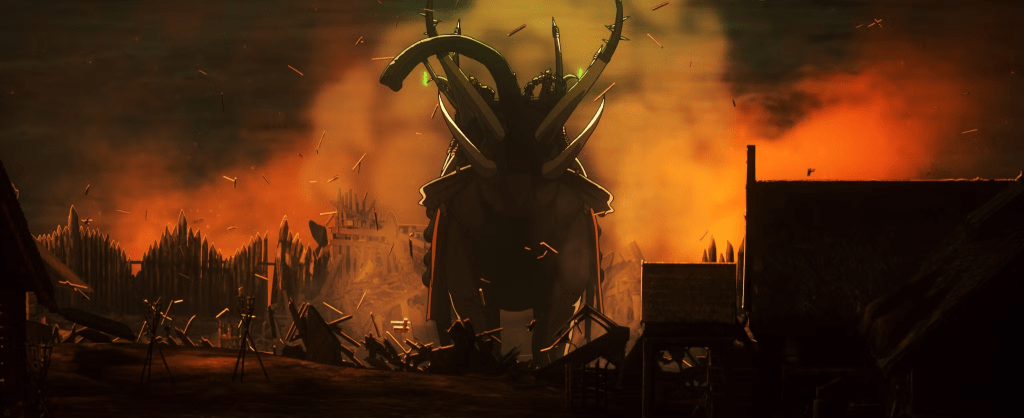
I think the biggest problem Rohirrim has is that narratively speaking (and visually), it shares a lot of similarities with The Two Towers. That’s not per se the filmmakers’ fault, as Tolkien’s brief documentation of this event in Appendix A did share a lot of the same plot points, such as having the Rohirrim evacuate Edoras and make their way to the Hornburg where a siege unfolds as the refugees await aid echos Two Towers to a fault. But it does make the viewing experience feel familiar and derivative of that film. Narratively speaking, there’s also quite a few parallels between Héra and Éowyn. She’s a solid character in her own right, but despite being likable, her story does feel like we’ve been there before.
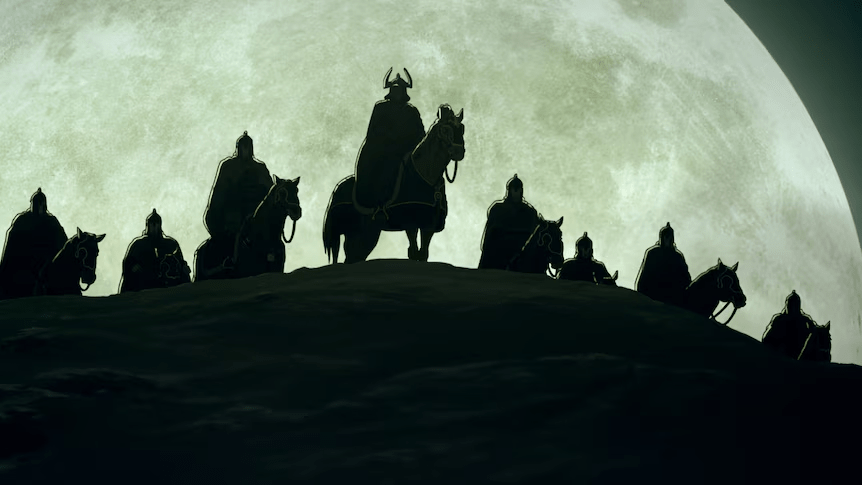
The end experience is still pretty enjoyable. I think you have to be a fan already of the Jackson adaptations or of The Lord of the Rings in general to really appreciate it that said, plus being a fan of animation helps sell the movie. I can’t see this as an introductory point for a newcomer; not because it’s dense or complex, but because it seems made for pre-established fans (who didn’t show up). If I were to compare the end result to the other Jackson films, specifically The Hobbit films, I’d say it would slot somewhere between the first and second one in terms of quality, assuming a ranking of 2, 1 then 3. But it’s still a far cry from the original Lord of the Rings trilogy. Whether that’s an issue or not really depends on you. For me, I had a good enough time going back to Middle-earth, with the vistas and the music, but I know this movie won’t be for everyone and I understand that the movie was made purely as an easy way to keep hold of the IP, rather than having anything meaningful to add to the filmography.

