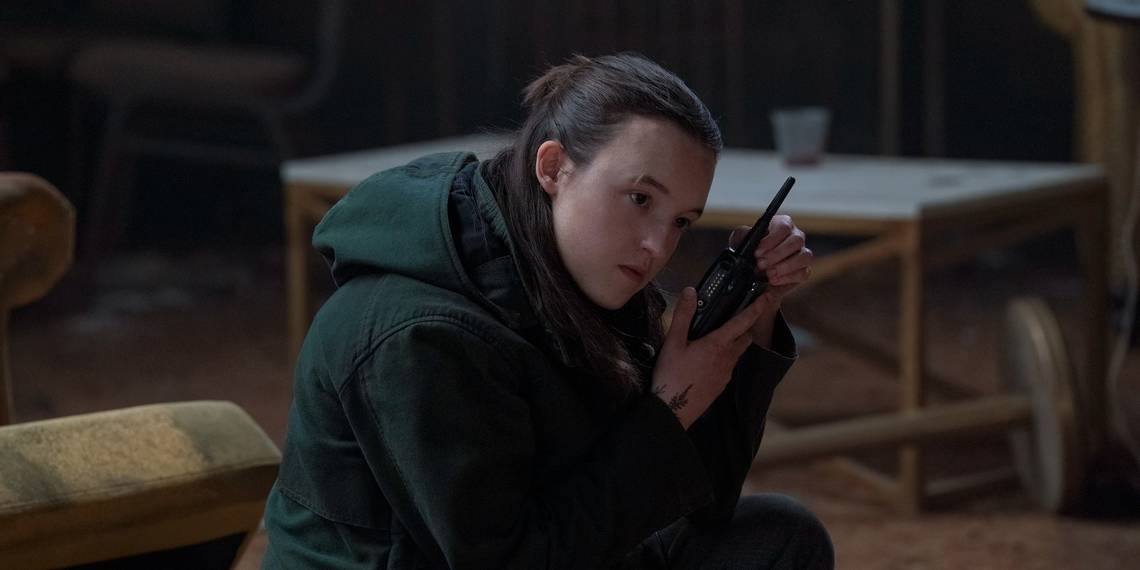
The Last of Us returns to the present-day narrative in its finale and makes a beeline for its confrontational conclusion. It’s a bit of an odd finale, in that it feels like part of a story, with random interludes and interjections from narrative beats that feel out of place. This is by design, as we see by the end, but it doesn’t make for the smoothest of adaptations.
Episode seven covers day three in Seattle for Ellie and sees her hitting the road with Jesse, who is essentially the complete opposite of our lead. Stoic, level headed, and more driven by morality, the two butt heads when Ellie’s thirst for revenge outweighs potentially saving Tommy, who may or may not be under fire. There’s also the whole issue with Dina and the unborn child, with Jesse already feeling a strong sense of duty and responsibility for the child, even if he knows he’s not going to be Dina’s partner in life. Ellie stumbles upon Abbey’s potential location by pure chance, it seems, with Nora simply stating “wheel” and “whale” while under torture. Not sure why she didn’t just say “aquarium”, seeing as Ellie located the building very quickly and one word is easier to say than two.

After a brief scene where she’s captured by Scars and subsequently released (why not just stab her?), which feels really out of place but more on that in a sec, she gets back to her boat and arrives at the aquarium, where she ultimately ends up killing both Owen and a very pregnant Mel. Her pregnancy is supposed to mirror Dina’s and how Ellie’s quest for vengeance has resulted in collateral damage to the innocent. But we’re pulled from the grief and consequences too quickly. I did like that Ellie was tapped into that rage finally, but she really should’ve been like that since Joel’s murder. The happy-go-lucky Ellie we had for most of the season, even if it was just a mask, didn’t work narratively speaking.

Then, before you can say “wrap up”, Jesse is murdered by Abby at the cinema, with Tommy bleeding out and Ellie dead to rights in her crosshairs. The scene ends with a gunshot and a cut to black, before we flashback to Seattle day one, only this time from Abby’s point of view, introducing us to the format for season three, which, like the game, will be from her perspective. A safe bet is that season three will end where two finished, meaning there’s a good chance we don’t get closure on the theatre showdown until the proposed fourth season begins.

Much like this episode, season two was way, way, too rushed. With only seven episodes, one being a flashback, there wasn’t enough time to really allow the story to develop organically and let things linger awhile. There were a lot of missing moments from the game, as each day in Seattle felt rushed and trimmed down. Likewise, the show had a weird habit of telling, not showing, when it came to its characters, leaving little room for interpretation.

Many narrative beats were shuffled around or reimagined compared to the game, and for me at least, none of the changes worked. In the game, it’s only during Abby’s flashback that we learn that Joel killed her dad. But we learned about that very early on in season two, so there’s no sense of discovery left to come, no great moment of revelation and understanding. We’re left just watching her go through her own three days now, which will likely include her own flashback episode, but I fear it will lack the impact of knowing who her dad was, since we’re already privy to that. Likewise, we’ll probably see the WLF attack on the Scars from Abby’s perspective, which will likely fill in the blanks we saw in this finale. But even if we see the other half and we have a better understanding from Abby’s perspective, having Ellie detour for a few minutes only to be let loose again mere minutes later feels really random and pointless, as if it’s there only for the audience to go “oh that’s from last season!” come day three in Seattle next season.

Since Tommy didn’t leave Jackson first as he does in the game, the show lacked his phantom presence this season. In the game, Ellie and Dina are following his bloody handiwork through Seattle, resulting in Tommy feeling omnipresent throughout as he impacts the narrative from afar. Here, he feels wasted and just comes back to the story without feeling important and with his fate currently up in the air, it feels frustrating to have brought him back so quickly, and now we’re left with some unresolved moments and a sense of frustration.

It’s not all doom and gloom that said. The production values shown on the show was through the roof, with the sets and the make-up in particular being really noteworthy. The acting was inconsistent, but when it was good, it was really good.

The Last of Us season two is a show that feels far too short at seven episodes long, but simultaneously feels meandering, a bit bloated, and aimless despite the short runtime. I was a big fan of the first season and was curious to see if an adaptation of the divisive second game could make the narrative feel more organic in the television medium. But the show opted to keep the three-day format and shuffle backwards for the next season to relive those days in Abby’s shoes. I can’t help but think the show may have benefited from crosscutting, meaning to tell Ellie’s story and then intercut it with Abby’s at the same time and tell both stories in parallel. Now, HBO have to do a whole season of television without Ellie and introduce audiences to a third lead in as many seasons. That could work in a game, as you’re directly controlling a character, but it may prove frustrating to viewers, especially if they want some answers/closure for the cliffhanger ending of the season two finale. But this is what we got, and I have to say that the show struggled with its adaptation of The Last of Us Part II, which remains the better iteration of this narrative by far.

