
Ferrari is the first film from legendary director Michael Mann since his 2015 misfire Blackhat. The film stars Adam Driver as the titular car manufacturer as he navigates multiple challenges in the summer of 1957. Ferrari also co-stars Penélope Cruz, Shailene Woodley, Jack O’Connell, and Patrick Dempsey in supporting roles. So, after such a long hiatus, does Michael Mann still have it and is this movie worth your time? Let’s find out.
Ferrari, surprisingly, doesn’t feel that much like a Michael Mann movie, which usually feels laser-focused and excellently paced. This biopic feels much more meandering in its pacing, which is ironic for a film about race cars. The film juggles the exploits of Enzo Ferrari during one particularly hard summer for him. His company is on the verge of bankruptcy but in a bid to win over consumers, seeks to win the 1957 Mille Miglia, which is a 1000-mile endurance race across Italy. On top of all that, Enzo is facing a lot of tension from his estranged wife Laura (Cruz), who owns half of the Ferrari company’s shares and faces pressure from his mistress Lina (Woodley) to legitimatize their bastard son before Confirmation. So it’s safe to say that Enzo has a lot on his plate, and yet the film ends up feeling low-energy despite the many crises in his life.
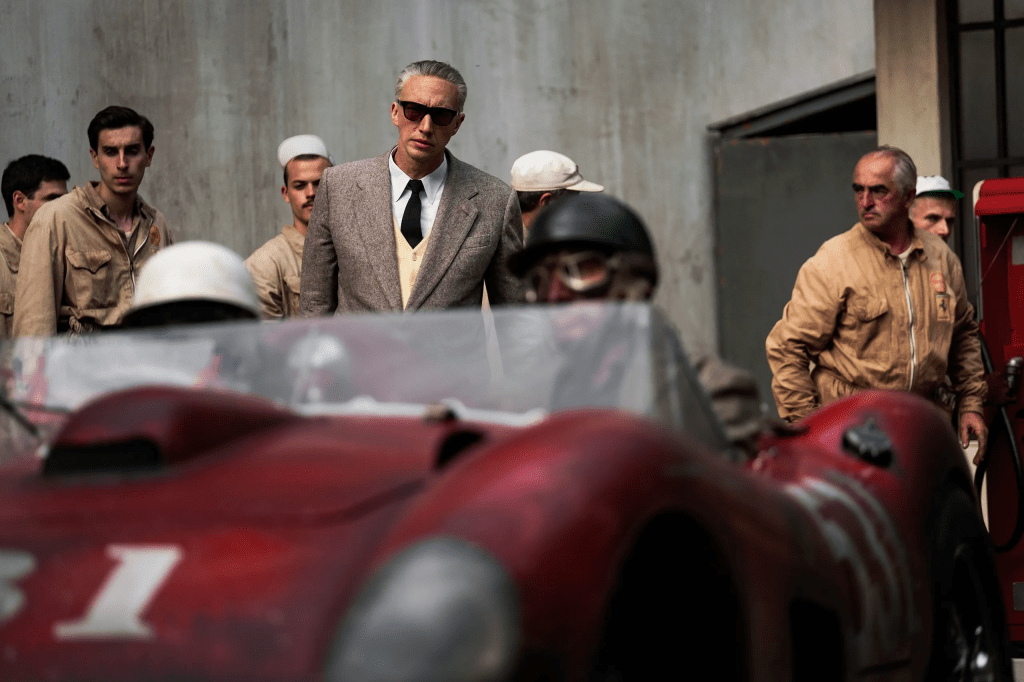
While Driver’s performance as Enzo lacked a certain oomph and charisma, Penélope Cruz as Laura dominates the screen as Enzo’s wife. The two became estranged after the death of their son, Dino Ferarri, and are more uneasy business partners now than lovers. Her performance is full of distrust, spite, and even the promise of violence against her husband as she learns about his infidelities, his illegitimate son, and his struggling company. Being a major shareholder, she has a lot of influence over Enzo, and this dynamic and confrontation is certainly one of the better aspects of the film.
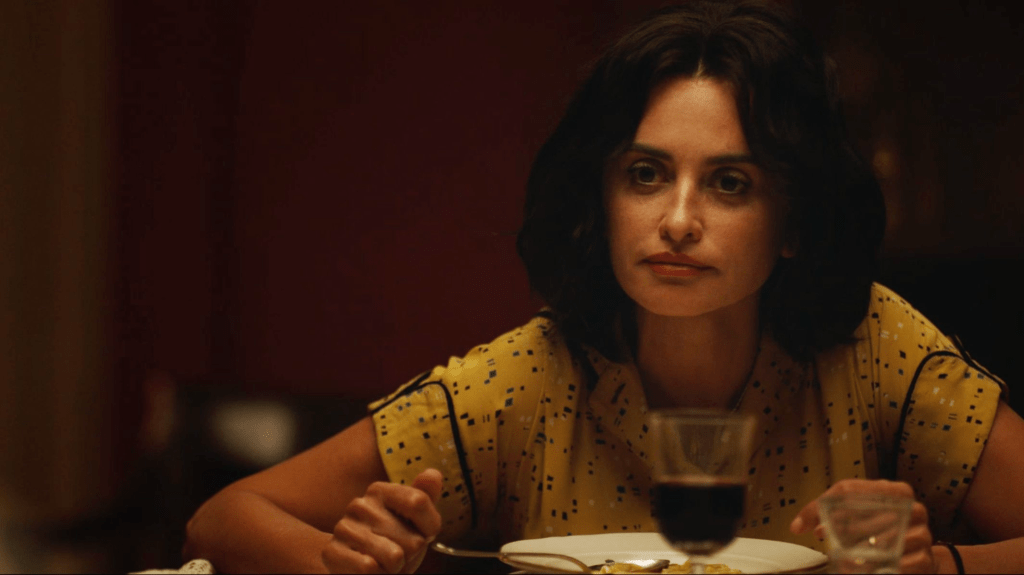
But I found Enzo’s personal life to be portrayed in a very uninteresting way. Driver’s performance feels stilted and his faux-Italian accent can be distracting at times. Not helping with the pacing is actually the cinematography, which can often feel drab and flat, lacking any sort of vibrancy that one would associate with flashy sports cars and the drivers associated with them. The movie is more interesting, however, when it focuses on Enzo’s determination to win the Mille Miglia. Ferrari picks up its tempo quite a lot during these planning and executing scenes and the final race sequence is both well-shot, visceral and even horrifying, as it depicts the crash of Alfonso de Portago, which killed nine civilians watching the race, including children. It’s quite the conclusion to an otherwise epic scene and one that hits with shock and horror, even if the VFX of the film are immersion-breaking. Enzo, of course, would be in the crossfire of the media storm that would follow and the Italian government would formally cancel the Mille Miglia as a result of this crash, banning road races completely in the country.
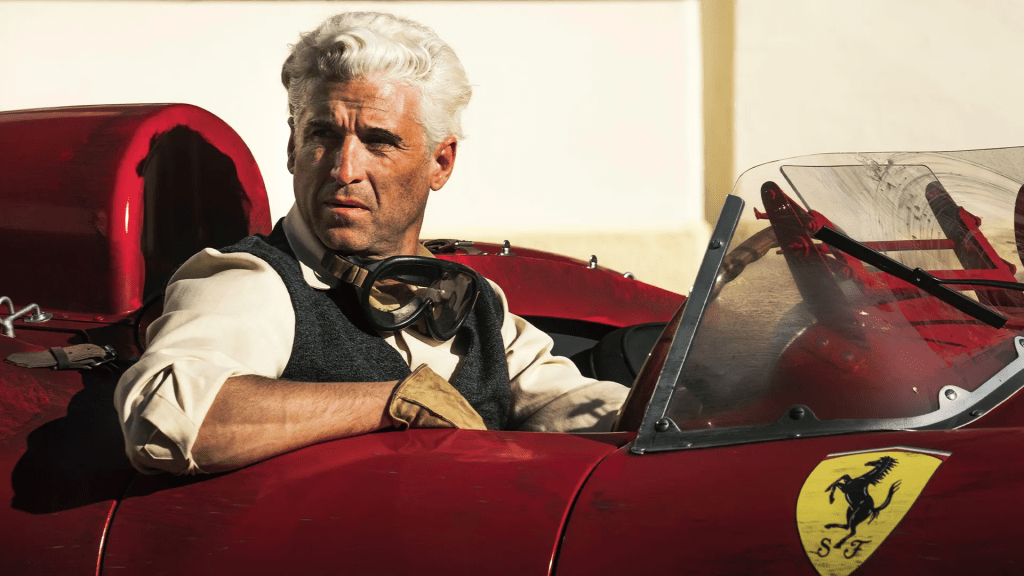
Ferrari isn’t a bad movie per se, but I don’t think it’s the movie audiences were also expecting. It isn’t very flashy or energetic, which considering the titular figure and impact said person had on motorsport, you’d expect. As a result, the movie can feel slow, with some unfortunate pacing issues and an unexpected emphasis on Enzo’s personal life, rather than the company he’s best known for. I hate to compare movies, but Ford v Ferrari is the pacing this film should’ve had.

