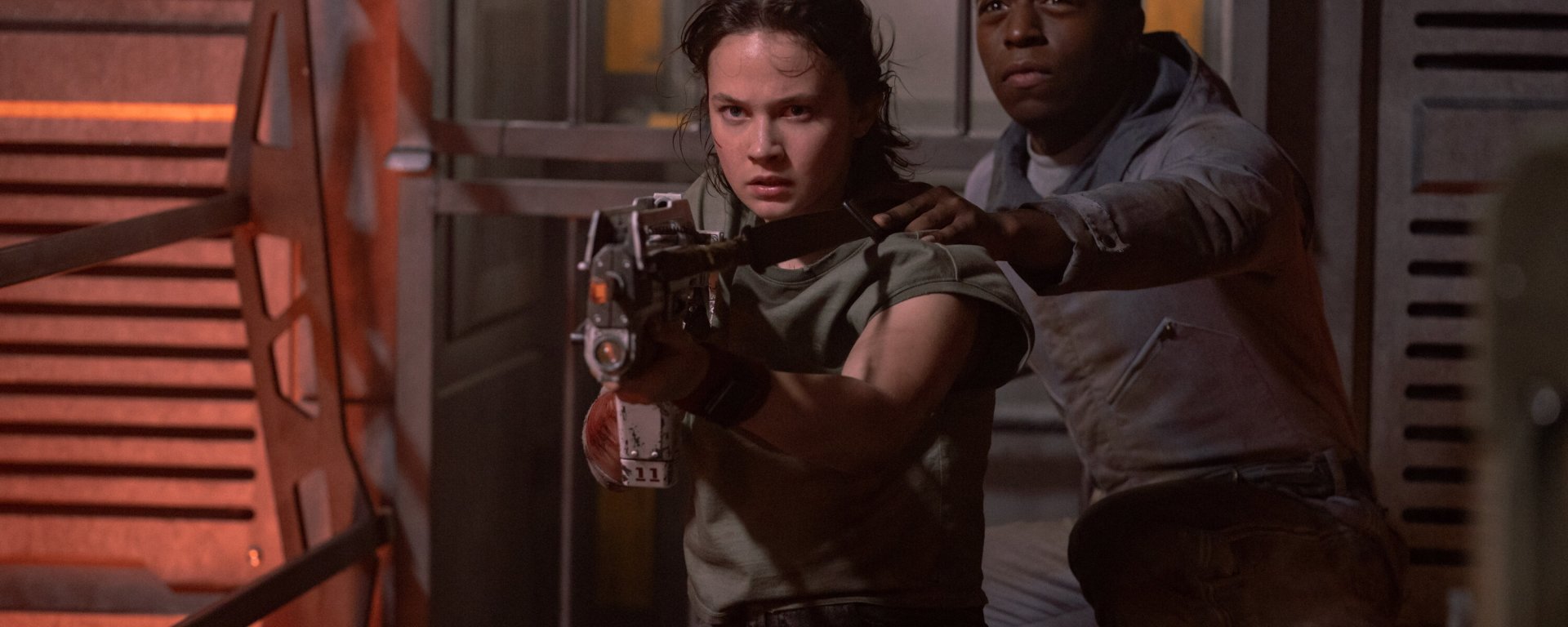
Since its release, Alien: Romulus has been met with similar polarizing responses to previous incarnations of the franchise, but this time around they’ve skewed more toward the positive. The film does employ a lot of elements from previous franchise entries, even some of the less beloved ones, making a stew of chaos and suspense all under the backdrop of some absolutely stunning production design. In many ways, Romulus improves on some of the ideas of previous Alien movies, even if it still doesn’t stick the landing.
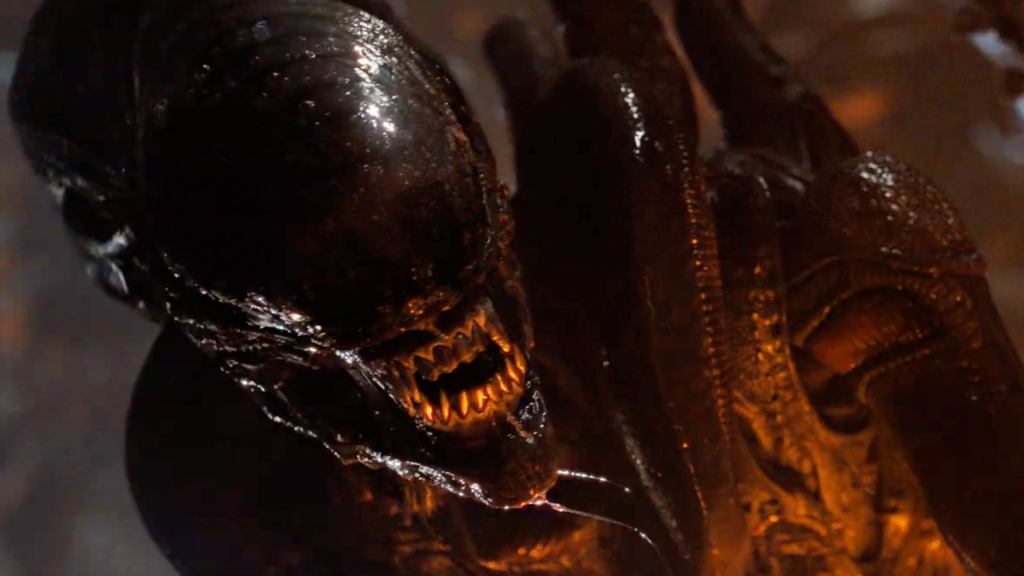
The story, like the original Alien, is straightforward. Unlike Alien, Romulus moves along at a rocket’s pace once the action begins. Romulus follows Rain (Cailee Spaeny) and Andy (David Jonsson), an orphaned miner and an android programmed to act as a surrogate brother for her, living on the desolate colony of Jackson’s Star. After Rain’s contract is forcibly extended, effectively imprisoning her in company servitude for the next six years, the two join Rain’s ex-boyfriend Tyler (Archie Renaux) on a mission to steal some cryo tubes from an abandoned space station and use them to escape to another colony. They travel to the station Romulus with Tyler’s pregnant sister Kay (Isabella Merced), android-hating Bjorn (Spike Fearn) and pilot Navarro (Aileen Wu), only to find the station is not so abandoned. It turns out that Romulus recovered the Alien jettisoned out of the airlock by Ripley, unleashing a hoard of monsters aboard the station. What follows is a curious blend of several of the franchise’s past entries, most notably Alien: Resurrection, which Romulus improves on in many ways.
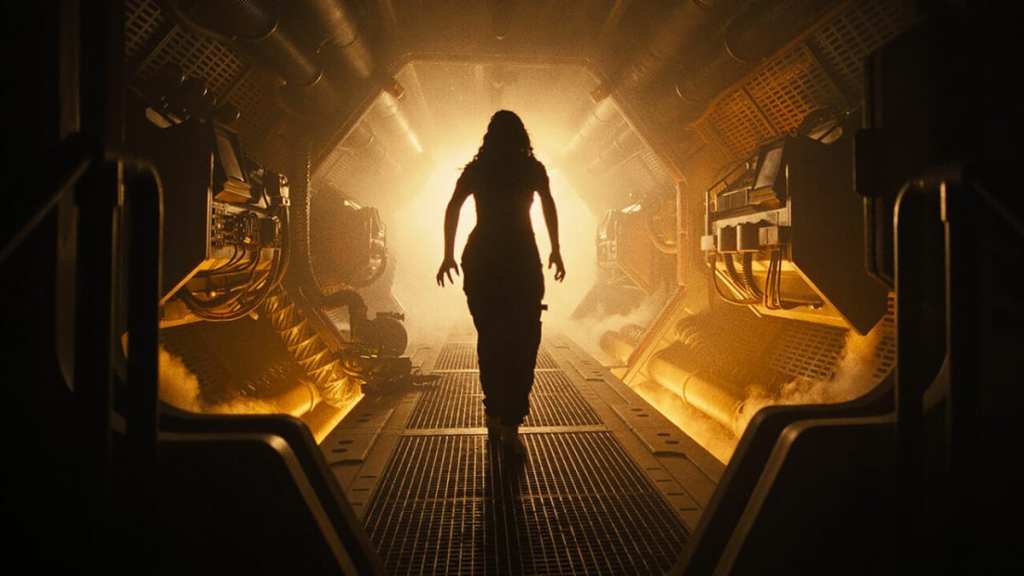
Where Romulus excels most is its production design. Not since the original trilogy has a film in this series looked so incredible. Jackson’s Star manages to capture the desolate and grimy feeling of Alien 3’s Fiorina 161, with a touch of overcrowding to set it apart. It is such a good-looking setting that it’s honestly disappointing more of the film doesn’t take place there, which is not to say the rest of the film isn’t easy on the eyes. The planet is a ringed planet, lending itself to spectacular views once the characters travel off-world. The rings are even used as a clever plot device where the characters must finish their work before the station falls into them, where it will surely be destroyed. As for the Romulus itself, it is brought to life with some absolutely stunning practical sets that manage to cross the polished look of Prometheus with the used look of the original Alien.
The characters themselves are hit or miss. Navarro is probably the least developed of the bunch, dying early on in an admittedly effective chest-bursting scene. Bjorn, whose mother was condemned to death by synthetics, does have a justifiable reason for his suspicion of the android Andy, but his character is also a bit underdeveloped before he’s washed out of the film with a bath of acid blood. This is primarily due to the film’s pace, which is pretty chaotic and quick once the action really begins. While previous Alien films, even Resurrection, lent themselves to some quiet moments that gave the characters room to breathe, Romulus moves so quickly that they don’t have much of a chance.

This is not to say the film is a total loss, however. The characters that are developed are very interesting, with the two best being Rain and Andy. The pair have a very well-fleshed-out relationship, with Rain really viewing Andy as a brother and Andy having the disposition of a child who just wants to be included. This changes when the action kicks off, and in an effort to get a better handle on the situation, Rain programs Andy using the memory of one of Romulus‘ own synthetics, an android known as Rook.
Rook will no doubt be one of the most controversial elements of the film. Played by Daniel Betts, Rook is modelled after Ian Holm’s Ash from the original Alien, brought to life with digital effects. Rook proves to be a corrupting influence on Andy, using him to guide Rain and Tyler through the station in hopes of rescuing some company assets gained from the company’s research into the Alien. Rook claims that the organic compound harvested from the creatures, which bears a curious resemblance to the black goo from Prometheus, could benefit mankind and help them become more impervious to the harsh conditions of space. To this end, Andy, now following Rook’s directives to help the company, willfully puts the other characters in danger to achieve this end.
This is the central conflict of the film, with Rain and Andy’s relationship severely strained by the alterations to his directive. The once-innocent Andy becomes cold and uncaring, unable to remember his own initial programming to look out for Rain’s best interests. Rook replaces Rain with himself, directing Andy’s actions through the story and causing him to make numerous morally questionable decisions. Andy’s changes cause the group to spiral into chaos. His insistence that Navarro be abandoned after a facehugger infects her causes Bjorn to panic and flee with her, only for the ship to crash after Navarro gives birth. The rift widens when Kay, having barely survived the crash, is left to be captured by one of the Aliens when Andy refuses to open a door for her, fearful that the creature will escape.
Tyler is later killed rescuing Kay while Andy suffers a software meltdown, causing Rain to send Kay back up to the ship while she goes to rescue her adoptive brother. The film has some pretty standard Alien fare here but also makes interesting use of some elements never really touched on in previous Alien films. The rescue of Andy for instance is capped by an impressive sequence when Rain disables the station’s artificial gravity to prevent the Aliens’ acid blood from eating through the hull, and the two effectively swim through a zero-gravity environment, doing their best to evade blobs of the yellow-green death. It’s a nice scene in concept, and though not entirely successful in its execution, shows that the series still has some ideas to explore.
Of course where the film will no doubt attract the most controversy is in its final act, where we get into some Resurrection/Prometheus territory. Kay, dying from an injury, uses the black plasma to heal herself. She unknowingly infects her unborn child with the pathogen, mutating it into a human/alien hybrid similar to the Newborn seen in Resurrection. The creature is born, grows, and later sucks Kay dry, leaving Rain alone on the ship trying to eject the monster into Jackson’s Star’s rings.
It seems a common theme of Alien sequels is altering the creature to try and keep the scenario fresh, such as with the Queen in Aliens, the Dragon in Alien 3, the Newborn in Resurrection, or the Predalien in AvP Requiem. But even if the creature is different, a lot of the same tactics are used to scare the audience, and these tricks aren’t really any better if the creature is changed. Rather, employing new tricks with the same beast seems to be the way to go.
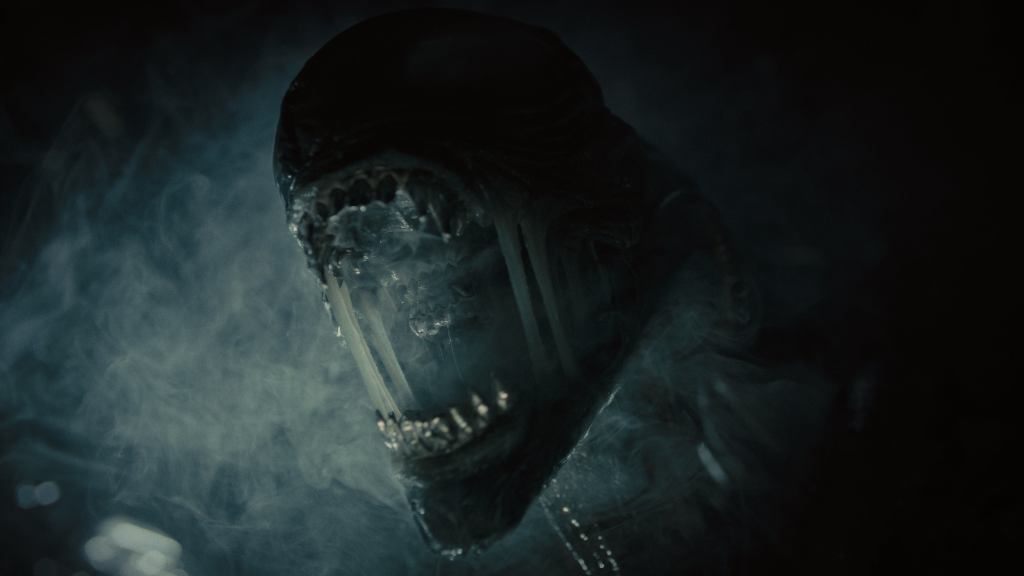
And yet the Offspring is a pretty damn scary monster. It doesn’t have the odd blend of cute and ugly that the Newborn had. Instead, the Offspring has an odd, asymmetrical design that makes it seem broken, a nice counterpoint to Rook’s altruistic claims that the plasma will benefit mankind. The sequences with the Offspring, when they work, are very effective, and are an example of how Romulus manages to take an idea previously explored in the series, and improve upon it.
In the end, Rain and Andy are the only survivors. The film ends with them entering hypersleep, unsure if they’ll ever reach their destination, but knowing they’re going there together. And that’s what Alien: Romulus is really about, the relationship between a woman and her adoptive brother becoming strained by the brother’s so-called ‘real’ family. While it could have dealt with just the classic Alien, the use of the Offspring shows that Rook is deceitful, promising a cure and instead delivering corruption. Andy is left with a choice of what constitutes his real family, and in the end sides with Rain and the two leave Rook to be destroyed along with the Romulus station. It’s a solid science fiction film with some interesting themes and some well-executed set pieces. It may not be a great film, but it’s a damn good one, which is an achievement in and of itself.


3 thoughts on “‘Alien: Romulus’ – A Very Spoilery Summation – ScreenHub Entertainment”