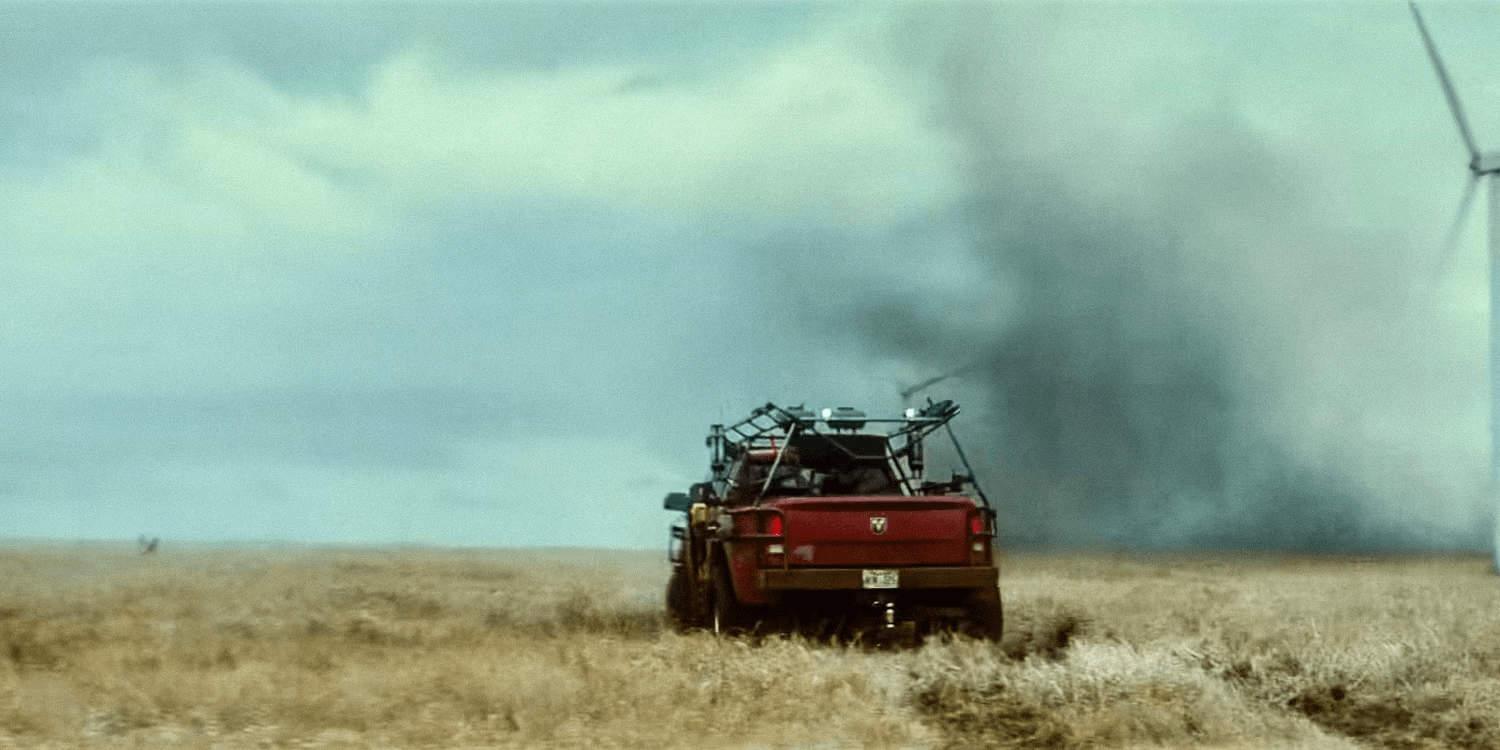
For those who came of age after the early 90s, it can be hard to understand just how groundbreaking CGI was to audiences at the time. And one of the biggest champions of that revolution was the 1996 film, Twister. Though the film was met with a decidedly chilly reception at the time of its release, it was a major hit for audiences, smashing the box office and becoming a beloved piece of 90s nostalgia in the ensuing years. A lot of weather-themed disaster movies have come out since, some in major Hollywood films like The Day After Tomorrow, and countless other efforts devoid of effort on television. And while the effects improved over time, for some reason Twister still reined supreme. And somehow, despite the fact that CGI no longer holds the ‘wow’ factor it once did, Twisters managed to recapture some of that magic. Just how is that?
Since Twister, tornado movies have become something of a bad joke, with less than stellar efforts like Category 6: Day of Destruction, Atomic Twister, Ice Twisters and of course, Sharknado, dominating store shelves, if not home ones. Why is that? Well, when it comes to digital effects, tornadoes have become one of the easier calamities to create, with their relatively simple shape now becoming commonplace in most programs, and the simplification of complex particle animations used to give them texture and life. Simply put, Twister revolutionized the VFX process so much that the magic was lost in the process.

And yet people still kept coming back to Twister. It wasn’t just the story and characters that drew audiences, though those were certainly important factors. Somehow after all this time the film never lost its wonder. So why is that?

One thing unique about CGI from the era that is seen less today is the integration of said effects into a real environment. Today, most environments are created fully digitally to better house the effects, something seen in major studio efforts and the latest superhero romp. Twister took a page from the original Jurassic Park, instead placing its monstrous windstorms in the real world. The more reality in the frame, the more the effect itself looks real. Another example of this is the original DragonHeart. Despite the Draco model being comparatively simple today, he’s so well integrated into the live-action environment, that it doesn’t really matter. While Twisters doesn’t go to the same lengths as its predecessor, there are examples of computer-generated images moving through some not-so-computer-generated real set pieces. And that lends a real sense of credibility to its set pieces.
Still, Twister made good use of practical magic to compliment its tornadoes, something Twisters doesn’t do as well with. Scenes like the characters being terrorized at a drive-in and Jo and Bill’s chaotic drive through an uprooted house are solid examples of this that Twisters, unfortunately, doesn’t strive for.

And yet somehow Twisters still manages to rise above its contemporaries, perhaps because out of all the things other tornado films have failed to do, Twisters does something we’ve not seen much of since the original. Each vortex has a feel of its own.
One of the great things about Twister is how unique each tornado looks. The first onscreen tornado is a stunning white rope that snakes its way across the richly colored plains. The waterspouts that target the group later on are similarly unique with their glossy appearance and chaotic movements. The tornado Jo and Bill confront on a lonely road is a dark, sinister funnel that looks much like the ones you’d see in science books or documentary films. The tornado that strikes the drive-in is only seen in momentary glimpses, mostly illuminated by the occasional flash of lightning. And the final tornado, the massive EF5, is a mile-wide monster, gorged on dust and debris that often takes up the entire frame.
One of the problems with a lot of tornado movies lies therein. All of the funnels in those films look more or less the same, with filmmakers often vying for a quick and easy insert without giving it any real life. By contrast, the storms in the original Twister often feel like full-fledged characters with their own looks and personalities. A lot of times in modern films, the effects are so focused on trying to pack as much as they can into a given scene, that this sense of character is lost. Even a big-budget epic like The Day After Tomorrow didn’t give character to its tornadoes in the scene where they swarm and destroy the city of Los Angeles.

Even in the trailers for Twisters, the effects looked a little more special. Like the original, every one of them seemed to have a character to it. The tornado that strikes an unsuspecting rodeo is a dark pitch black mass, seen in only momentary flashes of lightning. A tornado driven into by one of the heroes is a thin white graceful rope that bursts into color when given a healthy serving of fireworks. The final set piece is a massive wedge wrapped in ash and smoke that gives it a feeling like a moving fire. Each one is given special care that gives them a sense of life and individuality, something sorely missing when the quantity of effects becomes a focus while quality takes a back seat.

Watching Twisters, I felt a familiar sensation once felt by a six-year-old kid seeing Twister in the theater. I kept asking myself what they were going to do next, and what personality the next tornado would have when they appeared. Those familiar ‘oos’ and ‘ahs’ of youth started making their way into the open air, and I was enchanted. The jaded among us will dismiss effects work as a mere disguise to cover a film’s flaws, but such attitudes forget an important truth. Effects are part of filmmaking too, and the effort that goes into them does matter, the same as acting, writing, cinematography and editing. We’ve seen this in how some films of the 90s have waned, while other spectaculars like Independence Day and Dante’s Peak, flawed scripts aside, continue to find new audiences to enthrall as the years go by.
Twisters has its issues to be sure. But when it comes to the effects themselves, it manages to actually craft something impressive in an age when that initial wonder of CGI has long since waned. Storytelling flaws aside, I think Twisters should stand as a testament to how good effects work can and do elevate a film. If you had the same script and even the same actors, but didn’t have the supporting cast of malicious weather given the care it was here, the film absolutely wouldn’t have been nearly as good as it was.
Because even today, magic matters.

