Spoilers ahead
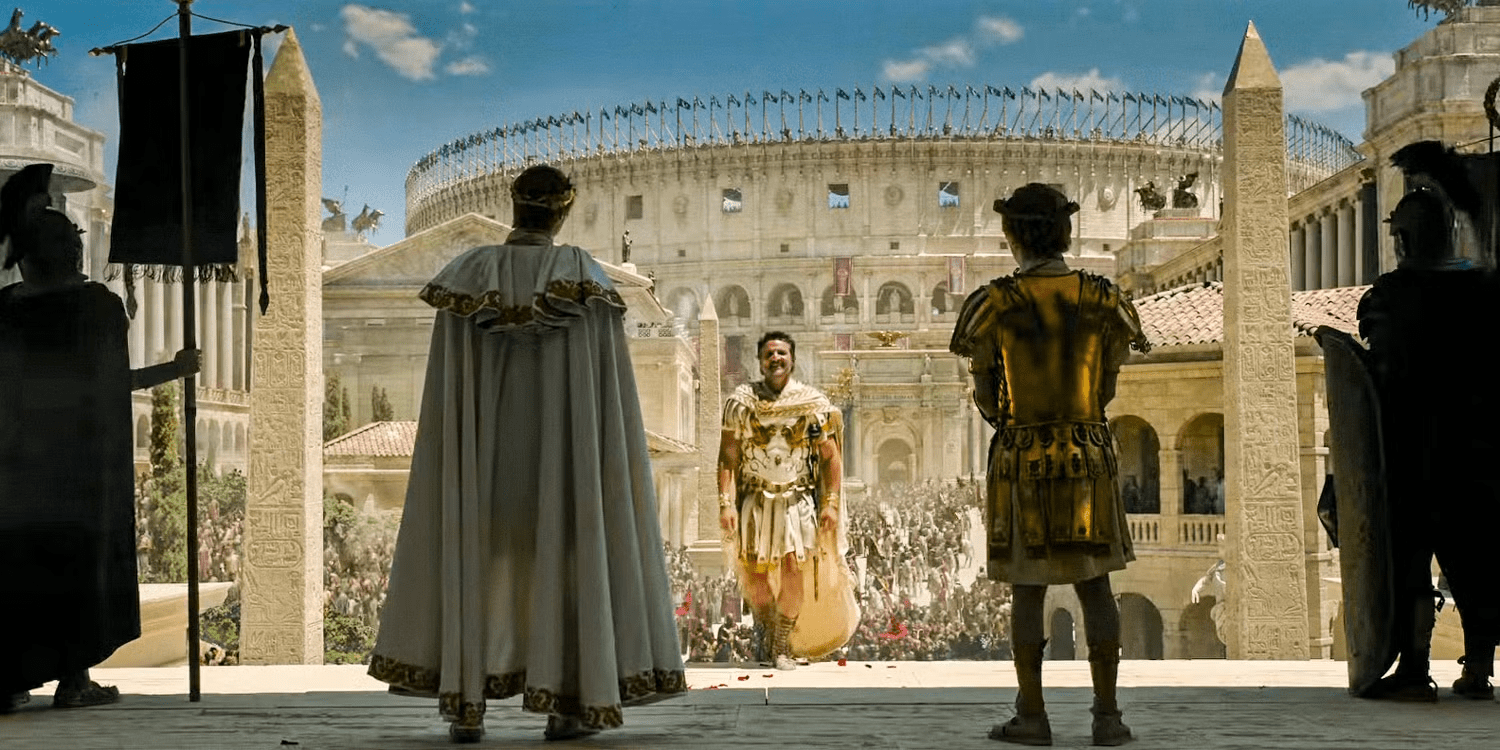
Much like the original Gladiator, there are a slew of historical inaccuracies with Gladiator II. Unlike Napoleon, which was framed as a biopic, we tend to forgive Gladiator for altering history because it’s not trying to be a retelling of historical events. The involvement of Maximus alone derails a lot of these focal points in time. So what happened in Gladiator II and how does it stack up to the original sources? Let’s find out. I’m not going to get into arbitrary specifics, like what type of Rhino was used in the Colosseum, that’s getting too nitpicky for my liking, but I’ll dive into more of the bigger historical events and characters seen in the film. Some of my sources are shared between entries, so you’ll see the same article pop up a few times if you follow the breadcrumbs.
Did the Romans Invade Numidia?
Yes, they did…albeit some three hundred years before the events of Gladiator II. The Romans came to Numidia in 112 BC during the Jugurthine War, which was when Rome was still a Republic and not an Empire.
Did the Romans Ever Flood the Colosseum?
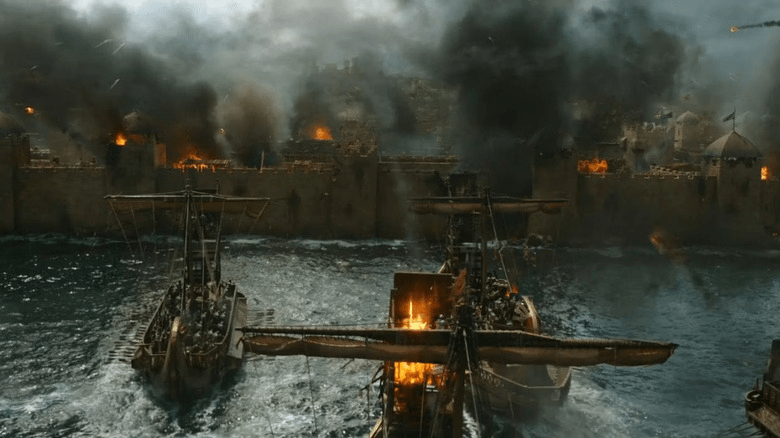
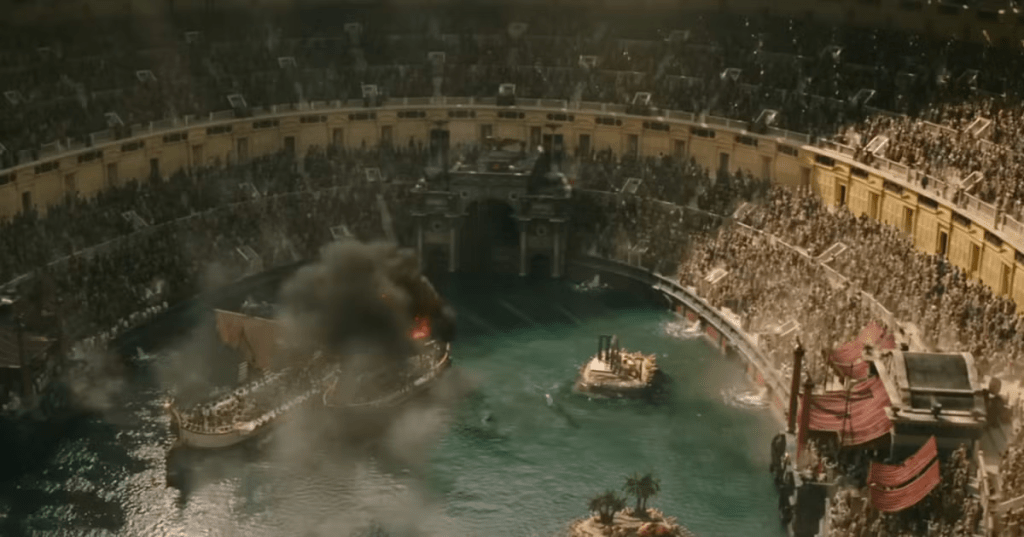
One of the rarer forms of entertainment for the masses was a type of gladiatorial event known as naumachia, which is where an arena gets flooded to allow for naval combat to be performed. Julius Caesar is said to have organized the first such event. Usually, naumachia was performed in its own style of arena to accommodate the ships, but the event did take place a few times in amphitheatres, including the Colosseum. I only found records of it happening twice in the Colosseum and neither one was during the reigns of Geta and Caracalla (one was during the reign of Titus, the other during that of his brother Domitian’s rule. We saw both figures in the show Those About To Die). So the Romans seemed to have tried naumachia very early on in its inception, as the amphitheatre was completed during their rule, but due to logistics, abandoned ever flooding it again. Likewise, there’s no evidence to support the existence of sharks, as transporting them would’ve likely been impossible. On the flip side, I have found reports of crocodiles being used during naumachia.
Did Caracalla Kill Geta?
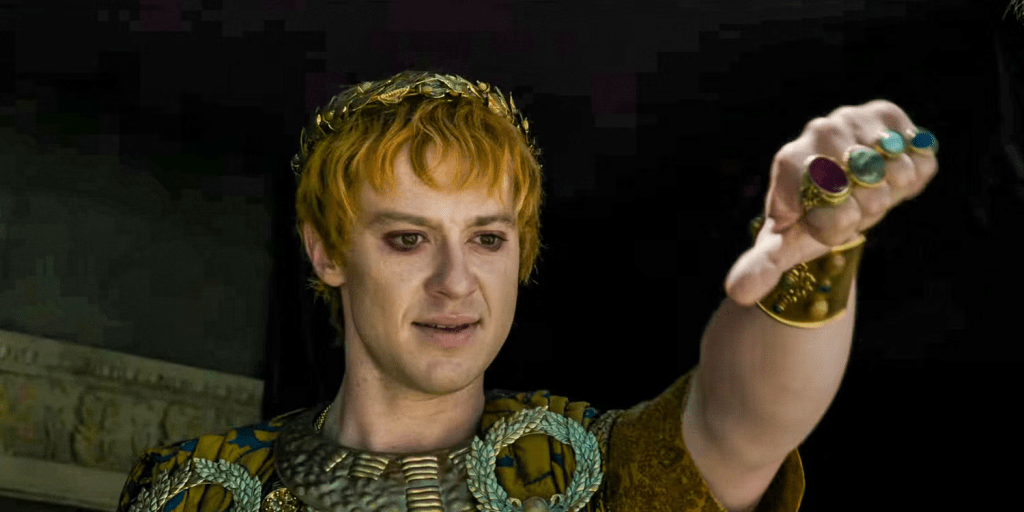
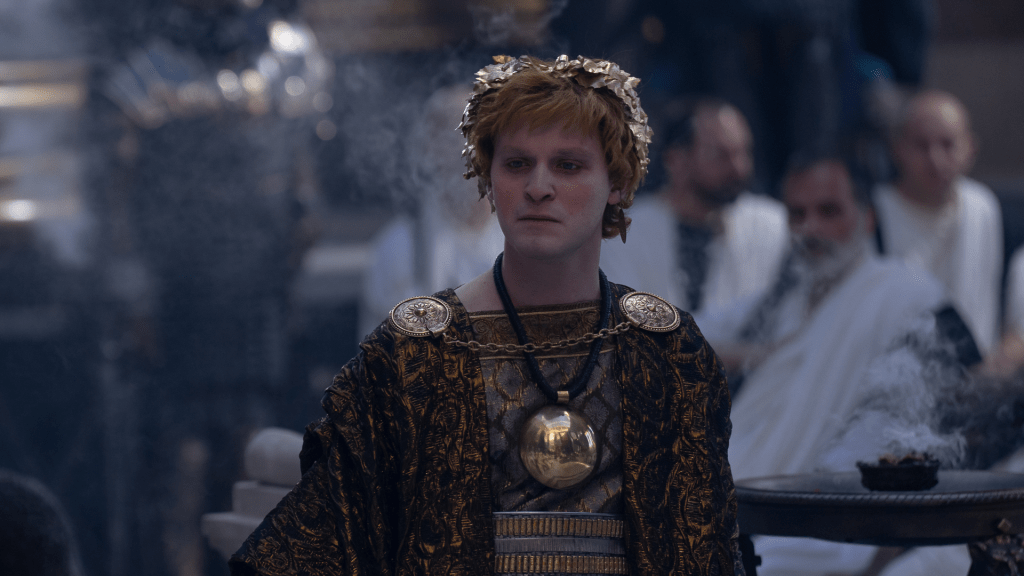
In Gladiator II, Caracalla murders Geta directly under the influence of Macrinus’ manipulation. In real life, he was murdered by the Praetorian Guards and died in his mother’s arms shortly into their co-rule together. Despite the Praetorians committing the act, it’s accepted by scholars that Caracalla ordered the hit himself, as all records of his brother’s reign as emperor were struck from the record, with his face removed from coins and even uttering the name “Geta” became a capital offence. So yeah, Caracalla killed Geta, albeit indirectly. It’s also worth noting that in history, the co-emperors were brothers, but not twins.
Did Macrinus Kill Caracalla?
Yes…sort of. In Gladiator II, Macrinus is very loosely inspired by the real Macrinus, who would go on to become Emperor. In the film, he’s a slave turned arms dealer/gladiator owner who has designs on the throne. Much like in history, he gets elevated from a non-senatorial position to one of power. In the film, he directly assassinates Caracalla and assumes command of the army, but in history, the real Macrinus gets Justin Martialis to kill the emperor on his behalf in Harran (in modern-day Turkey), which paved the way for him to become Emperor. Unlike Geta, who really died in 211, Caracalla was killed in 217, years after the events of Gladiator II. Macrinus would go on to rule as Emperor for just over a year and would be subsequently executed for being a rather unpopular leader, to say the least.
Was Lucilla Around in 211 A.D.?
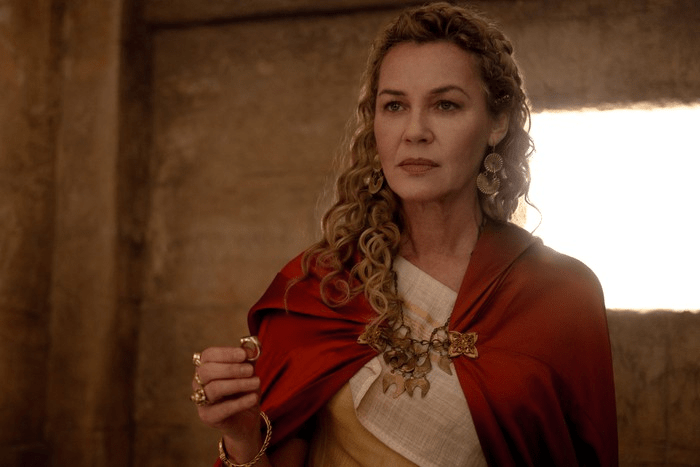
She was not actually. Much like in Gladiator, Lucilla attempts to overthrow Commodus due to his terrible rule, but she fails in the task. Commodus has her and her fellow co-conspirators killed in 182 A.D after exiling them, preventing her from appearing in Gladiator II historically speaking. Caracalla later murdered her son, Pompeianus, in either 211 or 212.
Was Lucius Vernus Real?
On paper, yes he was. Lucilla did have a son named Lucius Vernus, named after his father, but he died young, making it impossible for him to be around as a gladiator, let alone heir to the throne, in 211.

Was English Around in 211 A.D.?
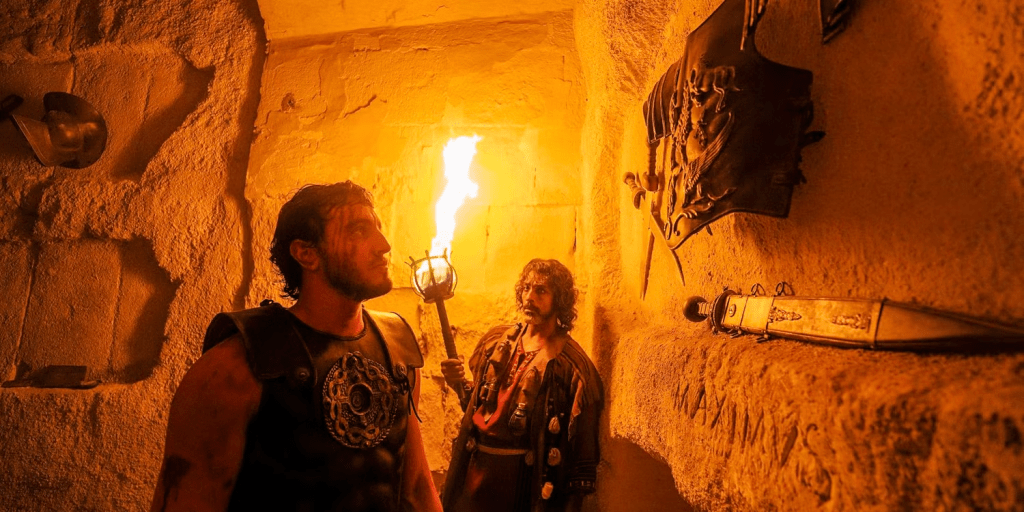
Under the Colosseum, Lucius sees the words “what we do in life, echos in eternity” carved into the wall. Unlike many of the other texts scratched into the stone, such as “Strength and Honor”, this one was carved in English, rather than Latin. English would appear in Britannia a few hundred years later and would’ve been Old English, not modern English. It’s an odd choice seeing as there are so many other instances of Latin text being used, why does one show up in modern English for no reason? They could’ve kept it in Latin and had Lucius read it out loud…something he already does in the movie anyway.
So as you can see, Gladiator II is pretty inaccurate, but it is rooted in history in some way shape or form. So don’t use it as a source, but treat it as a jumping-off point, much like the first one was.


2 thoughts on “‘Gladiator II’ Fact or Fiction – ScreenHub Entertainment”