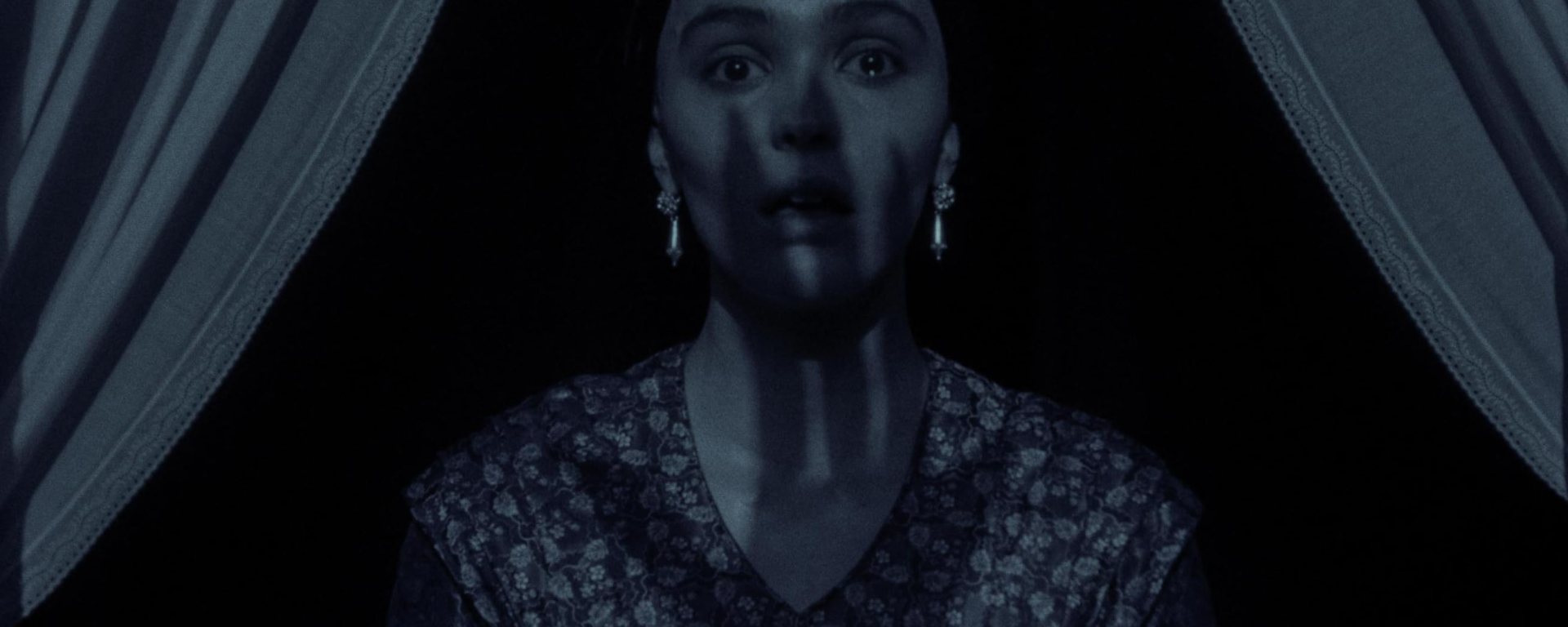
Director Robert Eggers’ passion project was always a remake of the 1922 film Nosferatu, but he thought it would be extremely bold of him to remake one of the most iconic horror films of all time as one of his first movies. Now, for his fourth belt and plenty of acclaim to his name, Eggers has brought his interpretation of the vampiric legend to the big screen, which in turn was an unauthorized remake of Bram Stoker’s Dracula. So, how does this movie fair, both as an Eggers movie and as a Gothic horror picture?
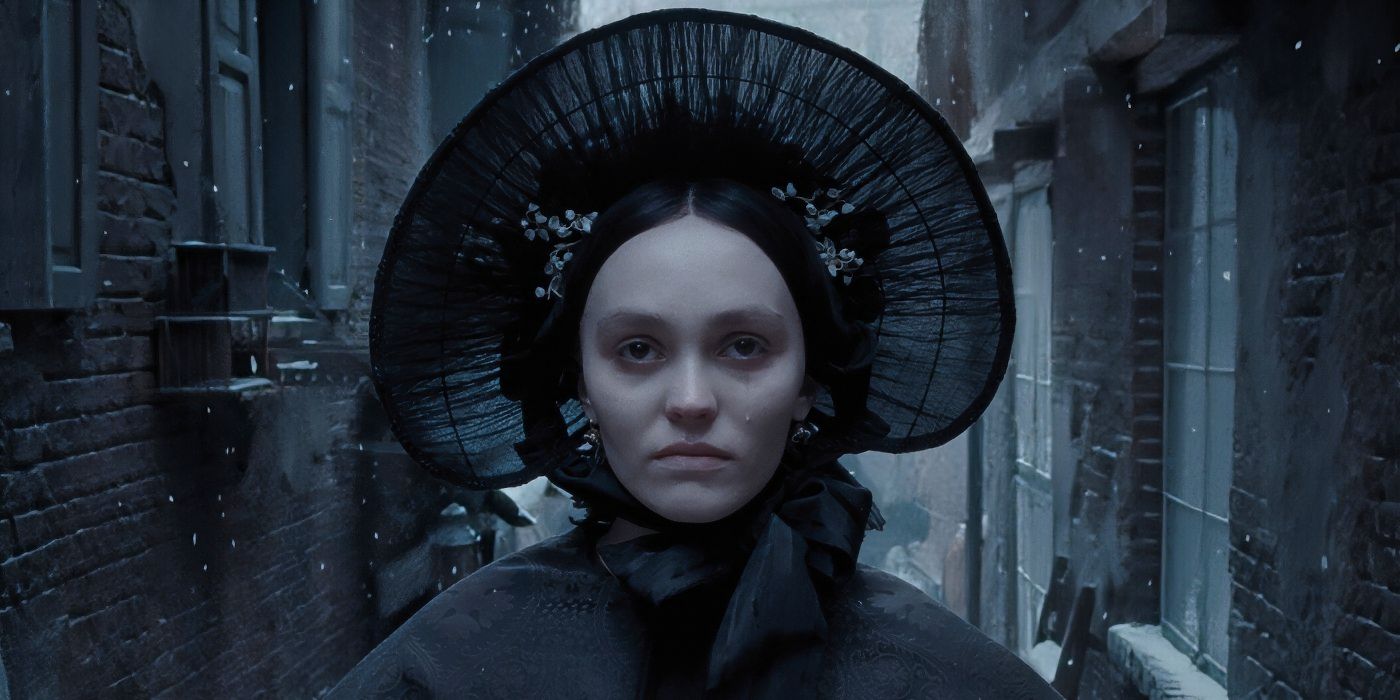
Just like his previous three films, Robert Eggers also wrote the script for Nosferatu, but unlike his previous works, he has to adapt someone else’s work and put his own spin on it. Unlike the original Nosferatu that said, Eggers is able to fill his film with dialogue and as such, as brought in a talented cast to help bring his vision to life. This includes Lily-Rose Depp and Nicholas Hoult as Ellen and Thomas Hutter, two newlyweds, their wealthy friends Friedrich and Anna Harding (Aaron Taylor-Johnson and Emma Corrin), Willem Dafoe as Professor Von Franz, Ralph Ineson as Dr. Sievers, and Simon McBurney as Herr Knock. Everyone involved does a really good job with their roles, especially Hoult and Depp, who have to convey sheer horror and fear throughout the film.
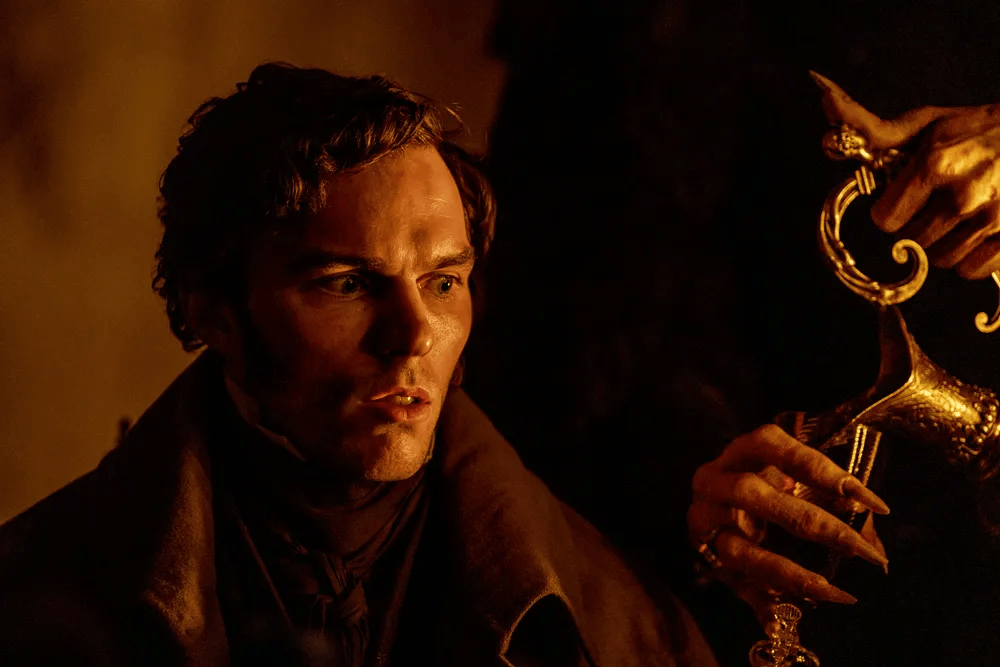
The scene stealer though would be Bill Skarsgård as the titular vampire lord, known publically as Count Orlok. Skarsgård’s voice and body are completely unrecognizable, disappearing completely into the role. His look (thankfully never revealed in marketing) is probably not what you would be expecting, but I thought it worked and is quite different from the original rendition. But his voice, a clipped and staccato drone, is haunting and unsettling.
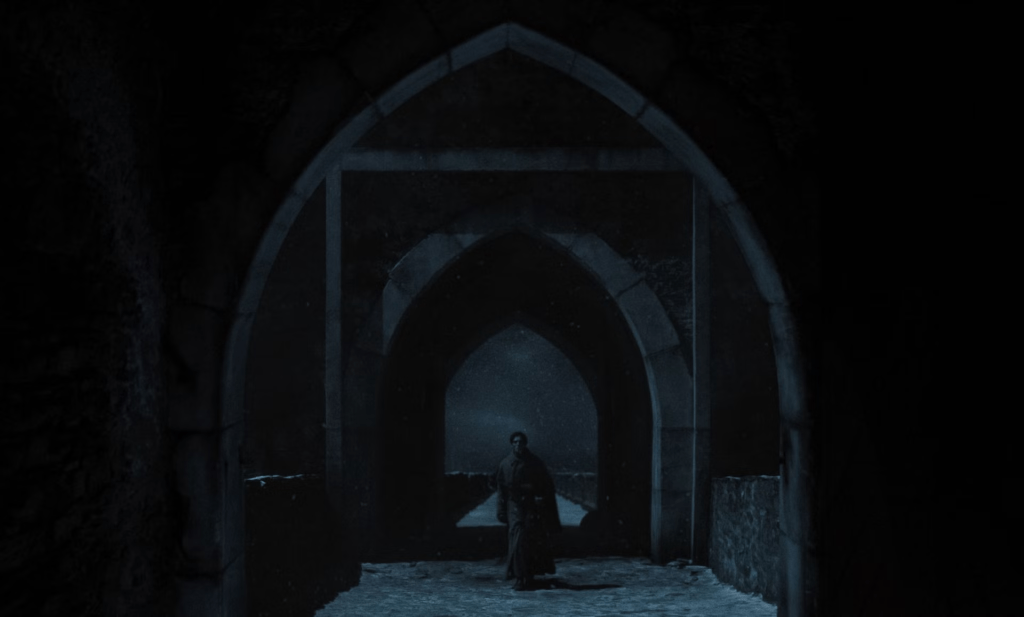
In fact, haunting and unsettling is perhaps the best way to describe Nosferatu. This is a dark and disturbing film, one that doesn’t shy away from the horrors of both the supernatural and the physical. There are possessions abound, mutilations, and plague all over the film, coated with a never-ending sense of dread and despair. All this is enhanced by the cinematography of Jarin Blaschke, who has shot all of Eggers’ films to date. Despite being shot in colour, the film appears black and white and Blaschke really makes excellent use of shadow to enhance the horror, as well as the supernatural aspects of the vampiric powers. Shadows are cast on the walls, but nobody is present to cast those shadows, for instance. You could pause the film at any time throughout the film and you’d be left with a frame that looks like a painting. The sets are also exceptional, particularly the town of Wisborg, which is densely populated and entirely believable as a real location. Orlok’s castle is cold and derelict, yet imposing and claustrophobic despite its size.
Compared to Egger’s previous works, I think Nosferatu is probably his most accessible feature film to date. But it still has moments that range from bizarre to unsettling. Some of this works, but I found some of it didn’t, which contributed to a sense of plotting along. At two hours and fifteen minutes, the movie ended up feeling a lot longer than it actually was. Sometimes, I felt the movie was being weird for the sake of being weird because that’s what’s come to be expected of an Eggers picture. I think the film, overall, would’ve benefitted with around ten minutes trimmed out throughout the runtime, just to tighten the pacing ever so slightly.

In the end, the 2024 remake of Nosferatu is a film filled with dread and horror. Not for the faint of heart, but if you’re in the mood for a film that emphasizes those sensations in a 19th-century setting, and one that makes cinematic vampires horrifying once again, this is a solid enough recommendation.


4 thoughts on “Succumb To The Darkness: ‘Nosferatu’ Review – ScreenHub Entertainment”