In this media-saturated world, all creators are trying to find new ways to push the envelope on what is acceptable to be shown. Among the waters being tested is ways to shock the viewer. It can be hard to tell when such efforts are merely exploitive efforts to grab attention, and which are bold statements willing to put the viewer in uncomfortable places. Speak No Evil may seem like the former on the surface, but that it is carefully, and rather brilliantly, making a point about agency and failure to act, is one of the reasons its ending remains so haunting.
For those who haven’t seen the film, the following article will be spoiler heavy.
Speak No Evil is a 2022 Danish Film by Christian Tafdrup. It stars Morten Burian and Sidsel Siem Koch as Bjørn and Louise, a Danish couple who, along with their young daughter Agnes (Liva Forsberg), are invited to spend a holiday with a seemingly friendly couple Patrick and Karin (Fedja van Huêt and Karina Smulders) and their mute son Abel (Marius Damslev). Once arriving at the family’s isolated home however, Patrick and Karin start exhibiting disturbing behaviors that increasingly test the boundaries of Bjørn and Louise, until a final harrowing act utterly shatters their world.
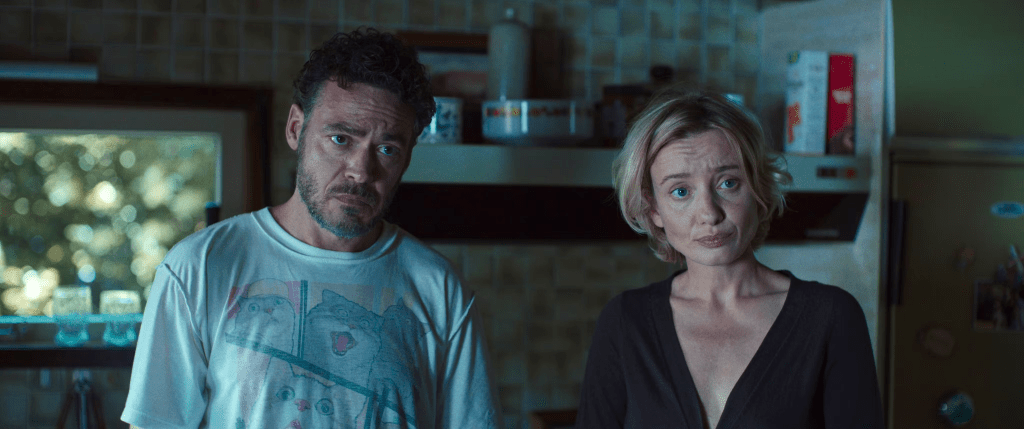
We all know the experience of yelling at the screen when characters in horror films make bad decisions. Speak No Evil is all about that, with inaction itself as much a villain as the monstrous antagonists. Bjørn and Louise try their best to be pleasant even as Patrick and Karin steamroll over their personal boundaries. Things start small with them egging the vegetarian Louise into eating meat and stiffing Bjørn with a restaurant bill. The pattern of behavior gradually escalates into uncomfortable territory, with the hosts spying on their guests having sex, and even taking Agnes to sleep with them in their bed. Worst of all, Patrick and Karin show increasingly abusive behavior towards Abel, the mute youngster forced to endure verbal and physical attacks regularly.
Still, despite this and despite having multiple opportunities to leave, Bjørn and Louise, allow the transgressions to happen, with any objections meek at best. Seeing this behavior and watching how our protagonists fail to act decisively creates a feeling of impending doom, though even that does little to prepare for the film’s ending.
In the last act of the film, Bjørn, drawn out of bed by a strange commotion, discovers a room filled with trophies Patrick and Karin have collected from previous victims. It turns out the pair are con artists and killers who rob and murder parents and abduct their children, and they want Agnes. Worse yet is once they grow bored with their current child, they are murdered to make room for the new one, something Bjørn knows because he finds Abel’s body floating in a nearby pool. According to Patrick, Abel is mute due to a birth defect. In reality, it’s because the sinister couple cut out the child’s tongue. It cannot be understated how important it is that Bjørn is aware of this, because it makes the ending more devastating.
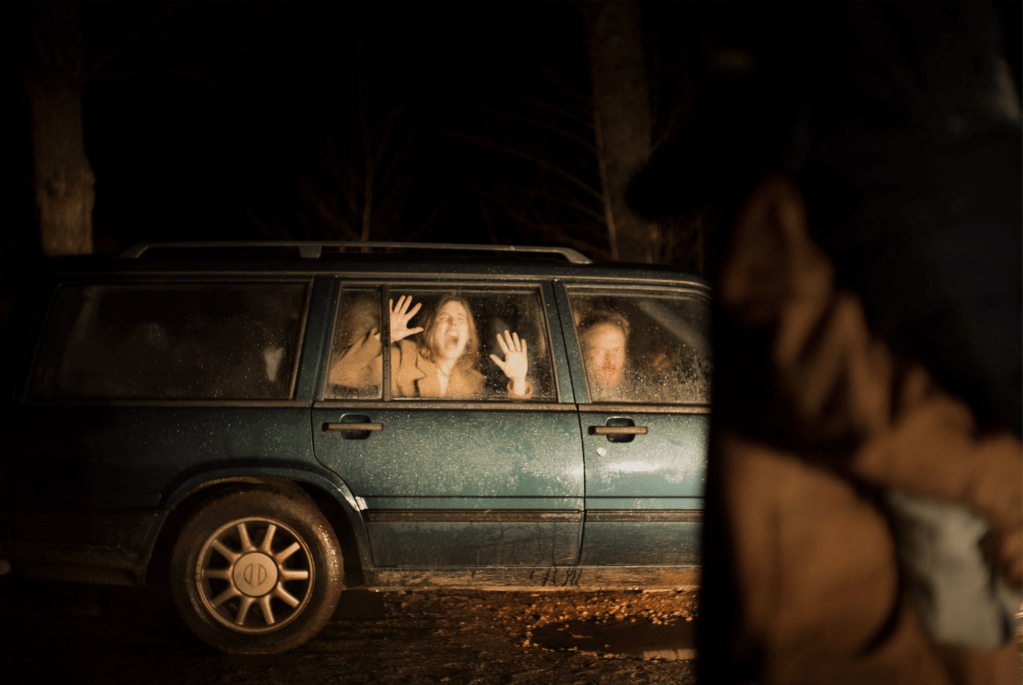
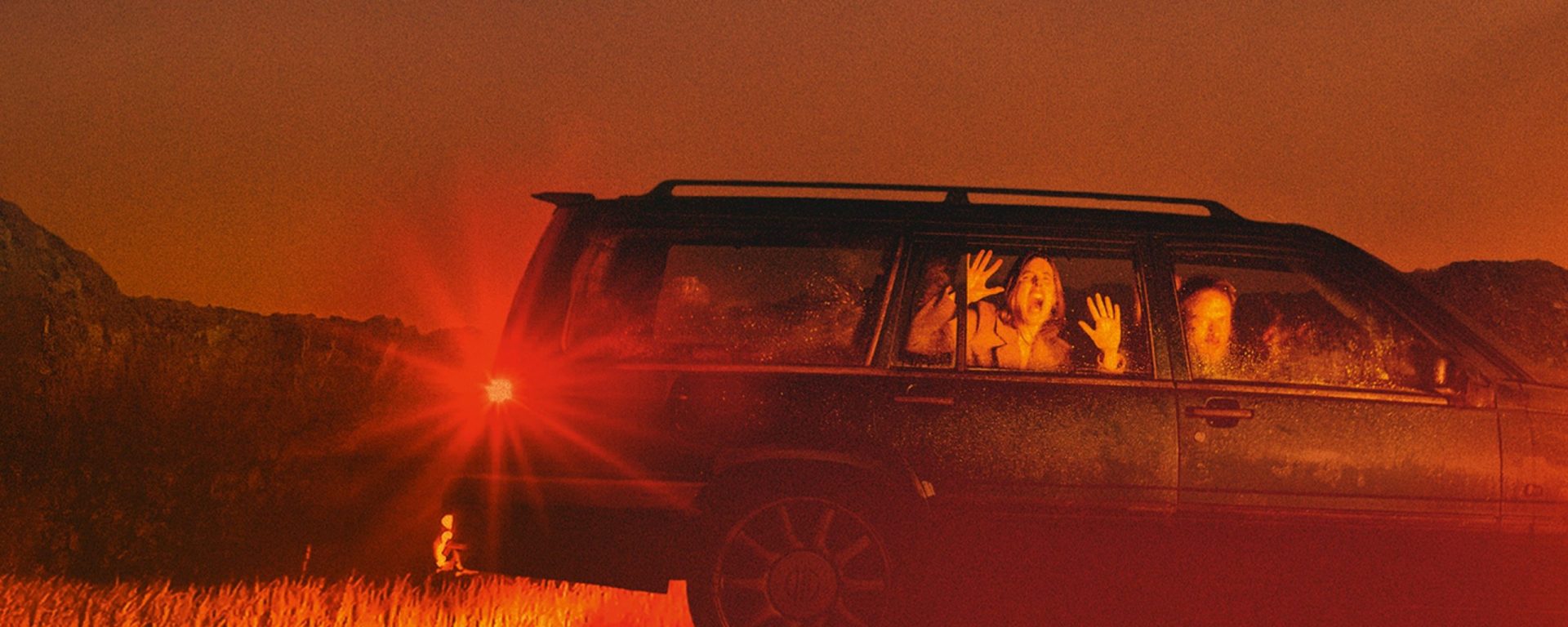
The family attempts to flee with Bjørn not telling Louise of the danger. They don’t get far before they are picked up by Patrick and Karin. Despite knowing what this man is capable of, Bjørn gets in the car with him without putting up much resistance. Later on when Patrick stops the car to relieve himself, Bjørn has another opportunity to steal the car and flee, but against does nothing. And then moments later, the film’s most infamous and gut-wrenching scene occurs. Filmed in shockingly realistic and grounded fashion, Patrick and Karin mutilate Agnes by cutting out her tongue in front of her parents, then hand her off to an accomplice while they drive Bjørn and Louise away to be killed. The film doesn’t flinch in its portrayal of the violence, but more so it’s the sheer terror and despair the scene evokes that makes it so memorable and haunting, and elevates the material beyond simple exploitation and into a very serious and effective piece of filmmaking. Watching Agnes dragged from the car, hemorrhaging blood while desperately reaching out to her parents as she’s carried off into the darkness, is one that stays with you.
Bjørn and Louise are driven to a rock quarry where they are stoned to death, but not before Bjørn asks Patrick why they are doing this, and Patrick responds with the film’s most incriminating statement.
‘Because you let me.’
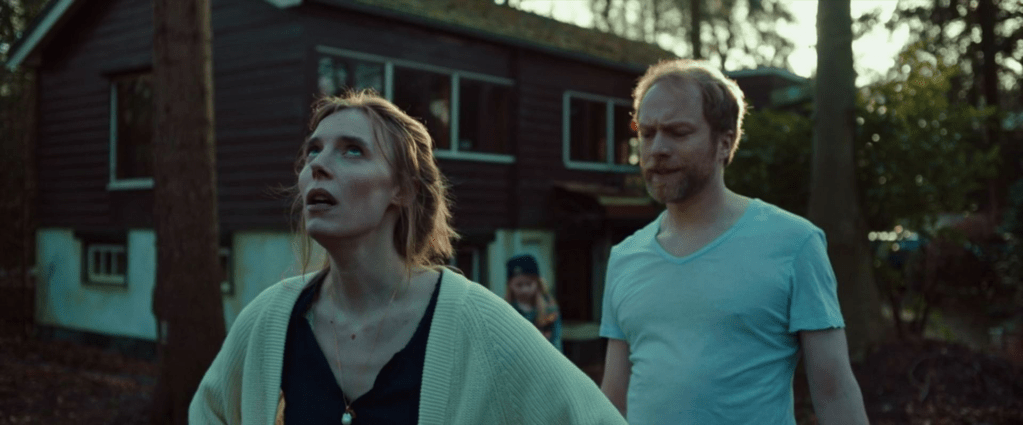
While the movie plays on Danish and Dutch culture, Speak No Evil is ultimately about how Bjørn and Louise fail to protect their daughter from a pair of obvious predators. Despite having multiple opportunities to leave, the pair remain unassertive and passive even when the danger becomes glaringly obvious. Even in the final scene, Patrick and Karin are unarmed. Despite watching their daughter being abducted, Bjørn and Louise do nothing to fight back as they willingly strip off their cloths, walk down into the quarry and are pummeled to death graphically with stones.
The director had stated he wanted the audience to be angry by the end, in particular with our main characters because their naivete and inability to be assertive allows Agnes to be victimized. Numerous times, the couple allow boundaries to be pushed even as their daughter grows increasingly uncomfortable. In one of the most difficult to watch scenes, Anges and Abel attempt to put on a dance for their parents, only for an overly critical Patrick to berate and harass Abel into tears. Even as Agnes grows increasingly unsettled, Bjørn pushes her to continue performing even when she wants to stop. And even when they do stand up, which this scene ends in, it is done in a passive, ineffective way.
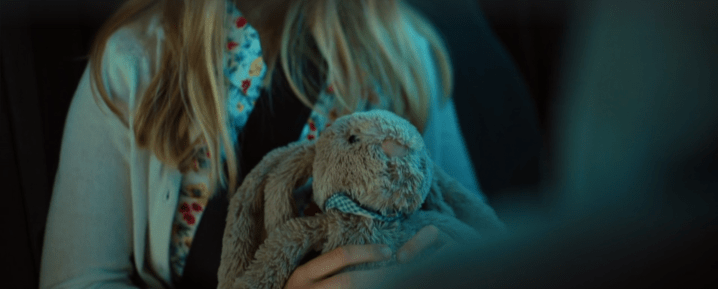
One of the most haunting things about the film is its final image, and how it relates to how Agnes’ parents fail to act until its too late. Earlier on, the family is in the process of leaving when Agnes favorite stuffed animal Ninus seems to have been left behind. Rather than deal with the clearly upset Agnes, Bjørn instead opts to drive back to the house to retrieve the animal. By the film’s ending, Patrick and Karin have grown bored with Agnes and are on the road to run their next scam. The final image is of Agnes in the back seat of Patrick and Karin’s car, reunited with Ninus, but now without her parents or tongue. Its salt in an open would, but necessary to reflect on the family’s actions leading up to this point. Seeing Agnes’ mutilation is also an important element of the story as her parents, as well as the audience, are forced to witness the consequences of their inaction.
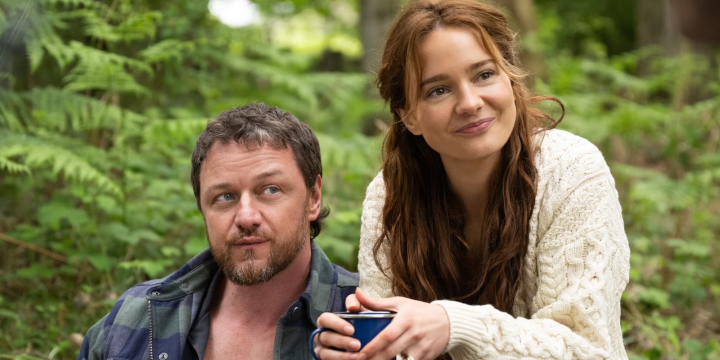
The movie was remade by Blumhouse with James McAvoy as Patrick, and while the first half of the movie follows the original very closely, the second half transforms into a more standard thriller. It tries to go into territory made popular by the original Last House on the Left and The Hills Have Eyes. It attempts to make the same point about lack of assertiveness even when it’s called for, though it ends with the characters standing up and fighting back having learned that lesson before paying the ultimate price. Still, a film should be willing to go into some uncomfortable places, and the original film allowing the worst to come to pass highlights the importance of being assertive in a more blunt, unforgettable way.
Let me make this clear. I’m not one of the people who will claim that a so called ‘happy ending’ is weak and safe. It’s true most American audiences wouldn’t be able to accept such a horrifying take as this, so the changes made in the remake are understandable and allow you to build on the ideas of the original rather than just repeating them. The real problem is that it is too focused on being cathartic and crowd pleasing. A better take would have emphasized being assertive in and of itself is a very uncomfortable thing at times, and made the flatter half just as disturbing and uncomfortable as what they endured.
Speak No Evil is less about the con and more about the victims and how they, through their inaction and naivete, enabled it. It manages to make you feel deep sympathy for the couple, but also a burning rage at their refusal to stand up when they need to, because ultimately Agnes is the one who suffers most. It’s a point that the film wouldn’t have made so impactfully, had it not been willing to go to such a dark place. In many ways, Speak No Evil would be an easier film to handle had it been simple exploitive tripe. That it is so well done, so well paced, so well acted and so chillingly executed, makes it that much more devastating and unforgettable.

