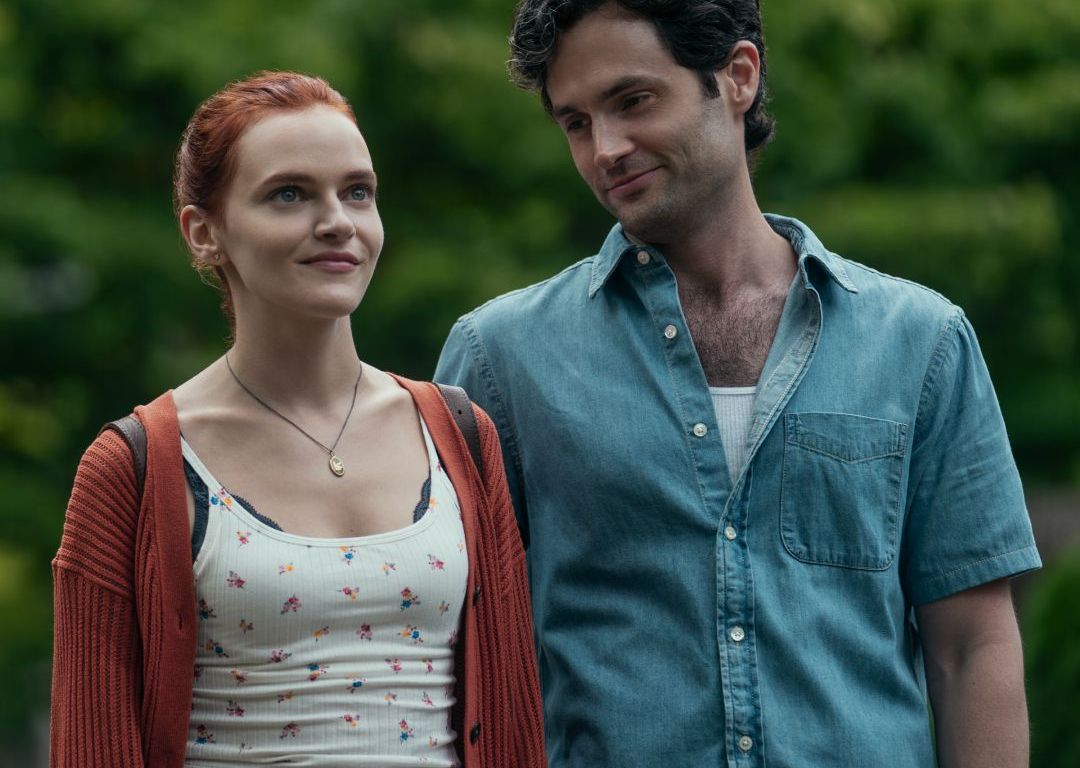
When it comes to television, there are few characters I despise so utterly as Joe Goldberg. The protagonist of Netflix’ You, played superbly by Penn Badgley, is a self obsessed serial killer who views himself as a misunderstood romantic. Not since Walter White have I hated a character so completely as Joe Goldberg, which is why I absolutely love the series finale to You. Because as it turns out, the creators hated Joe Goldberg just as much as I do, and when it came to closing the curtain on the series, that wanted to make it unambiguously clear what Joe really is.
For those who have not seen the series finale, fair warning. Heavy spoilers incoming.
Now to understand why I so enjoyed this finale, we need to take a look at the formula of the series. You follows Joe Goldberg, an obsessive stalker who, after becoming infatuated with someone, inserts himself into their lives to maneuver the target of his ‘affections’ into a romantic relationship. During this Joe will do everything from break into their homes, stalk their social media, gaslight them, and of course, kill potential threats to his staged romances. All of this is told from Joe’s point of view, with his self serving narration laying out his perspective on the events. Joe’s narration sounds smooth, charming, and is chillingly effective at getting us to see things as he does. It’s a classic case of the unreliable narrator, and a lie Joe tells himself. The issue is that as the show went on, some of the audience started to believe the lie.
And perhaps this is one of the reasons the final episode is so effective. Because while some of Joe’s narration is present here, the real narrator, the real star of the final episode is Louise, played by Madeline Brewer. The final season sees Joe having returned to New York under the protection of his wife Kate (Charlotte Ritchie) and her wealthy family. The two of them are raising Joe’s son Henry, from his previous wife and victim, Love Quinn (Victoria Pedretti). Louise, a friend Guinevere Beck (Elizabeth Lail) whom Joe murdered in the first season, believes Joe is responsible and joins a group of online sleuths to expose him. Posing as ‘Bronte’, she catfishes Joe in the hopes of finding evidence, only to fall in love with him for real. The final episode sees ‘Bronte’ and Joe leaving his life behind, with Joe believing he’s finally found his happily ever after. Louise however, having grown wise, has other ideas, and plans to use this final getaway to force her friend’s killer to face the music.
This final episode brings Joe to justice while also deconstructing the idea of him as a romantic lead. To do this, the creators decided to have Joe’s unraveling begin in the bedroom. There were talks about him potentially meeting his end in the cage, but the bedroom, where Joe plays the role of romantic lead, is where he really is at his most dangerous. This is where Joe puts on the mask he has been fooling his victims, and the viewer with since the show began. So it is only right for the final confrontation begin here.
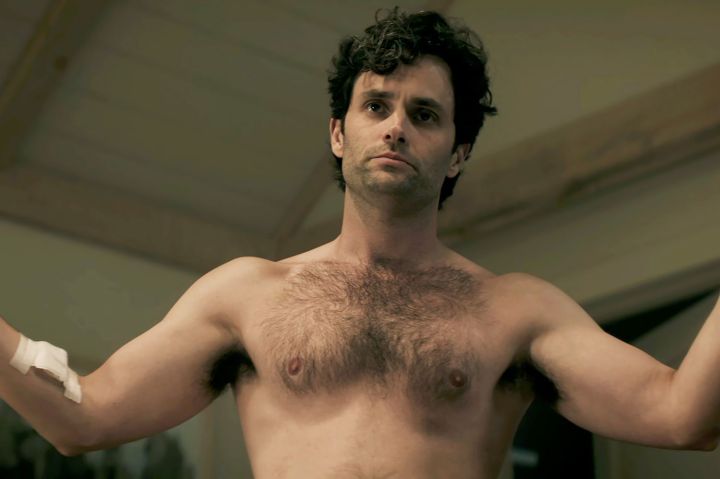
What’s effective about this episode is Louise’ narration serves as a counterpoint to Joe’s. While Joe spins his usual musings of true love and destiny, Louise’ words cut in, pointing out to the audience how performative and false it all is. Joe cooks her a meal, and Louise contemptuously guesses (correctly) that cooking is something Joe learned from a previous victim. Joe takes her on a romantic boat ride, and Louise comments how fake it all is. She can only take so much before she drops the act and finally tries to call Joe out. Badgley fought for Joe to be as naked as possible for the finale, wanting to really hit home that this is Joe with the mask off, so when Louise pulls a gun on Joe and starts their confrontation, our friend Joe is caught in nothing but his boxers. He spends the bulk of the episode dressed this way, and the image of him running around in the rain in his underwear hardly speaks of the leading man personal Joe is trying to cultivate.
It’s here that Joe’s performative nature is truly stripped away. The first thing that Louise does is force Joe to redact what he added to Beck’s book in order to restore her voice. Despite Joe’s professions to the audience and himself that he cared for Beck and is haunted by her killing, he treats this more as an annoying chore than anything else. Joe truly feels justified in his actions, and really believes deep down that he has the heart of a romantic. That illusion is shattered when Joe calls his son Henry. Henry however has learned that Joe not only is a murderer, but that he murdered Henry’s own mother. In one of the show’s most heartbreaking scenes, Henry admonishes Joe, calling him a monster and hanging up on him. Though Joe attempts some of his usual performative grief, Louise calls him out and says he is not the victim. It’s here that the mask fully comes off and Joe becomes violent.
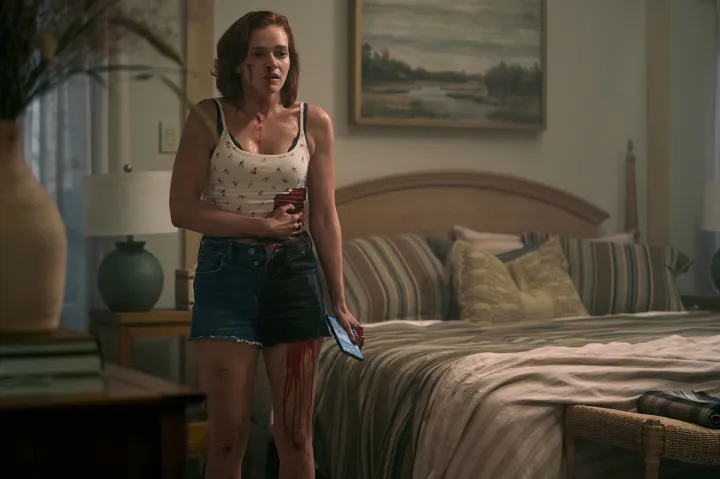
Up until now, Joe is rarely shown getting physically violent with women. Even Beck’s murder occurs offscreen. However, when Joe attacks Louise, we see everything. Joe throttles her, punches her, even shoots her. It’s something that in many ways feels more out of a Scream movie than You, but that’s precisely what the creators wanted. We see Louise, the object of Joe’s supposed affections, bleeding and afraid as she tries to escape him. When Louise calls him out for his violence, Joe tries to blame her, calling her ‘ungrateful’ and saying she didn’t realize ‘how good’ she had it. Louise calls Joe a misogynists, and he charges at her. Earlier, Louise told Joe to show her how he killed Beck. Mask fully off, an obviously gleeful Joe says he will show her, and proceeds to strangle Louise. Despite the claims of his narration, Joe very obviously enjoys the violence. However, this attack does not put an end to Louise, who ends up getting the upper hand and has Joe at gunpoint.
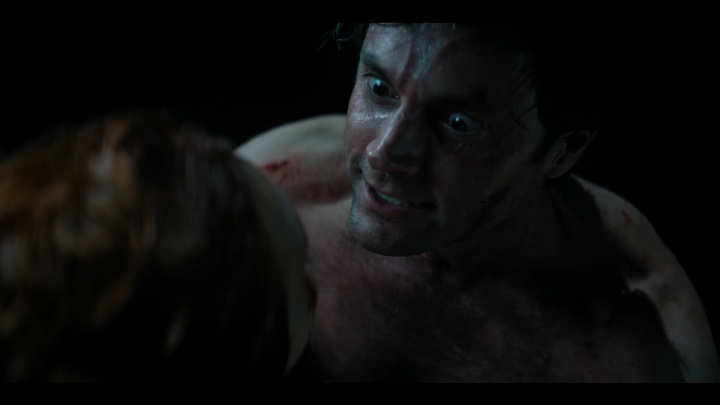
Louise manages to call 9-11 and the police, combing for Joe, start closing in on him. In the middle of all this, Louise has her friend’s killer at gunpoint. Not wanting to face the consequences of his actions, Joe begs Louise to kill him, saying it would be the perfect end to their tragic romance. Louise, having regained her agency and power, refuses, saying that Joe will have to face the consequences for what he’s done, before uttering a statement that serves as one of the show’s defining moments.
The fantasy of a man like you is how we cope with the reality of a man like you.
Joe is living out a fantasy, and has been pulling the audience along with him. He’s not a tortured romantic who desperately wants to be better. he only thinks he is. The far less appealing truth is that he’s just a slimy little psycho who invades peoples lives in order to make them part of his twisted drama. It’s all theater, and Louise no longer wants to play. Joe however insists that the theater continue. Unwilling to suffer repercussions for his actions, Joe attempts to charge at Louise and force her to shoot him, which she does. She doesn’t kill him however. Instead Louise does something that in the wrong hands could have been comedic rather than powerful.
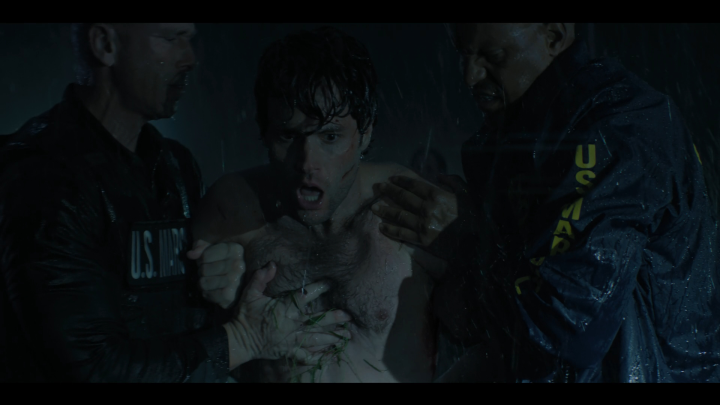
Louise shoots Joe in his genitals.
It’s a moment that surprises Joe as much as it does Louise. Now, crotch violence is a genre staple in horror and thriller films, with such titles as I Spit on Your Grave, Last House on the Left and Sudden Impact all showing heroine figures castrating those who attacked either them or their loved ones. For the show to be willing to go this far with Joe I think isn’t just cathartic, but an important step when it comes to utterly emasculating the little murderer. In an episode focused primarily on deconstructing Joe, this final humiliation is where the show leaves us. Joe on the ground, in his underwear. bleeding from his crotch as he is dragged away by the police, and towards the consequences he’s been trying to avoid the entire show. And the consequences are dire. Joe is convicted of Beck’s murder and many others, and by show’s end is doomed to spend the rest of his life in jail.
The epilogue to the episode comes in two parts,. The first is narrated by Louise, who has recovered from her encounter and fills in the audience just what happened to those who survived Joe. Kate is trying to raise Henry, the latter of whom has fully rejected his father’s influence. Marianne (Tati Gabrielle), whom Joe targeted in seasons 3 and 4 is now out of hiding and pursuing a career as an artist. Nadia (Amy-Leigh Hickmann) who Joe framed for her own boyfriend’s murder, is now free and trying to help others. And Beck? Beck’s unmolested manuscript is now a bestseller. But Beck is still gone. While Louise is happy to have given Beck her voice back, Beck is still dead, whatever future she could have had stolen by Joe. It’s something that Louise can never change, but she tries to live strong, lead a good life, to honor her friend and all the others who didn’t survive Joe.
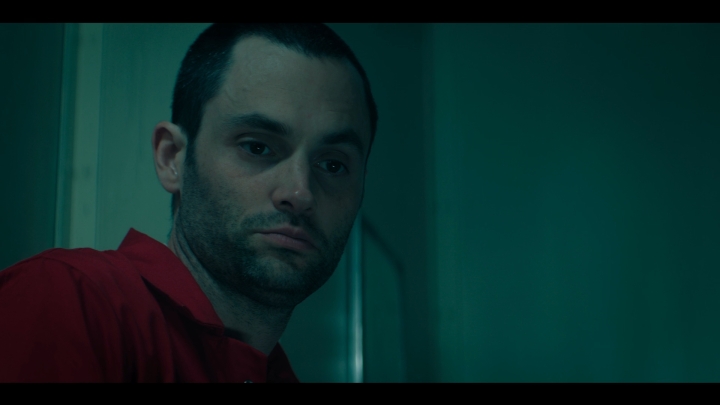
We see Joe in prison, head shaven and having gained weight, now in a deep depression and lamenting how unfair it is that everything was blamed on him. It’s a pathetic image, and it’s meant to be. One of the most upsetting aspects of the show’s popularity were the Joe fan girls, the murder groupies who loved the character and wanted to see him succeed. Joe receives a letter from such a ‘fan’ saying all the twisted things she wants Joe to do to her. Joe crumbles up the letter and throws it away, speaking to the ‘fan’ and by extension every such fan of the show who idolized and romanticized Joe, saying maybe the problem isn’t him but ‘maybe it’s you.’ Its a rare and risky move for a show to call out a section of its own fanbase, but I think it’s an important one. The show’s final line calls out such fans for glorifying the character and not acknowledging his victims, something the creators dedicated the entire finale to refuting.
And that’s perhaps my favorite thing about this finale. In between all the strong character moments, the nail biting tension, and the bittersweet goodbye to Joe’s survivors and a remembrance of his victims, this episode is dedicated to destroying Joe, and calling out fans who sided with him when that was never the show’s goal. The creators could have gone the easy way. They could have given Joe a happy ending. Could have tried to satisfy this fan base. Instead the creators pulled the ever so risky move of having the entire finale say ‘I don’t think you get it.’ For most shows such a gesture could have been pretentious or hostile. For here? I think it really works, and for me redeems and re-contextualizes a show that really could have fallen into the trap of glorifying the monsters among us.


I just finished the shows finale and I have to say, everything you’ve said mirrors exactly how I felt and perceived the ending.
Though I won’t lie, I had a massive giggle to myself given Joe’s absolute denial right to the end. His self-aggrandisement is just incredible, and so… Joe.
Thank you for writing your piece!
LikeLiked by 1 person
Thank you for reading! I’d call the last season one of the series best and the final episode is absolutely in my top five. So cathartic and fitting, and it does its job so well of utterly wrecking Joe.
LikeLike