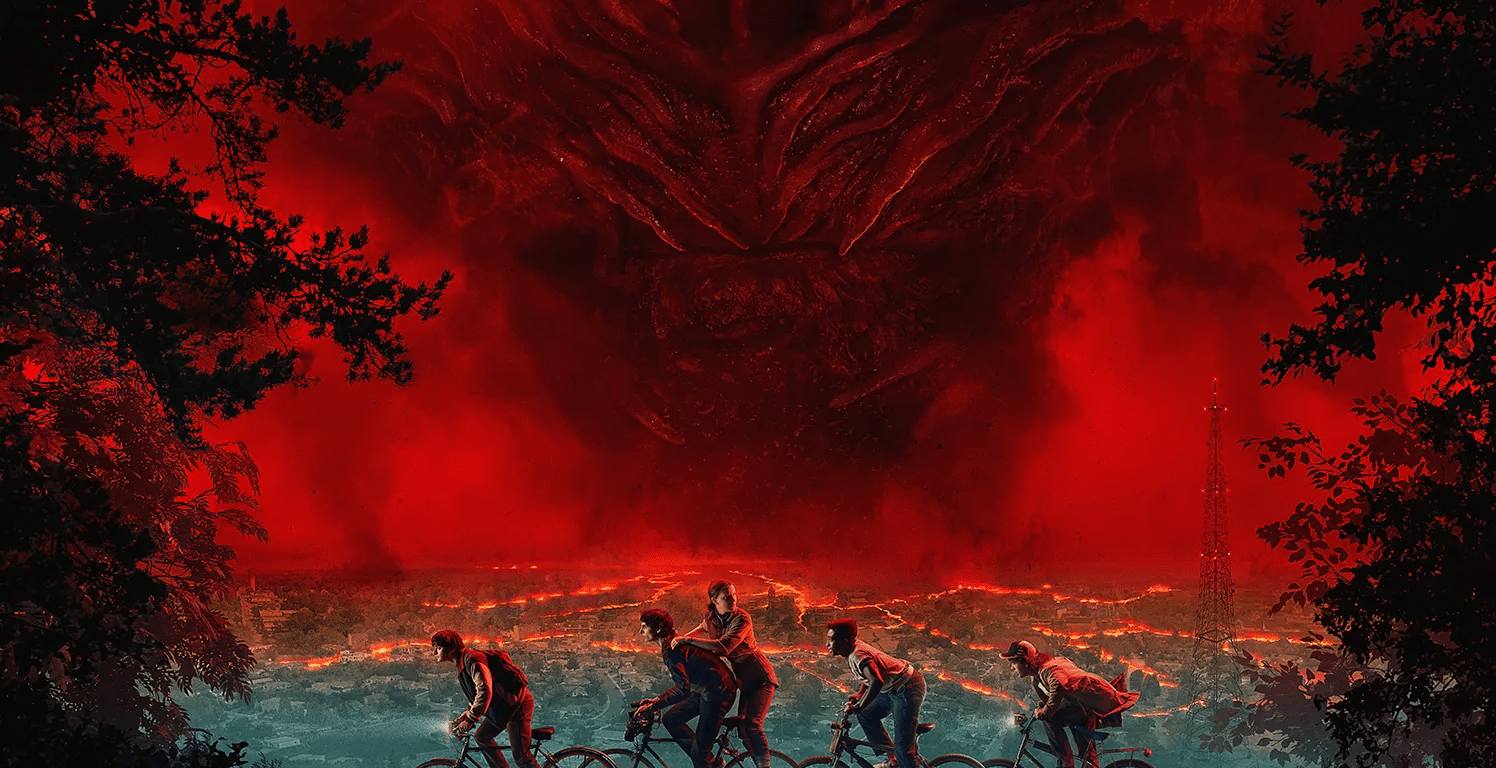
When Stranger Things first premiered, I was living in California, still had a few more years in my 20s, and was working actively to achieve my dreams. A lot had changed in my life since then. I’d moved back to the Midwest, and now my 30s are racing towards the finish line. I’d changed a lot, and so had Stranger Things.
For those who have not seen the show, Stranger Things tells the story of the people of Hawkins, Indiana, who find themselves besieged by various monsters and creatures invading their lives via an interdimensional portal hidden somewhere in the town, which impacts everyone from the kids of the town to its weary adults. What struck me so much about the original was how tight the screenplay was. The first season of Stranger Things really managed to craft a rich atmosphere as well as flesh out its lively cast of characters, which made it a surprise hit for the streaming service when it first came out. It also really managed to capture the mood of the era. Later seasons felt more like a caricature of the decade, and as the writers tried to figure out ways to stretch the series out, there were inevitably some seams starting to show. The fifth season of Stranger Things is the weakest the series has to offer, with the formula of the franchise already well established. It’s also not a total disaster, the first half of the season and the feature-length finale both being much stronger than the episodes in between, and saved a lot of the issues from the preceding episodes. I myself was more than a little reminded of Krull, a flawed but nevertheless imaginative film about a fantasy world invaded by aliens.
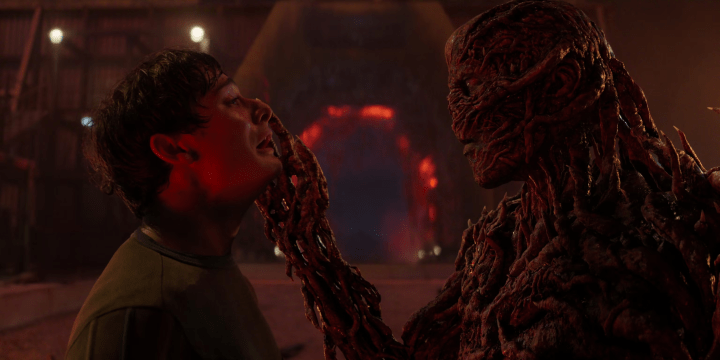
When it came to the show’s monsters, there was a lot of variety, from its Alien-inspired Demogorgon to the more ethereal and strange Mind Flayer, to everyone’s favorite Freddy Krueger impersonator with Henry/Vecna, who took over the role as the series’ flagship villain for its final story arc through seasons four and five. Vecna, I think, was not as strong a villain as the Mind Flayer, whose menacing silence was, for me at least, far more fearsome than Vecna’s various speeches and monologues. Thankfully, the Mind Flayer was given more agency in the final season, revealed as a manipulator for a willing Vecna/Henry. While the show will no doubt have its share of cheese, it is also unmistakably brutal. The third season, widely considered one of the show’s finest, featured the Mind Flayer invading Hawkins using a vessel of exploded human remains. Yuck. And awesome. For the final seasons, the characters dealt mostly with Vecna. The last season features Vecna kidnapping many children from Hawkins to bring about a ritual that will end the world, and the only ones who can stop him are our plucky band of heroes.
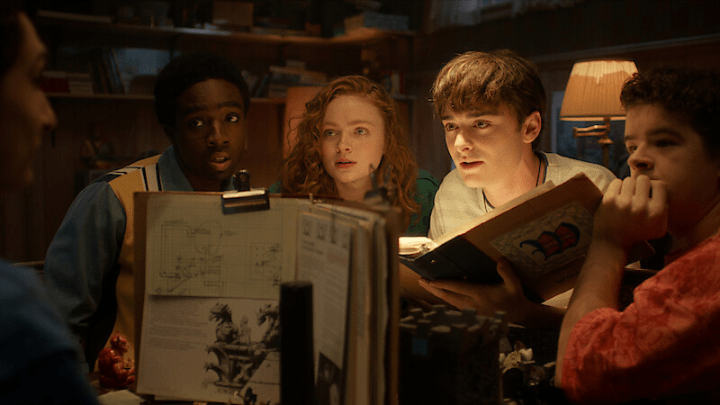
Of course, you still need good characters to make a story work, and that is thankfully one of the areas the series excels in. At the core of the show, the series is about growing up, and watching it again, I was reminded just how long nine years seemed as a kid, and how short it can sometimes seem as an adult. Somehow, the difference between 30 and 40 doesn’t seem as big a difference as between 12 and 21. I started the show in my late 20s, and in my late 30s, my enthusiasm may have waned a little. But for those who started the show at the same age as Mike, Lucas, Dustin and Will in the first season, this show has been a lot about life and discovery. The closest I can compare this to in my own experience is with the Harry Potter series, which was definitely the flagship franchise for that target age group when I was a kid. And the film adaptations, too, showcased a young cast who were growing up while the audience watched.
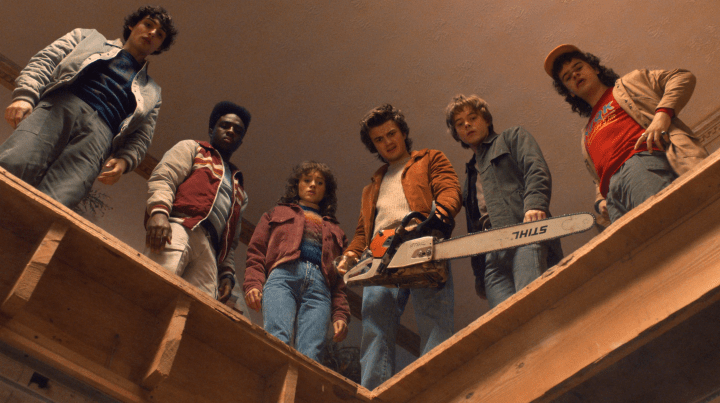
But then again, that wasn’t the only audience. One of the successes of Stranger Things was that the show didn’t just have its young cast, but we also had a cast of teenagers and adults who were just as rich. This only added to the show’s appeal, with characters like Nancy, Robin, Jonathan and Steve appealing to kids who were just a bit beyond the younger cast in terms of years, and characters like Joyce and Hopper appealing to adults who would have come of age in the era that the show was depicting. Even the Potter series focused mainly on the students, with the teachers taking on more supporting roles. Stranger Things gave the adults a much more proactive role in the adventure, elevating them to main characters alongside the rest of the cast. This only made the show stronger, and gave career-best performances for Wynona Ryder and David Harbour, and I suspect age diversity may have been another reason for the show’s rousing success.
I’m not one of those people who will dunk on something simply because it’s popular. Admittedly, the show was not for everyone. It wasn’t even for me some of the time. And when something explodes into the cultural landscape and starts showing up everywhere, it can be a bit grating to see it everywhere you turn. Especially when there are a lot better shows out there. Still, it’s not hard to imagine how things would have been different had this show come out in, say, 1995, when I was a kid. You’d better believe had that been the case, I would have been there to watch every episode of the show’s nine-year run. Kids fighting monsters from other dimensions? Yes, please! Stranger Things, for all its flaws, has also introduced many people not only to various classic films and shows, but also to an entire world of Dungeons & Dragons and video arcades. You can find many stories online of parents bonding with their kids over this. One of my favorite science fiction accounts on Bluesky told the story of how Stranger Things ignited a passion for the original Ghostbusters in their kid. I liken it to the surprise success of theGuardians of the Galaxy soundtrack, which introduced many youngsters to classic musical hits from decades past, and ended up becoming the top-selling album that year. People often underestimate the interest kids will show in retro media. As a ’90s kid who grew up on ’50s monster movies, I can confirm its power.
Still, these things deal with the impact of the show rather than the show itself. At its worst, the Netflix series was formulaic, repetitive and overloaded. It would often struggle to balance a cast that at times was overstuffed, and while most seasons had a lot to admire, the cracks were certainly starting to show as early as the second season. At the end of the day, the final season may not have suffered from doing too little. Like the rest of the show, it often struggles while trying to do too much, with numerous subplots and attempts at humor resulting in run times that at times felt very sluggish. Stranger Things as a whole, in particular the last two seasons, could benefit a lot from some edits to tighten its run time, leaving more room for the show’s stronger elements to really shine. And Stranger Things had a lot of strengths. At its best, the show manages to be deeply resonant with creative and suspenseful set pieces, and its characters manage to surprise its audience as the story develops. The fifth season has both, thankfully, more good than bad heading into its final episode, which was by far the best of the entire season. At its core, the show was about growing up, and we all can do a lot of growing up in the space of nine years. When you are a kid, nine years can feel like an eternity.

