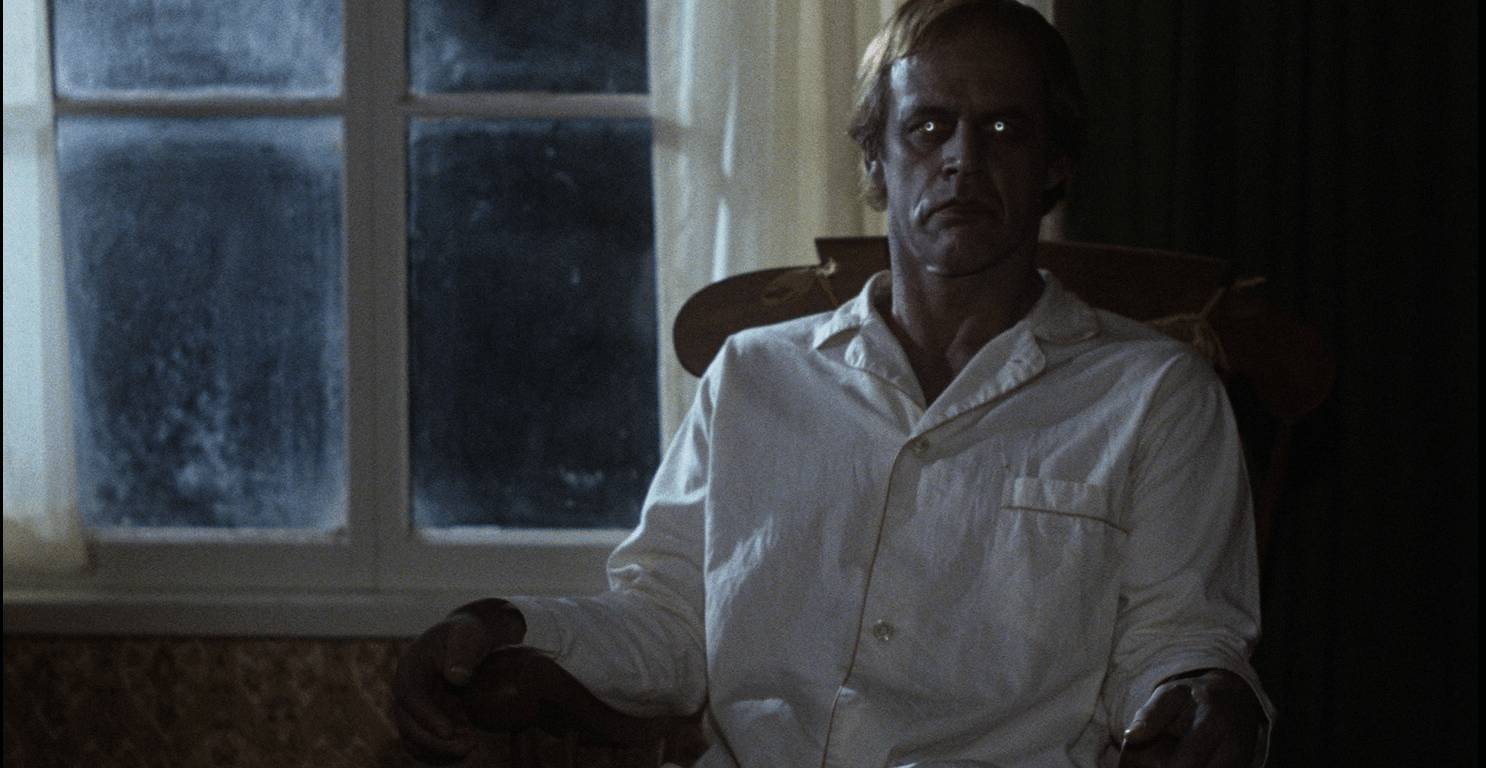
Mike Flannigan’s Midnight Mass, the story of a small island community being overrun by vampires, became a critical darling and streaming hit when it was released. Stories about vampires have been around for centuries, and Flannigan, ever a fan of horror, had many to look at for inspiration. But one story, from the mind of horror great Stephen King, was perhaps the most influential on Mike Flannigan’s classic series. And that was Salem’s Lot.
Salem’s Lot tells the story of Ben Mears, a once resident of the town of Jerusalem’s Lot (abbreviated as ‘Salem’s Lot), who returns in order to write a book about the Marsten house, a supposedly haunted mansion located outside of town. He discovers that the house has been purchased by Richard Straker, a mysterious man opening an antique shop in the town. Soon, people start vanishing and dying in mysterious ways, only to return as strange creatures hovering outside windows, demanding to be let in.
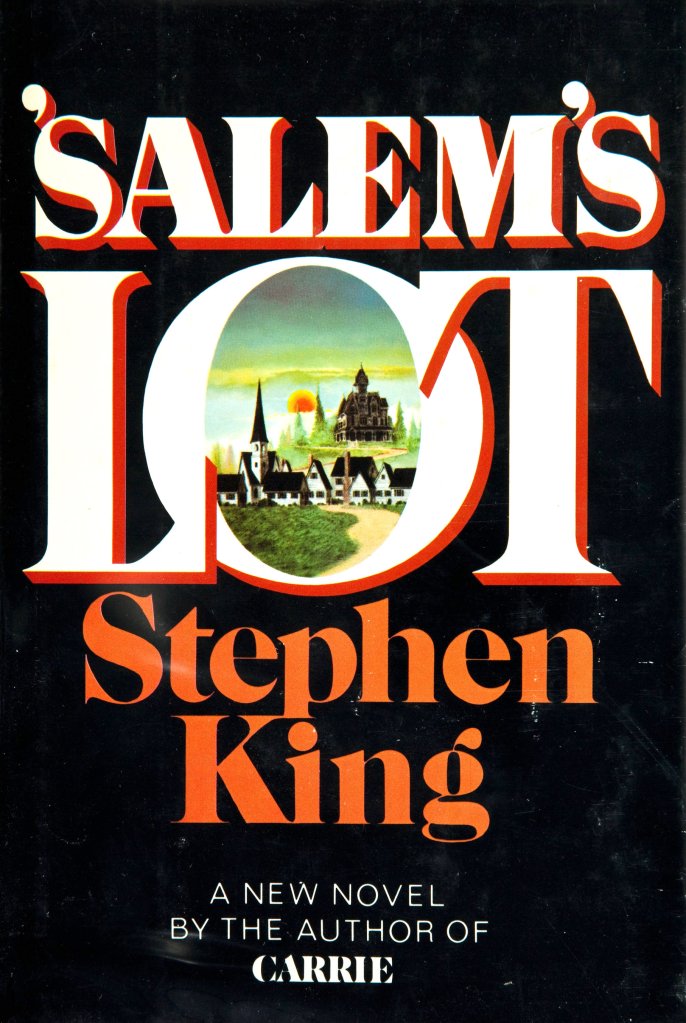
Believe it or not, there was a time when Stephen King was not a household name. Indeed, many of the great novels and films based on said novels may not have happened had it not been for the surprise success of the 1976 film adaptation of his debut novel, Carrie. The film was a massive hit, earning Oscar nominations for both of its lead actors, and earned high praise from King, who said he felt it improved on the book. The success of Carrie made King a hot item in film, but he was still not the cultural force he would later become. When he published Salem’s Lot to similar acclaim, many were eager to make an adaptation.
One thing that makes Salem’s Lot so comparable to Flannigan’s series is just that. Unlike Carrie, Salem’s Lot didn’t get a theatrical release. At least not at first. Writing an adaptation of King’s novel proved challenging. Despite repeated attempts by various writers, the novel couldn’t seem to be condensed down enough so that it could fit inside a standard 90-minute runtime, and studios weren’t eager to produce a several-hour-long vampire thriller for theaters. Because of that, Salem’s Lot would find its home on cable television, executives opting to use multiple episodes to really capture the expansive nature of King’s story. In the 90s and 200s, it was common to see miniseries based on King’s works appear on television. Salem’s Lot was the very first such miniseries, and to this day it remains the standard by which all others are measured.
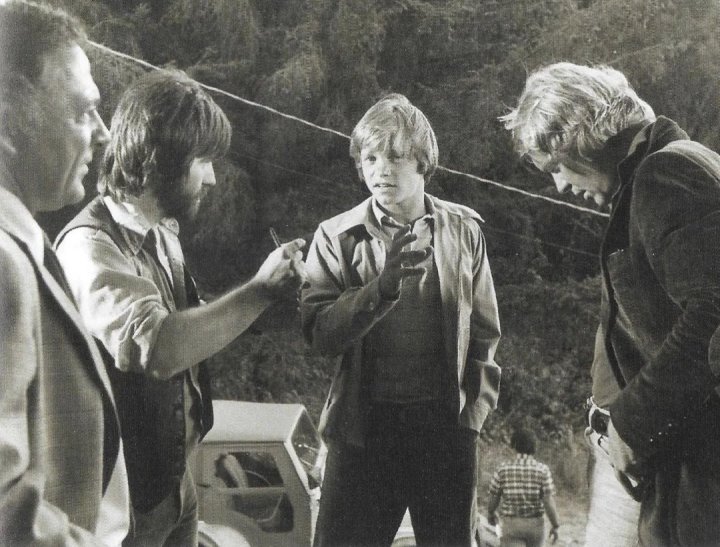
Cable television had a lot of constraints. In the age of streaming, we can see series that pile on graphic content from violence to sexual content and even, gasp, naughty words. That wasn’t the case back in 1979. CBS had some pretty strict rules as to what you could show on television. So how did you tell the story while making sure it stayed scary, but was also fit for airing on CBS? Most fans of the horror genre will tell you that you don’t need graphic violence to scare the audience. Perhaps no film is a better testament to that than The Texas Chain Saw Massacre, a film that remains as nightmarishly visceral now as it was over fifty years ago. All with barely a drop of blood. What better director to bring King’s vision to television than the one who set Leatherface loose on the world?
Hooper’s direction is one of the things that elevates the series above what you would typically see on television at the time. Hooper takes a page from Hitchcock, basing a lot of the aesthetics for the miniseries on the Master’s classics. The Marsten House is modelled heavily after the Bates house from Psycho, the opening credits were inspired by the opening credits for The Birds, and so on. And Hitchcock, like Hooper, was a master of getting an idea across without showing it. The resulting style brings a real cinematic sensibility to the story, giving the story a grounded feel in its earlier scenes and slowly instilling Lot with the surreal and horrifying, all while managing to keep the story appropriate for television. Not much had to be removed. Only one shot of gore and a scene involving a character being threatened with a shotgun had to be trimmed or altered, although even this footage has found its way to many reprints and re-airings.
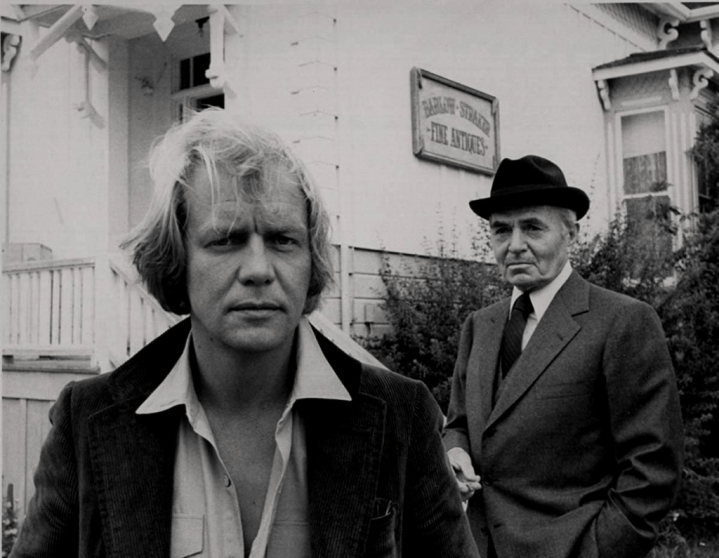
For its cast, Salem’s Lot was hardly short on talent, securing many veterans and newcomers from film and television to bring the extensive cast to life. We had Bonnie Bedelia (Die Hard), Geoffrey Lewis (High Plains Drifter), Lew Ayers (All Quiet on the Western Front), and Kenneth McMillan (David Lynch’s Dune), to name just a few. The headliners of the cast were David Soul of Starsky and Hutch fame as the heroic Ben. Perhaps the biggest draw was James Mason, a veteran of classic films such as North by Northwest and 20,000 Leagues Under the Sea. Mason would bring the pivotal role of Richard Straker to life with fiendish subtlety. While taking talent from film to appear in television was nothing new, it was rare to see actors of such prestige as James Mason appear on the small screen, lending the series even more credibility with viewers.
Salem’s Lot was made at a time when Gothic horror was falling out of favor with the public, and it revitalized the vampire genre in a big way, taking a creature of the night and dropping them in the middle of an unassuming, unsuspecting town. Salem’s Lot was often billed as Dracula meets Peyton Place, which fit it rather well because of how mundane and comfortable the Lot really feels. Hooper brings style to the movie for sure, but never in a way that makes Salem’s Lot feel like anything other than a town we’ve all been to, perhaps even grown up in. Filming took place in the town of Ferndale, California, and it is as much a character as Crockett Island was to Midnight Mass.
Midnight Mass is heavily inspired by the works of Stephen King. The theme of vampires spreading through a small town was popularized by King, and later served as the basis for Midnight Mass. But Salem’s Lot isn’t the only King story that Flannigan drew inspiration from. Storm of the Century, a TV miniseries written by King in 1999, is also one of his better-received television works, perhaps aided by it actually having been written for the screen by King. This tale of an island community under siege by an outside evil also likely served as heavy inspiration for Midnight Mass‘ Crockett Island. Incidentally, Crockett Island is very likely named after Larry Crockett, the questionable real estate man who helps Straker gain his footing in Salem’s Lot.
There was a time when vampires were strictly found in Gothic horror tales dealing with castles and dungeons. To see such things in a modern setting like Crockett Island was not always the genre norm. Salem’s Lot, while not the first vampire movie to dabble in the supernatural invading modern life, its take did help popularize the idea, creating something of a vampire genre renaissance to which Midnight Mass can directly trace its origins. Now it would be reductive to say both Midnight Mass and Salem’s Lot were just about vampires running rampant, each instilling themselves with rich themes and subtext. Both Midnight Mass and Salem’s Lot touch heavily on the theme of mortality. Midnight Mass‘ Pruitt is motivated to spread the curse in order to rejuvenate himself and those he cares about, giving them a second chance at life. Ben returns to Salem’s Lot, as the town was a special place in his childhood, and he seeks to reconnect with his past, only to find decay. But there are other themes as well. Mass deals with themes of radicalization and mob mentality. Salem’s Lot is about the seedy underbelly and slow death of small-town America.
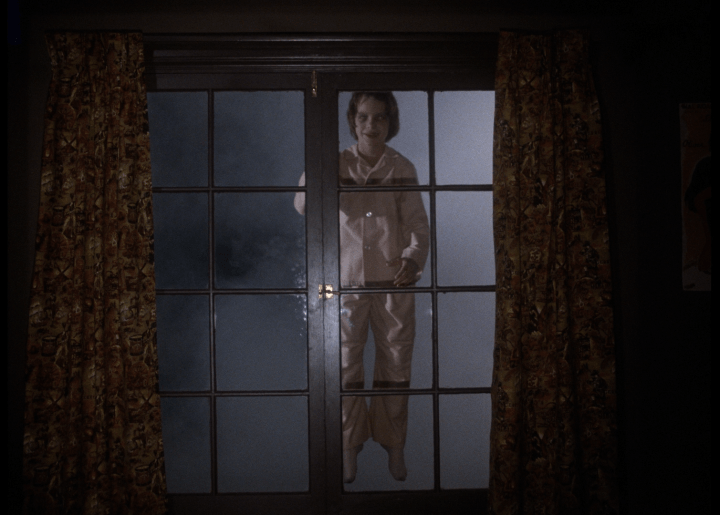
The vampires of Salem’s Lot are not creatures that turn into bats and wolves. King instead treats them like the spread of decay, disease, and denial. When the creatures of the night first begin to appear in the town, they are treated as surreal. Our first glimpse of the undead is spotting one hovering outside a window. The sequence and similar ones were accomplished by placing actors on camera cranes, raising them up to windows and filming the footage in reverse, giving it a strange, uncanny valley feel that makes it even more unsettling. From there, the vampires appear more and more frequently, spreading from person to person in an almost Body Snatchers-style invasion where characters we get to know and care about are replaced with the undead one by one.
While Midnight Mass was able to tell its story in eight episodes, Salem’s Lot was limited to two, airing on CBS over two nights. The first half of the miniseries is good, slow-burning horror, ending just as one of the undead emerged from the grave to feed upon the living. The second part is a fast-paced roller coaster as the infection spreads through Salem’s Lot, bringing wreckage and decay in its wake. After its run, Salem’s Lot would achieve wide acclaim, netting Tobe Hooper another massive hit, further cementing King as a cultural force, and earning several award nominations, including three Emmy nominations for its make-up, music, and title sequence.
These days, the line between film and television is becoming increasingly blurred, and perhaps that is for the better. At the time, cinema and television had styles unique to themselves, and the two were viewed as separate. As a milestone in horror television, Salem’s Lot brought real style to the small screen, proving just as influential as established classics like Dracula. Salem’s Lot achieved something that was unheard of in television at the time. It became an icon of the big screen as well as the small, directly inspiring many vampire classics such as The Lost Boys, and has been parodied and referenced on popular shows such as The Simpsons. And then there is, of course, the connection with Midnight Mass, which drew heavily on both the novel and the original miniseries, along with other classic King works such as Storm of the Century. Salem’s Lot was released theatrically in a condensed cut overseas, a cut which would later be released on home video, introducing many who missed the original two-night event.
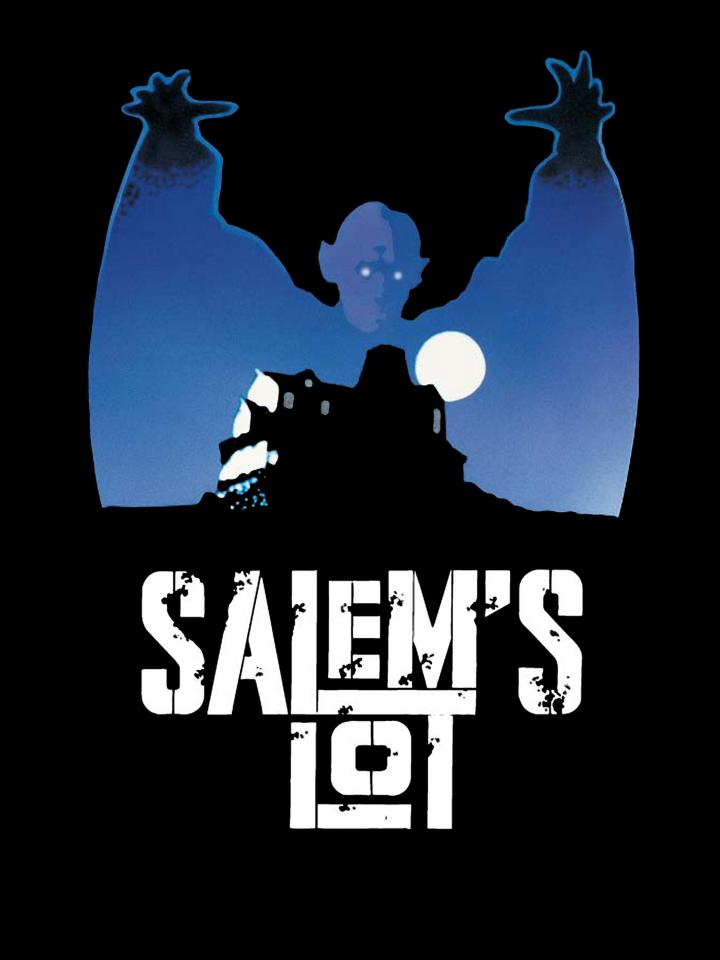
There have been numerous adaptations of the work since then. The Hooper film got a theatrical sequel that many would rather not remember. Another adaptation came out for television in 2004, and a third in 2024. While all have their perks, most agree that the original Hooper production is so far the best adaptation. It takes heavy liberties from the book, but it, like The Shining shortly after, has such a rich atmosphere that it almost doesn’t matter when the story deviates. The classic series stands as a horror masterpiece that shook the walls between the big and small screen, and helped pave the way for similar classics to make their debut on cable and streaming. It works as a study of character, the town itself, and even though it is a television film approved for primetime, it is still subtly scary in a way that, were it released today, would require little revision.
Television at the time was not viewed with the same prestige as cinema, and many viewed the small screen as a limitation. Lot not only proved that horror could still work in the home, but that in some cases it could be even more effective. After all, this was a story about how evil was coming into your own home. What better place to experience such a story than at that very place? When it comes to horror on streaming and television, from directly inspired works like Midnight Mass to other titles and genres, all owe a lot to Salem’s Lot. It has now been almost fifty years since viewers first heard that sound of nails scraping against windows. I only discovered the series in 2015, but since then? I’m also making sure my windows are locked.

