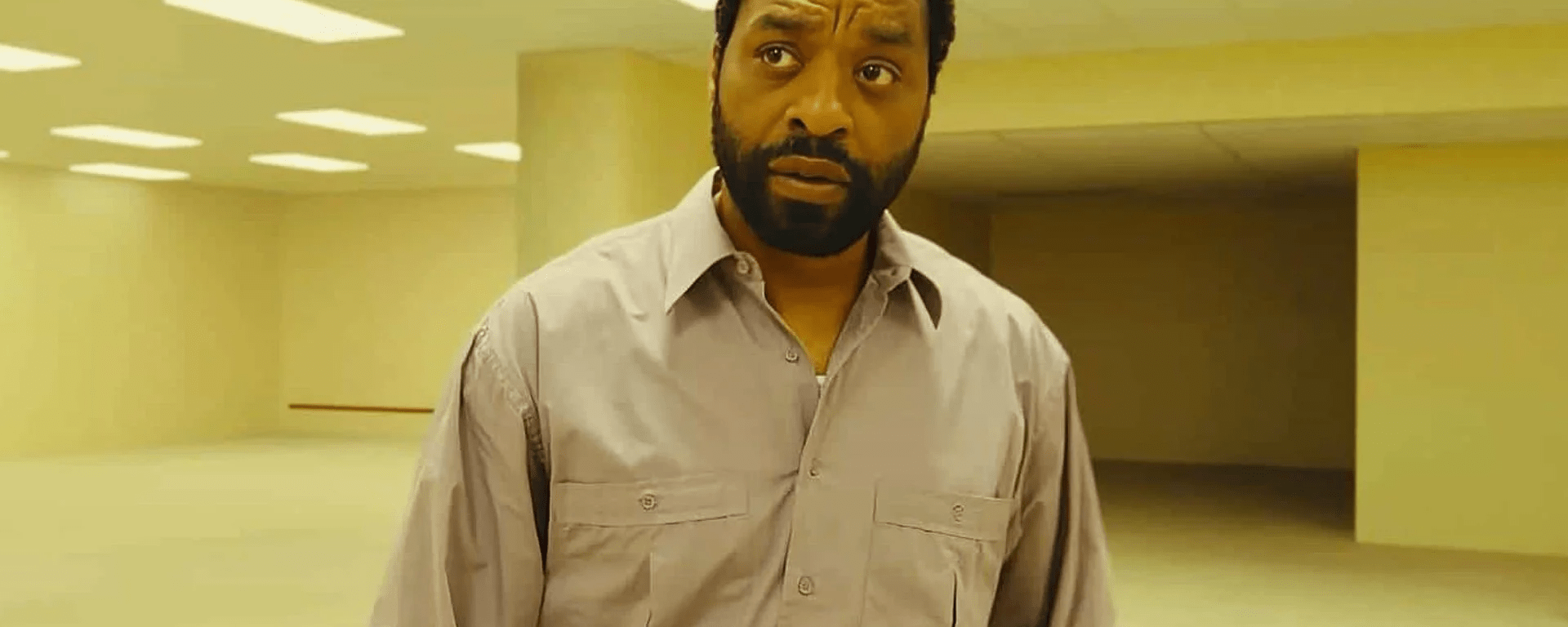
Translating the Backrooms from a surreal horror short into a feature film was always going to be a challenge, because one of the things that matters most in feature cinema, or longer form fiction in general, is a strong character to carry you through the narrative. And you have to ask the question how it relates to the situation the characters are in. Jack Torrance in Kubrick’s adaptation of The Shining is a struggling man who blames his family for his failed ambitions, and the villainous Overlook takes advantage of that resentment and turns him against his family. The two feed into each other. Backrooms is similar in, at least so far as this story goes, the tale is more an analysis of the people and how the Backrooms holds a mirror to them, showing sides to ourselves that we may not want to see.
The article below is very spoiler heavy, so fair warning.
The Backrooms as a concept is filled with possibilities as to how they can apply to various characters lives, and what their journeys and what they discover say about them within this strange space. Take for instance a concept like Invasion of the Body Snatchers. Both stories tell of alien invaders replacing humans with emotionless duplicates. The original from 1956 takes place in a small California town outside of the major cities. The remake from 1978 drops the invasion in the heart of San Francisco. While plot wise the stories are largely identical, even repeating certain story beats, they are about different things. The original film from 1956 is largely about getting older and how the places we grow up, and the people we know, change with time. The remake is about living in a sprawling metropolis, and loss of identity and individuality living in such a space. Same plot., Different stories. So too is the case with Backrooms. The original shorts by Parsons didn’t exactly have multi layered storytelling, but they are not supposed to, more about exploring the space. Here, we’re going to explore the people.
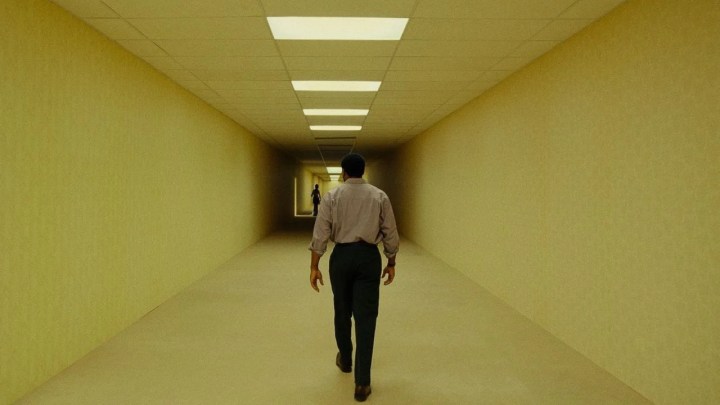
Backrooms follows two characters. Clark, a struggling furniture salesman going through a bitter divorce, and Mary, his therapist who is trying to help him recognize his own toxic tendencies. Clark later discovers the Backrooms, and when he attempts to explore it, uncovers that something is alive in there, and dangerous. There is a monster down here, and as the characters continue to explore the Backrooms, their journey puts them on a collision course with the creature.
The key thing here is something that we don’t actually see, and that’s the fight that Clark had with his wife. Following a drunken return home from a late shift, Clark shatters a glass, and when his wife speaks to him, he lashes out at her while lamenting his hardships trying to achieve his dreams as an architect. This fight is something we never actually see in the movie, only hearing about it secondhand from Clark. The thing is, Clark’s version of events, though he may not be aware of it, are unlikely how things actually happened. We only see hints at what actually happened when Clark, in the midst of roleplaying the incident with Mary, grows increasingly aggressive and belligerent, reflecting a side of himself he’s in denial of. This denial is the entire point of the movie.
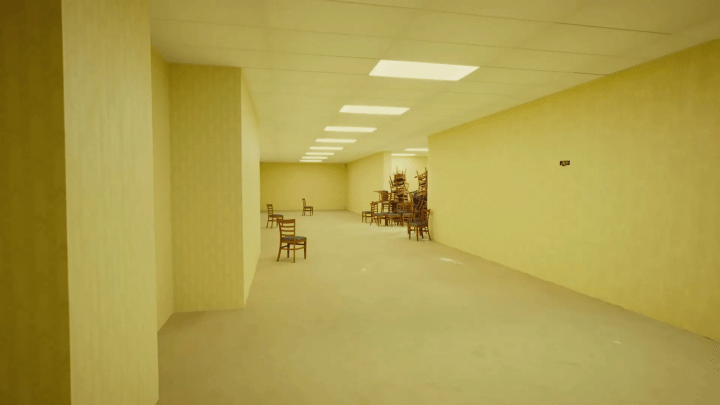
The Backrooms in this iteration is a kind of misremembered reality, a space that tries for whatever reason to emulate the world we live in, only to do so in an imperfect way. The office building space may simply be because such spaces are common among working Americans, and may be completely different depending on the region. But within these halls, there are shapes that look like houses and streets that we may be familiar with. One of the best shots in the film shows a character’s home, before dropping into the flow to see a more distorted version underneath, going deeper and deeper and deeper until we arrive in the backrooms iteration of the room, which only gets some of the details right.
Clark is the same way, misremembering his fight with his wife and casting blame on others for his failures as opposed to himself.
We all know people who when they are called out on bad behaviors, they double down as opposed to really trying to change. Clark’s exploration of the Backrooms is just that, him doubling down. As the story progresses, Clark goes deeper and deeper into this strange space, and seeks validation from his therapist Mary for his discovery. When she dismisses him, Clark lashes out in a petty way, demanding that she apologize to him once he finds proof. There are a number of ways this can be read, but primarily, this moment as many others again goes back to the fight that lead to him and his wife splitting. He wants his version of events to be supported and validated so he can point the finger at his wife instead of himself. When Mary offers resistance, he balks and exposes his true colors. Eventually Clark, after causing the deaths of some of his employees, stays in the Backrooms, leaving a cryptic message for Mary that motivates her to seek him out.
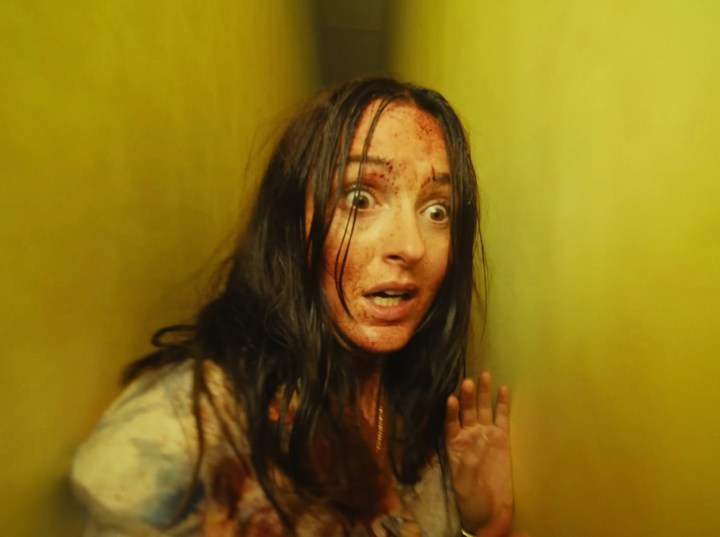
As said in my review of the film, Mary is very much the moral center of the story. Mary, having endured trauma of her own via an abusive mother, is better at recognizing toxic behaviors in others as a result of her experiences, and perhaps sees something of her mother in Clark. In a crucial plot point, Mary sees her childhood home where she was effectively held prisoner by her mentally ill mother being torn down to make way for more repeating apartment buildings. The only thing she saves is a handprint she left in the driveway as a child, which she keeps with her. It’s a physical reminder of her past, and despite her memories being distorted, the totem remains unchanged. This becomes important later on when she faces the monster within the Backrooms.
Parsons’ shorts populated the backrooms with many kinds of odd terrors, and the movie does the same, although these terrors are more uncomfortable in they look like people. Distorted and misshapen people, but people nonetheless. While venturing into the Backrooms, Mary finds a delusional Clark, having recreated his home in this strange world, and found the Backrooms counterpart to his wife. When he tries to get Mary to once again validate his version of events surrounding the argument with his wife, Mary snaps, unleashing her pent up frustration with her client and telling him he was unable to face his own failures and flaws, and that refusal is what killed his marriage. Clark however says he doesn’t want to change, and in this place he doesn’t need to. And that’s when the monster we’ve seen glimpses of finally appears.
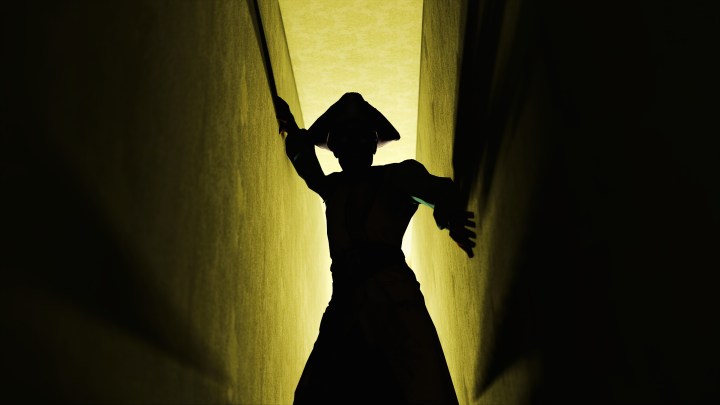
The monster is Clark. A distorted misshapen version of Clark dressed in the pirate getup he used top promote his business. Further hinting at abuse, the Backrooms counterpart to Clark’s wife flees when the creature approaches. Rather than try and flee, Clark surrenders to the creature, speaking to it as if it were himself. Dismissing his flaws, Clark simply says ‘it’s just the way we’re wired.’ When he says that, its effectively a surrender to his darker abusive nature, which is reflected by the creature. And so, having surrendered to it, Clark is thus eaten by his Backrooms counterpart, the real him having broken free. Mary’s story is a story many mental health professionals have to confront. Not really being able to help a patient no matter how much you want to. Unable to help Clark, now she has to do what other mental health professionals have had to deal with. Protect herself from her patient.
The final chase through the Backrooms really breaks out the surreal images. The sets are not as sprawling or big as the shorts, but given they were working with physical sets that is understandable, and the images they do create are very effective. Mary is pursued through the backrooms by the Clark monster, ending up in the backrooms version of the furniture store where Mary and the creature finally face off. In a crucial moment, the monster has Mary cornered, but she is able to get away by using her totem, the handprint left in the concrete, to fend it off. This moment is important because it is a physical reminder of her memories, not the memory itself, and the physical thing she has remains untouched. Her using undeniable reality to fight off the Clark monster again goes into the film’s thesis of what we remember verses what was.
Mary does escape the Clark monster and is greeted by several people who work in and study the Backrooms, leaving her fate unknown. The movie ends with a quick exploration of the backrooms showing recreates of places Mary had been in her life, such as her childhood home, and even the interrogation room she is currently in, the film ending on the distorted Backrooms version of Mary sitting in passive silence. This is a reflection of who Mary was as a child, passively sitting and enduring her mother’s paranoia and abuse. But unlike Clark, Mary is not destroyed by her counterpart. Regardless of what happens to her after, the point is Mary has gotten out of the Backrooms and not fallen into the same delusions as Clark, leaving her counterpart lost and undiscovered. But still there, just like bad experiences always are.
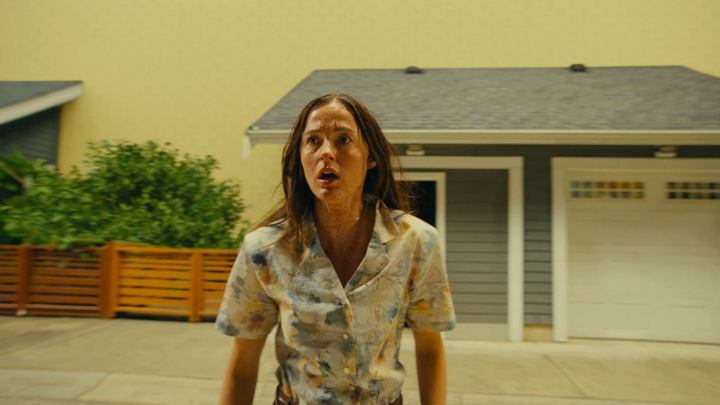
I didn’t know what to expect from this movie, so seeing such a strong character study about an unlikable lead and the doctor trying to help him was a strong framing device. The best horror to me is universal, reflecting anxieties and fears we have to deal with throughout our lives. One of this things is how difficult it is to see our own shortcomings and to change. Having met a number of Clarks in my life, even perhaps having been like Clark in the past, I found this story very effective. It may not have the same feel as Parsons’ shorts, but what is here really does work. To me, Backrooms ranks as one of the stronger character based horror flicks we’ve seen in recent times, and a crowing achievement for a Youtuber making their transition into the big screen.

