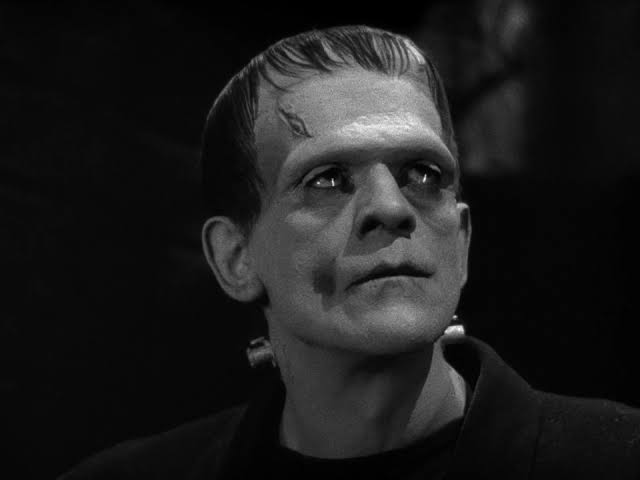
Boris Karloff was once a household name when it came to fans of horror films. I’m not begrudging younger generations for not knowing the heroes of generations before. There’s nothing wrong with that. I was hardly into the films of Buster Keaton in my youth, so who am I to judge? To understand the importance of Boris Karloff, one has to understand just how iconic he was to monster movie fans everywhere, arguably the very face of the genre. Who is Boris Karloff? Well, you all may have run into him without even being aware of it. He served as the narrator for the classic animated short, How the Grinch Stole Christmas, for instance, but another, more iconic role is that of the monster from the 1931 classic, Frankenstein. Yes. Whenever you go to a Halloween store and see a costume for the famous monster with bolts in the neck, a flat head and stitches, that is the likeness of Boris Karloff.
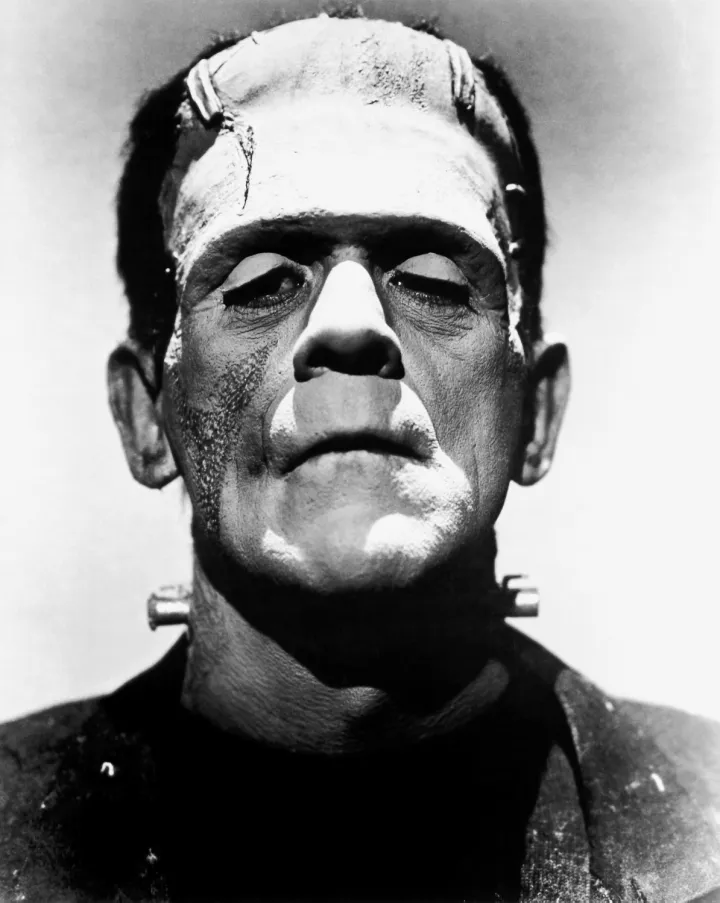
Karloff would go on to portray numerous other monsters, reprising his role in Bride of Frankenstein, and playing the original version of Imhotep in the 1930s version of The Mummy. These days it can be easy to forget that Universal Studios was built by the success of their monster movies like The Wolf Man, Dracula, and yes, the monsters made famous by Boris Karloff. But even when I was a kid growing up in the 90s, films from 60-plus years ago were no longer the talk of the town. We had slasher movies and major monster franchises like Alien and Predator. Frankenstein, The Wolf Man and Dracula were icons, but not ones people spoke about as much.
The fate that befell the classic Universal Monster movies is the same that befell my icons like Michael Myers, Jason Voorhees, Freddy Krueger, Alien, Predator, you name them. Sure, the movies still come out, and are often successful. But with films like Obsession and Backrooms making waves, the horror landscape is changing.
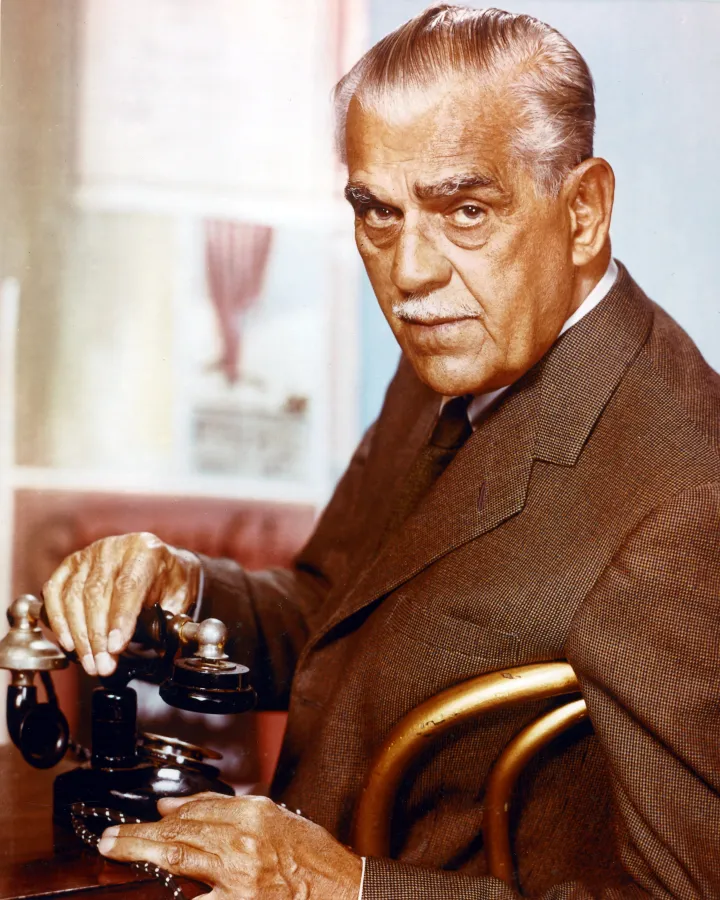
Again, there is no bitterness intended by this. It’s just the truth about horror as a whole. Why do we tell horror stories? Because in some ways we like being scared. We like fear from a place where we can be safe. But another reason is that we live in a harsh, cruel world, and sometimes dealing with that fear with fictional monsters is easier than facing the terrible things we’re capable of doing to each other. My personal favorite film by Boris Karloff is not a film where he’s covered in makeup or playing a heavy in a gothic castle. Instead, he plays an actor living in then modern Los Angeles, late 1960s, and ready to face that harsh reality.
Targets, made in 1968 by up-and-coming director Peter Bogdanovich, who would later make waves with hits like Paper Moon and The Last Picture Show, burst onto the scene with this harsh and gritty horror film that shows Karloff as a man. At the end of his life, Karloff played actor Byron Orlok, essentially himself, in failing health and struggling to find work in a changing landscape. By 1968, such contemporary horror films as Psycho had already shocked the world, and films like Black Christmas and Texas Chain Saw Massacre were not far behind. The era of painted monsters was over, and Orlok knows it.
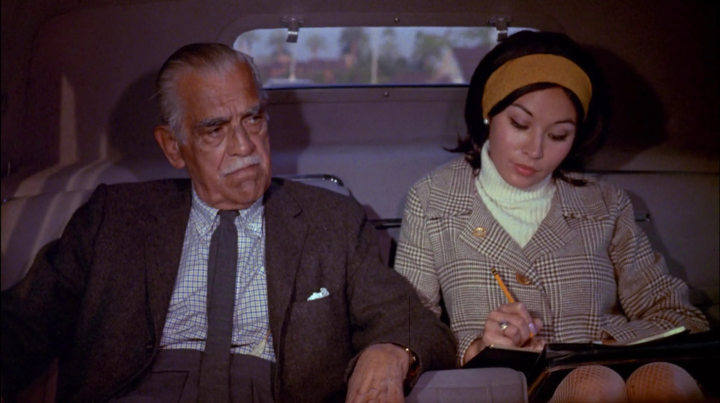
Karloff’s Orlok is bitter, retiring after his dissatisfaction with his latest film, much to the upset of that film’s director Sammy (played by Targets director Bogdanovich). The two of them lament recent events, Orlok saying he no longer considers himself a serious actor, and saying that his horror no longer works. “No one is afraid of a painted monster,” he says. There are some genuinely fun and charming moments here, such as a scene where Karloff and Bogdanovich sit down and watch The Criminal Code, an actual film in which Karloff made an early career-defining role. There’s also some great chemistry between Orlok and Jenny, Orlok’s personal assistant and a young and assertive Asian woman played by Nancy Huesh. Huesh does a phenomenal job in one of the film’s lead roles, calling out Orlok and even putting up with some borderline racist abuse from him, and the film doesn’t vilify her for it. It shows her as in the right. “There are some of us who care what happens to you, though I can’t imagine why,” she says. Ironically, it is Orlok realizing he has treated his colleagues poorly that compels him to make one final public appearance in his career, attending a screening of his final film (a real-life film entitled The Terror which Karloff made with a young Jack Nicholson).
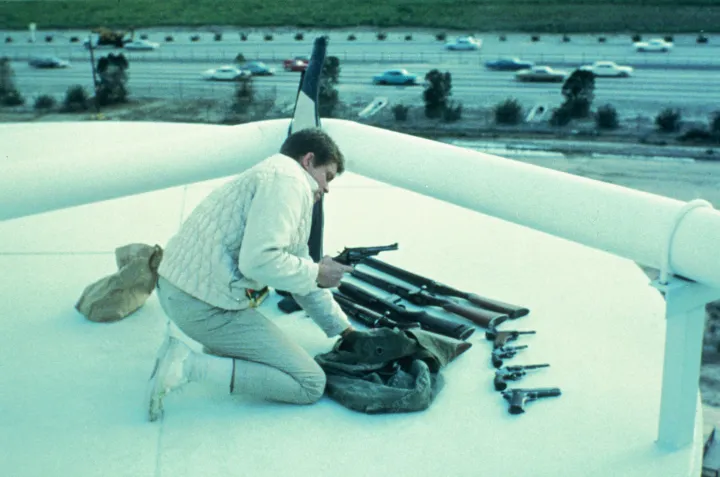
Boris Karloff is not the monster in this film. Quite the contrary, he’s the hero. The monster is a man named Bobby Thompson. Thompson, played by an actor named Tim O’Kelly in one of his only film roles, is unassuming at first glance. He’s a Vietnam vet in his late 20s/early 30s. He’s married, has a stable job, and lives with his wife and parents. So what is Bobby? Is he a knife-wielding psycho like Michael Myers? A maniac who harasses his victims on the phone like in Black Christmas? Truth is, Bobby Thompson to me ranks as one of horror’s most chilling villains, as he tackles a subject that has sadly become all too relevant today. Bobby Thompson is a guy with a gun.
One of the first mass shooting incidents that gained wide media attention was the Texas University Clocktower killings, where Vietnam vet Charles Whitman murdered his wife and mother before embarking on a killing spree at the University of Texas, murdering many students and bystanders with his sniper rifle and a variety of other weapons. At the time, cases like this were rare, but they were growing more common. Today, it’s a subject that many films still shudder to depict.
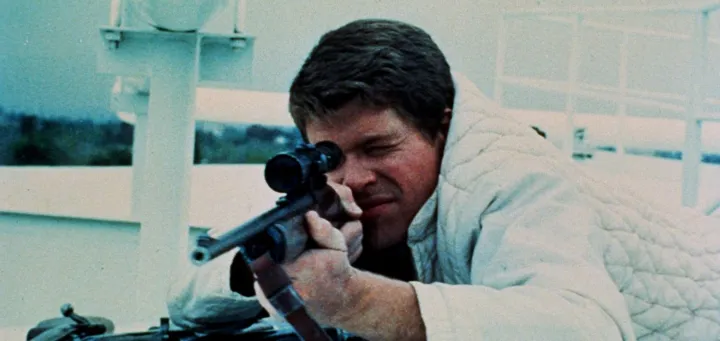
The character of Bobby Thompson is heavily based on Charles Whitman, from his home life to his background, even to some of the things he says. In one of the film’s m most chilling scenes, Bobby, while cheerfully eating a chocolate bar, goes to a gun shop and orders hundreds of rounds of ammunition, moments after committing a triple murder at his home, a scene which ranks alongside the shower scene in Psycho for sheer unexpected brutality. When the man behind the counter asks what he’s doing, Bobby cheerfully replies, “I’m gonna shoot some pigs.”
We have no motive, apart from that Bobby confesses he gets ‘funny ideas.’ He does it simply because he can. And because he wants to. Bobby’s killings with his weapons are not shown with flourish or theatrics. They’re just simple, harsh and blunt. He picks people off as they’re sitting in their cars, just going about their daily lives, and eventually finds his way to a drive-in theatre, the same theater where Karloff’s Orlok is making his final public appearance. The monster of the screen, and the monster of the real world, are about to collide.
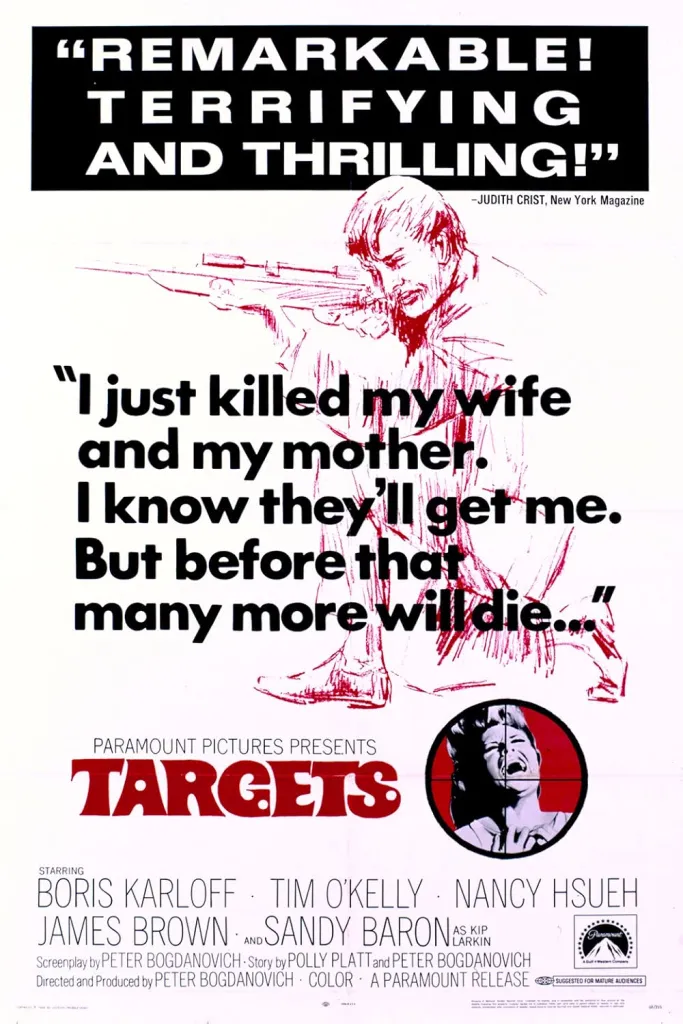
While Targets is still more of a cult film, it is gaining recognition. Over the last few years, it has seen releases on such prestigious labels as The Criterion Collection, introducing audiences everywhere to this unique and yet profound scary movie. To horror fans, especially those who still have love for the classic Universal Monster flicks of the 30s, 40s and 50s, I can’t recommend Targets enough. The final act of the film is a horror great on par with the final acts of such classics as Halloween and Texas Chainsaw Massacre, all beautifully set up by the scenes with Karloff. Targets takes the makeup off the icon and allows us to see Karloff as a vulnerable man, and then pits that man against just about the most real-world horror we can get. No supernatural monster. No seemingly unstoppable killer with a knife. Just a kid with some guns, a story we have seen time and time again. The result is a film that not only serves as a highlight of Karloff’s career, but also as perhaps the perfect coda to the era of Universal Monster movies. Targets is a horror film about why we make horror films. We tell each other scary stories because sometimes, they are less scary than the truth.
“Is that what I was afraid of?” Orlok asks when he finally sees the gunman.
As it turns out, it’s the scariest thing in the world.

