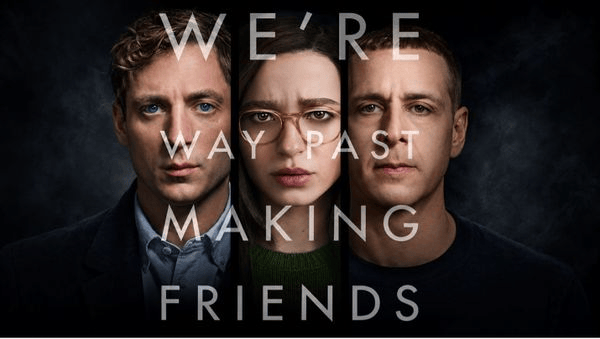
The Social Network is considered by many to be an exemplary piece of cinema. We ranked it quite high on our coverage of the best films of the century thus far, so the pressure was certainly on for its quasi-sequel, The Social Reckoning. Can it live up to the legacy of the first film, and , better question, can it stand on its own? Let’s find out.
The Social Reckoning stars Mikey Madison as Frances Haugen, a data engineer over at Facebook who becomes disenfranchised with her employer over how the company has changed how people use the platform. She’s discovered that Facebook’s new algorithm seems to be feeding on hate and negative content and perhaps even radicalizing users. Unfortunately, no one internally wants to stir the pot on this topic, which leads her to cross paths with The Wall Street Journal’s new tech writer, Jeff Horwitz (Jeremy Allen White). Despite his job title, he knows very little about tech, but has made a name for himself in D.C. as a political investigative journalist, something he hopes to channel into his investigation of Facebook.

The Social Network director David Fincher sits this spiritual sequel out, allowing that film’s writer, Aaron Sorkin, to pull double duty as both director and writer. Sorkin, love him or hate him, is a pretty reputable writer, but his directing efforts haven’t quite hit the same pedigree as his other projects. Reckoning continues that trend. It’s not like he’s a bad director, but compared to someone like Fincher, he just lacks a lot of style and flair, opting for a safer and risk-free directorial approach. Scriptwise, this entry actually feels a bit more restrained for a Sorkin picture. Yes, there is impossible dialogue, as is traditional, but it feels a bit more checked in. I had recently watched The Social Network in anticipation of this film, and that movie’s dialogue feels more quippy and rapid-fire than this one’s.
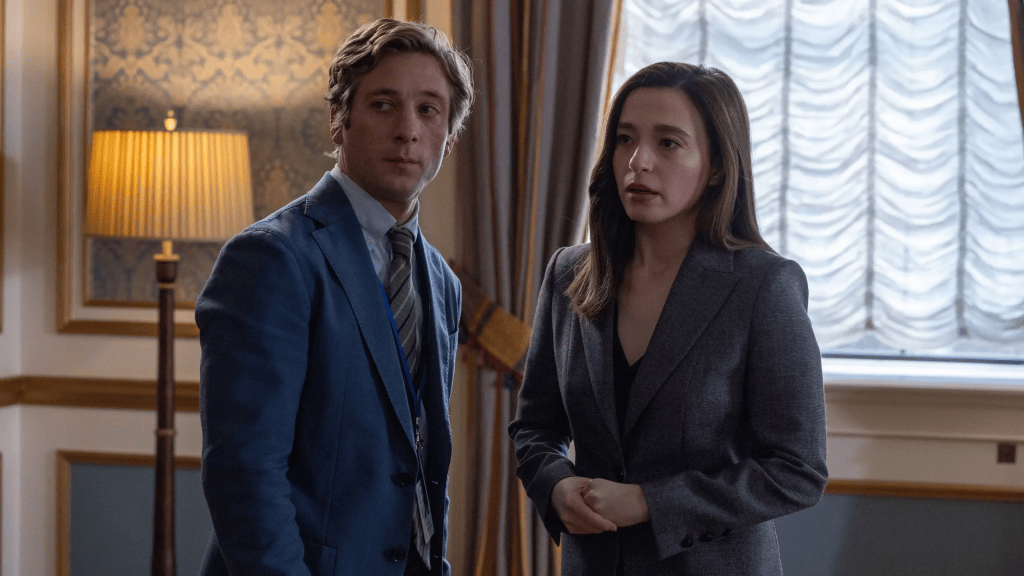
Unlike Network, Reckoning isn’t a start-up story about ambitious geniuses, but a journalism story chronicling The Wall Street Journal’s 17-part series, The Facebook Files. It also taps into the platform’s policies and impact during the January 6 Insurrection and the COVID pandemic, but they do feel more like footnotes. I think a six-part mini-series for the three years covered over the course of the movie may have allowed some of these beats to be explored more in depth. There’s a lot going on in this movie, from exploring the dark secrets of Facebook to the whistleblower and investigative angle.
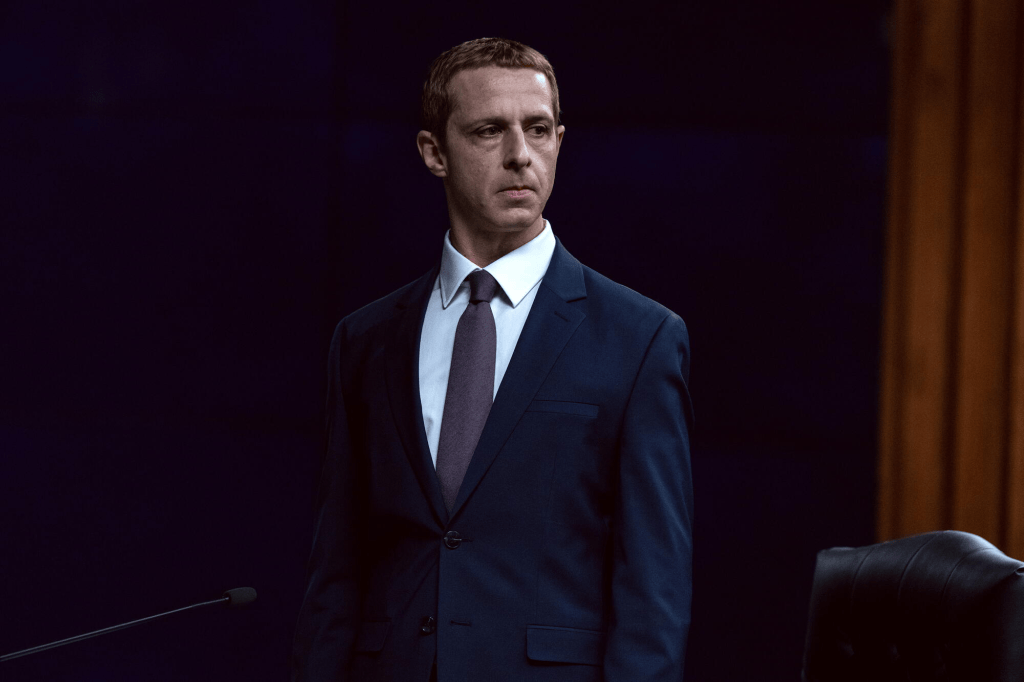
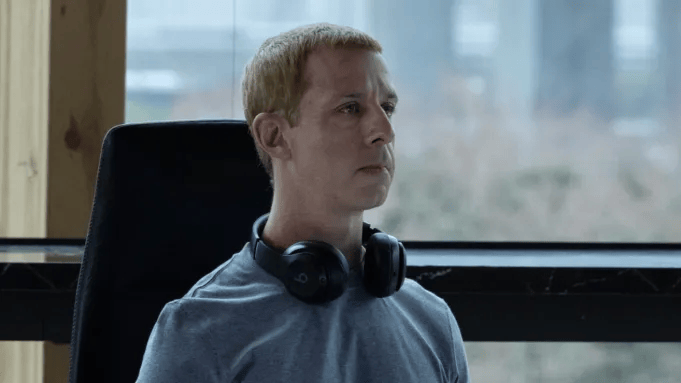
Everyone in the movie does solid work. Allen White is good as Horowitz, perhaps not straying too far from his turn as Carmine in The Bear. Mikey Madison fares better as Frances, an unpopular employee at Facebook who sees value in a platform like Facebook, but questions the direction the company is going. Bill Burr shows up as a fictitious character who sort of serves as the moral compass, challenging the status quo, and Burr actually may be the highlight of the whole film, verbally sparring with Strong’s Zuckberg constantly. Also in the movie, but not as much as you might think, is Jeremy Strong as Mark Zuckerberg, taking over from Jesse Eisenberg. Strong plays the role wonderfully, tapping into that robotic cadence and mannerisms that sometimes make Zuckerberg feel unapproachable at best, or unlikeable at worst. Zuck isn’t really a character here, unlike the first movie, but rather the poster child for the problems at the company. Strong plays the role well, but don’t expect to learn much about the Facebook CEO in this movie. This isn’t about him.
Atticus Ross and Trent Reznor do not return to score this one, so Alexandre Desplat gives us a fresh new sound for this entry, and I, for one, missed the unsettling and understated score from Social Network. Desplat’s work is good, but it feels at odds with the more nihilistic and grim reality Reckoning presents. The score can sometimes veer into hopeful optimism, as if there’s a light at the end of the tunnel, and it feels tonally out of place. Reckoning also shares the same cinematographer as The Social Network, Jeff Cronenweth, but surprisingly, the two movies don’t look or feel anything alike; I was surprised to learn it was the same person responsible for the photography.
The realist in me wonders if “Reckoning” was really the best title for this movie. There isn’t really one in the real world, or in the movie, as Facebook (now Meta) is still around and valued more than it was just a few years ago. The Empire wins, but the movie presents itself as more optimistic, as if its mission will in turn inspire users to question the apps they so passionately cling to. Judging by the box office for the film, this is unlikely to be the case.
The question then becomes: did this movie ultimately justify its existence? In a way. I do think the message of informing people about the findings of the WSJ is commendable, as many people likely skipped it, but the movie may also be too late for anyone to care. Meta may be raking in the dough, but Facebook itself is not the powerhouse it used to be socially anymore. Perhaps this could’ve looked at a different platform, taken a more anthological approach. Also, AI is the new thing, for better or worse, and social media companies are further intergrating into this tech. The question now isn’t whether Facebook is addictive or manipulative, but is AI going to take my job or go rogue.
So to answer my initial question: is The Social Reckoning worth seeing? Overall, I think so. It’s a good movie, with solid performances from its cast, a sharp script, and it feels informative. But it’s also maybe a few years too late and lacks the cinematic flair that its predecessor had, which keeps it from being a great movie. So if you’re into investigations, or don’t know about the Facebook Files, I would say this is a good companion to Network, but it isn’t the cultural touchstone that movie was. Is it unfair to compare the two? Maybe a little, but they are spiritual sequels and share the same writer, so comparison is inevitable.

