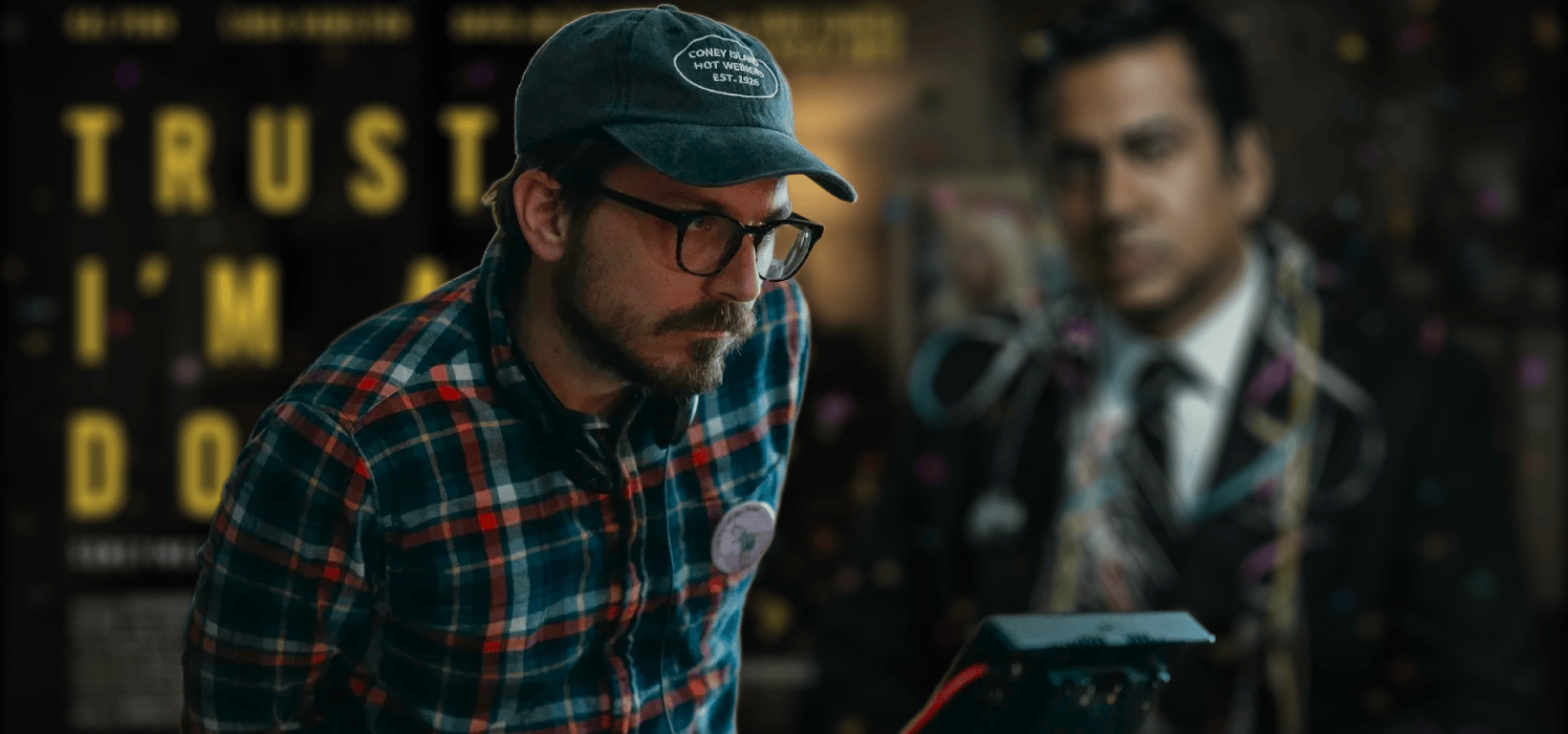
Kal Penn’s latest film, Trust Me, I’m a Doctor, is a wild ride from start to finish. Part biopic, part true crime, and mostly laugh-out-loud comedy follows the real-life journey of Dr. Sandeep Kapoor, a simple doctor with a small practice in the San Fernando Valley, whose life is turned upside down when he is implicated in the death of reality star Anna Nicole Smith. I sat down with Thane Economou, the writer/director of Trust Me, I’m a Doctor, to talk about his motivations and experiences making the film.
How did this start? How did Trust Me, I’m a Doctor come to be?
Thane Economou: My producer, Ryan Hawkins, had the rights to the book, the memoir that it’s based on, and he handed it over to me. We worked together in the past, and he said, “Can you make heads or tails of this? Do you have a take on this?” I got the book, and to be completely honest, I looked at the cover: Trust Me, I’m a Doctor: My Life Before and After Anna Nicole Smith. I said, “I don’t know if this is going to be for me. I don’t know what this is. It’s going to be salacious.”
Then I start reading it, and about 30 pages in, Anna Nicole Smith passes away. It’s utterly heartbreaking, but I’m looking at the rest of the book and wondering, what else is here? What’s this gonna be? And what it ended up being was a truth-is-crazier-than-fiction trial that Dr. Kapoor gets sucked into. I end up discovering this character of Dr. Kapoor, this extremely flawed, extremely human character who keeps on making mistakes and tripping over his own feet into holes he keeps digging for himself, and I found it to be a fascinating character, an interesting story, and a really interesting world to explore, which was like this 2007 height of tabloid culture media circus trial that includes everything from the highest offices in the California government, all the way down to Harvey Lemon of TMZ. I just wanted to jump in, so I raised my hand and said, “I want this”, and started writing almost immediately.
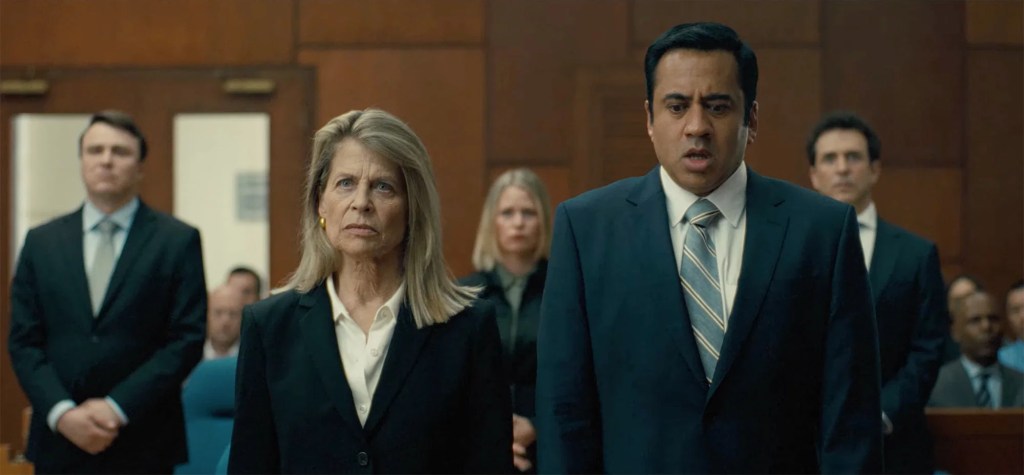
At what point did you decide that it was gonna be a comedy? Because this could have been a very serious true crime film.
Thane Economou: For me, it was about replicating the experience I had reading the memoir. Some things that occurred in real life were so wild that I was chuckling to myself. I find Kapoor, through his own self-deprecating self-awareness, to be quite a funny character. And yet there are these elements within the story that are heartbreaking and full of despair. I felt that showing the full breadth of those emotions in the story was important. That was something, from moment one, I said, “If I’m going to tell this, I’m going to tell this the way that I would tell this story at a cocktail party.”
I want to make sure that people understand the stakes of it and how truly dark some of the moments got. But at the other end of the spectrum, this is a funny story. Even if we’re just talking about Anna Nicole Smith, she was fun, she was funny, she was full of light, she was full of brightness. I wanted, especially in those early parts of the film, to display what it would have felt like to be in her orbit, which would have been quite the fun thing. So, to me, it was about capturing all the emotions I felt when I was reading it for the first time.
I was thinking about the way the film humanizes Anna Nicole Smith. She had this persona of the party girl, the blonde bombshell, the dumb blonde that she really leaned into. But the way she wound up being treated was very unfair. I think it was well handled in the film.
Thane Economou: Well, thank you. It’s a responsibility whenever you write anything that’s based on a true person. And with Anna Nicole Smith, specifically with Anna, I read every single memoir or biography that I could about her or that she was included in. I watched her entire filmography. I watched all of The Anna Nicole Show. I watched basically any interview I could, and what I discovered was someone who was extremely complex. As I say in the film, she is a hard person to pin down and to know fully, and part of that is because she’s just so human. She was a three-dimensional person, and I wanted to display her that way.
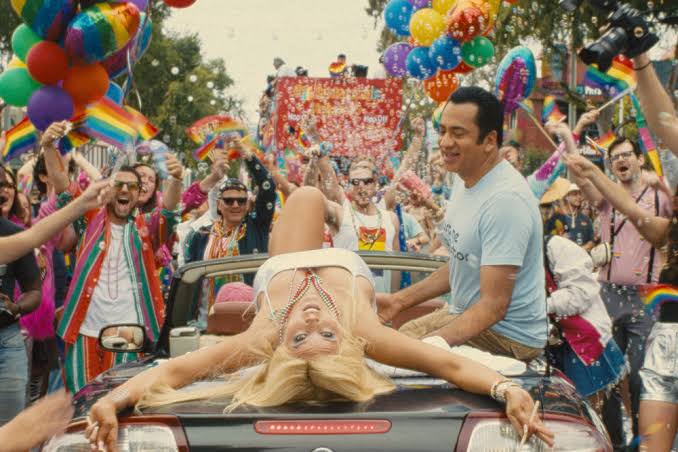
One of the things I say about Anna Nicole is that she had the same ups and downs as all of us; she just lived a life of more extremes. This was someone who was just full of life. In her happy moments, she was so full of love and so loving to all the people around her; that’s what you would always hear from people who met her. And yet her moments of heartbreak are more devastating than any that I’ve ever encountered, in my research or in my life.
The other side of that equation was the moment that Abbie Cornish came on board to play her. Abbie said from moment one that she felt that she knew this character from the inside. She knew people who had lived lives like Anna, who had suffered like Anna, people who had died of prescription drug overdoses. She knew that she wanted to honor that, and in a lot of ways, Abbie became my Anna defender, my Anna whisperer, the person who was at every turn pulling us back to the truth and saying, “Okay, but what would Anna have really done here? What did Anna really do here? What did she really say here?”
I opened the film with an interview with Abbie as Anna Nicole Smith. In the original script, I’d written a fictional interview. A fictional thing that I felt encapsulated her. Abbie was the one who said, “No. We have one of the most photographed, one of the most videoed people of all time.” So she went through, and she found one from 1994. She said, “What I’d like to do is record this interview word for word. Then you, Thane, can use this as B-roll and cut it up however you want. And that’s what we ended up doing. So at every turn, Abbie just said, “Let’s go to the truth. Let’s go to what was real.” And I really think that helped draw that three-dimensional picture of Anna.
I wanted to ask you about Abbie Cornish, because Kal Penn is awesome, but Abbie Cornish melts into this character. What’s it like working with somebody like that?
Thane Economou: It was very cool, and at times a little eerie. How Abbie came to be Anna was through research and voice training, but she would also spend about 3-plus hours in hair and makeup and costume before she would ever arrive on set. Oftentimes, we’d have to prep our Anna scenes, totally, have it all lit with stand-ins, everything. We were ready to rock and roll. Then we’d go shoot something with Kal.
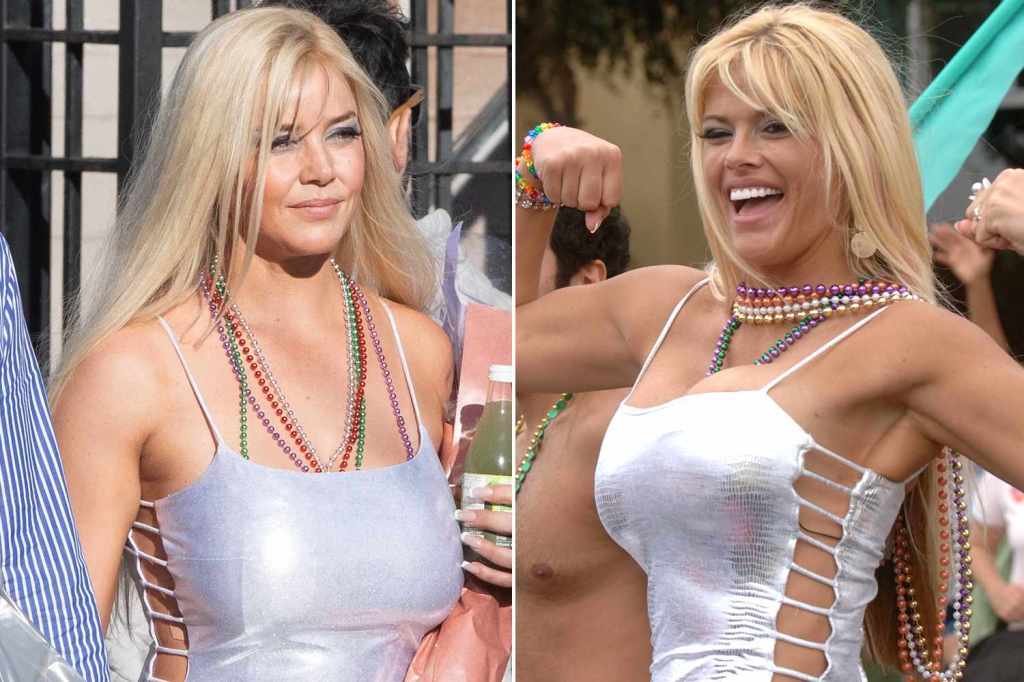
The moment that we heard “Abbie’s on her way, Abbie’s out of hair and makeup”, we would run over and get ready, because she would have to perform her scenes and then immediately go back in hair and makeup for another setup, and then another setup. So our time with Abbie on set ended up being limited, but highly powerful. When she walked on set, she was in character, and she was in hair and makeup, and in order to kind of keep that voice, she was in the voice at all times. It felt a lot of times like we were being joined by Anna, and it’s kind of nerdy, but I caught myself on occasion calling her Anna. It felt right. That process, I think, really elevated her performance. She was able to, for however long she was on set, remain completely in character.
A film can really live or die on its secondary characters, and I thought Trust Me, I’m a Doctor was very well cast. The dad and the woman who Dr. Kapoor was treating throughout the whole film. She provided a wonderful through-line and was beautifully written. What was it like looking for the right people for those roles?
Thane Economou: It was a long process. You’re right, they’re smaller roles, but with a cast like this, an ensemble, it’s so important, especially with those more emotional roles. Characters that have those emotional throughlines. You have to get it right.
Dhrindra plays Sandeep’s father. That is an actor with an incredible resume of stage, film, and television that I had never seen really be able to do this much on screen before. So, working with him, I was blown away by his level of research. He held several conversations with the real Mr. Kapoor, and felt that that level of authenticity was important. He would have conversations with Kal about their dynamics as father and son, and I just remember, especially in that final scene between the two of them, remarking that it was beautiful work. I was just honored to have been in the room for that.
The actress who plays Margie, his elderly patient, is another character actor we discovered who was so completely there. It’s to her credit, Jocelyn Zuko, who plays her, that it becomes such an emotional through-line, and very important to giving the film that heart. She really helps connect you with Dr. Kapoor to see what he’s like with one of his patients. That was really great.
From there, it was a murderer’s row of smaller roles that were filled with actors that truly came in ready to knock it out of the park. Another one being Elon Gold, who plays Harvey Levin, just completely immersed himself and said, “I’m gonna give you the ultimate Harvey Levin”, to the point where, after the screening, someone walked up to me and asked, “Was that the real Harvey Levin?” I said, ” No, that’s an actor.
David Julian Hirsch’s Howard K. Stern was another one. I couldn’t believe what he was delivering in his scenes. That came from him finding the footage, immersing himself in it, and just really feeling Howard K. Stern from the inside out.
That scene between Dr. Kapoor and his father was really emotional and really beautiful. To be able to put that together and give them what they need to bring that to life, how much of that is from the director?
Thane Economou: Oh, I’ll push it off myself and say that that scene, that emotional final scene between father and son, was truly collaborative. It was the hardest scene I had to write. It’s a credit to Kal working with me on the scene and constantly helping me tweak it, and of course the performances that elevated it. But also, Kal went back to Dr. Kapoor and had conversations with him about how this scene played out in real life, in ways that were included in the final script. So it really starts with the page, but at a certain point, everyone gets their fingers in it, and it just becomes better and stronger.
Is there something that feels relevant about this film? In today’s world, we have influencers, and social media can propel somebody to insane levels of fame almost instantly. Do you think Trust Me, I’m a Doctor has any messages or lessons?
Thane Economou: I feel like I wanted to speak to this moment in time, 2005 to 2007. That felt like the proto-everything we’re living in now in terms of social media and celebrity culture. It felt like at the time that there was one Anna Nicole Smith and one Harvey Levin, and now it feels like there’s 10 million wannabe Anna Nicole Smiths and 10 million wannabe Harvey Levins.
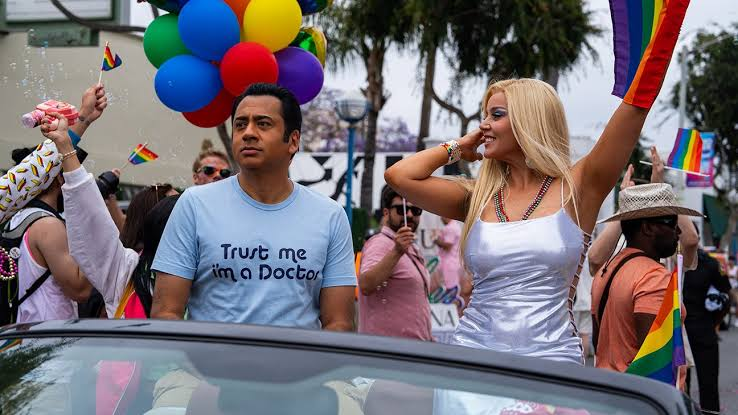
We could see the way that this celebrity culture was permeating into everything, including government and the justice system. One of the things that I talk about in this case is how the person that was leading the charge on Dr. Kapoor’s court case was Attorney General Jerry Brown, who was running for governor, and boy, wouldn’t this be a good piece of television to have Anna Nicole Smith’s doctors on trial.
The ways in which Harvey Levin is gaining power and gaining access and all of those things felt like they were bubbling up to the surface. The Anna Nicole Show was effectively, for all intents and purposes, the first major celebrity reality show. Now we’ve not only moved beyond everyone having a reality show to everyone’s Instagram account effectively being their reality show. So, I really just wanted to take that moment in time and look at how our current culture was kind of being seeded in some ways.
Before we sign off, I just have a quick question. Other than Trust Me, I’m a Doctor, what is your favorite Kal Penn movie?
Thane Economou: The Namesake. That was the one where I came in and knew Kal was right for the role. Because I knew he could obviously do comedy, and I knew he was this comforting screen presence that was important for people to identify with. But as far as the dramatic work went, I knew from the namesake that he is a tremendously talented actor with incredible depth. Knowing what he was capable of in The Namesake, I said, “I need him for this role”.
Trust Me, I’m a Doctor is based on Dr. Kapoor’s own memoir and will be in theaters October 16th.

