Spoilers for season two of House of the Dragon.
I recently reviewed House of the Dragon’s second season and finale and you may have noticed that any sort of mention or criticism towards Alicent was absent from the review. I debated including it, but thought this topic was too complex for a few sentences in a review. So, I’ve elected to give it its own article, as House of the Dragon has really dropped the ball when it comes to Alicent Hightower this season, so much so that it will have likely damaged the upcoming seasons.
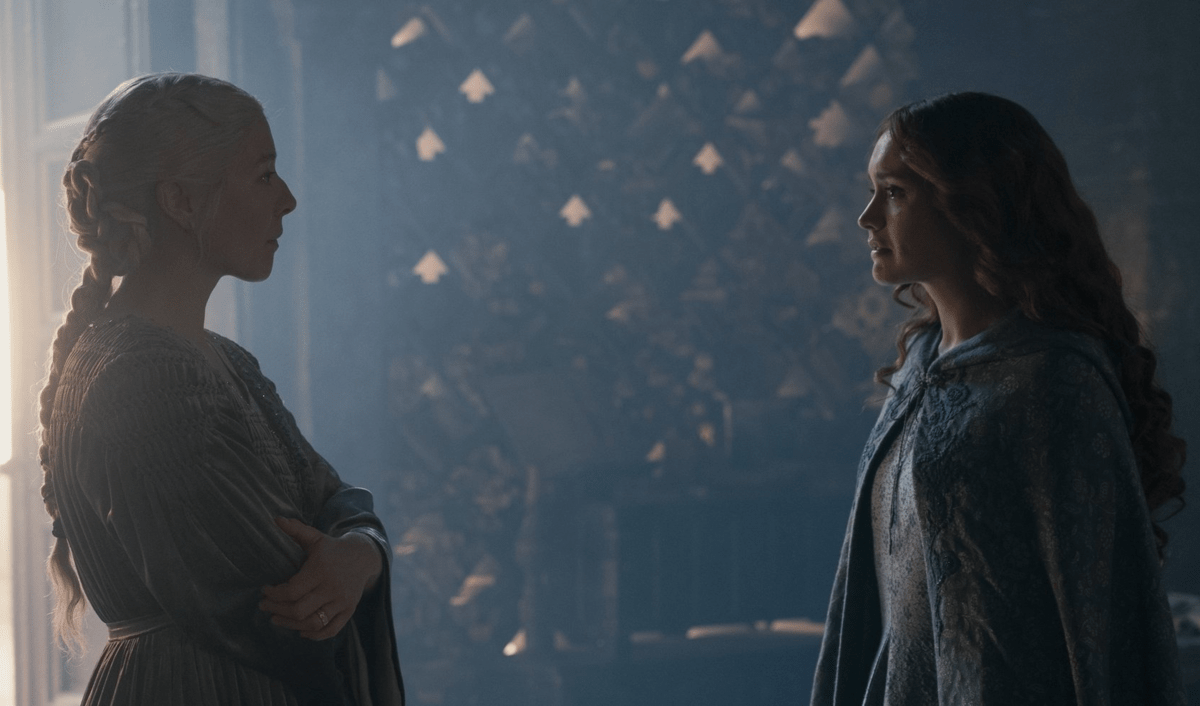
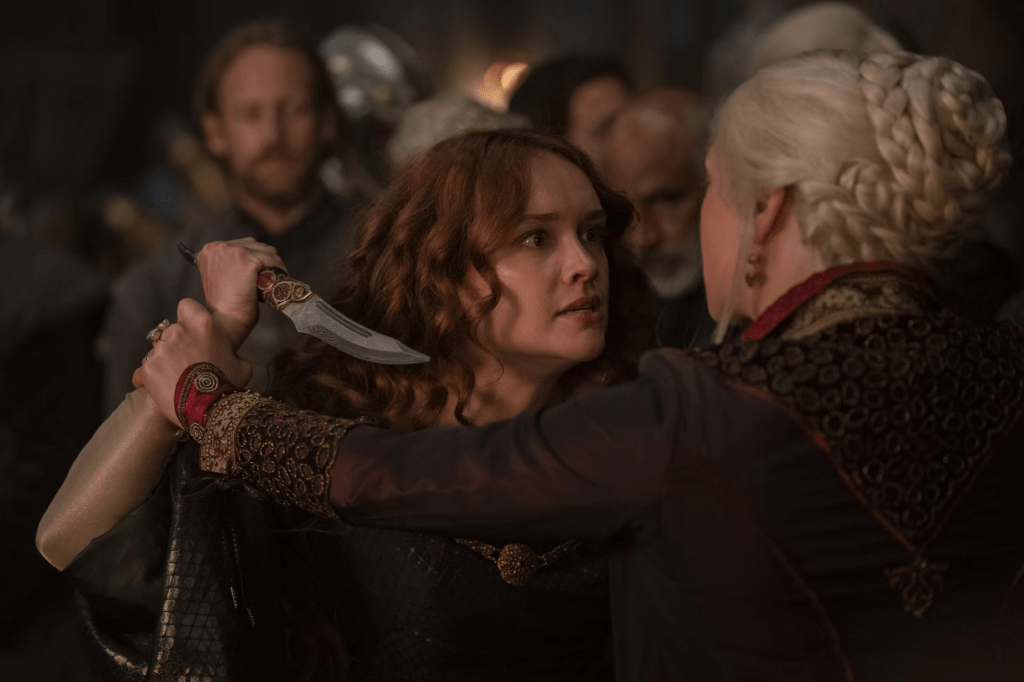
In the finale, Alicent sneaks into Dragonstone (despite there being a blockade around King’s Landing) in order to try and convince Rhaenyra to stand down and end the war. During their back and forth, Rhaenyra insists that there must be a son for a son and that Alicent give up Aegon to ensure peace, never mind the whole Blood and Cheese event though, which saw the death of an innocent child. What’s even more shocking, aside from this request, is that Alicent agrees to it. Let’s not forget that it was Alicent who pulled a knife on Rhaenyra in the first season after Aemond lost his eye and was willing to kill her over such an offence. She also raised her children with the understanding that the Blacks are to be hated, because they would kill Alicent’s children to secure the claim on the throne. So that’s the environment Alicent raised her kids with. But at this point, all Alicent wants is her friend back and is willing to open the doors, let an army in the gates, and surrender her sons to the opposition and be content to just “run away” with the person who will bring all of this to fruition. I would’ve bought Alicent saying that she’d be willing to sacrifice herself to protect her children, but I just can’t believe she’d so easily give up Aegon for Rhaenyra.
But Alicent hasn’t been “friends” with Rhaenyra for years now and the first season showcased just how resentful the pious Alicent was of the more carefree princess. Alicent was duty-bound, whereas her former best friend was not only the chosen heir, but basically had carte blanche to do what she wanted and when. Alicent resented this and this carefree attitude was what led to the birth of her three bastard children with Lyonel Strong, whereas Alicent followed her duty and birthed three four (can’t forget Daeron) legitimate children with Viserys. After his death, Alicent immediately seeks an affair with Cole, trying to find some of that freedom her friend had, which in turn, makes Alicent a huge hypocrite. Combine that seething resentment between the pair with the deaths of Rhaenyra’s child and Alicent’s grandchild, and these two should be at each others’ throats at this point in the timeline; as they are in the book.
But the show has opted to frame their conflict as more of a fracture between friends or even lovers, rather than sworn enemies. Speaking of the finale, director Geeta Vasant Patel had this to say of the duo:
“I always thought about the metaphor for it as two lovers that have been divorced and still love each other. Part of it is that they both want to be with each other in a way they can’t understand and can’t explain — it’s like first love.”
Patel was also quoted saying that the dynamic between the pair is absolutely the love story at the center of the show and that Rhaenyra would have gone with Alicent when asked to leave, but the call of duty was too great for the Black Queen to ignore.
With that in mind, it’s easy to see why Alicent would elect to sacrifice her son and the King to Rhaenyra, it’s all for love. And using the first half of season one, we could maybe buy into that, as there was a strong affection between the two on display; nothing romantic but the two were close. But those days are behind the pair. This is the very same Alicent who usurped the throne from Rhaenyra and didn’t consider the validity of the source (a drugged-up sick man) that instigated that whole change of regime. The most important thing to Alicent are her children, so to offer up Aegon and Aemond so casually after the horrific loss of her grandchild and open war on the continent, just to reclaim a friendship from over a decade ago is wildly out of character for Alicent.
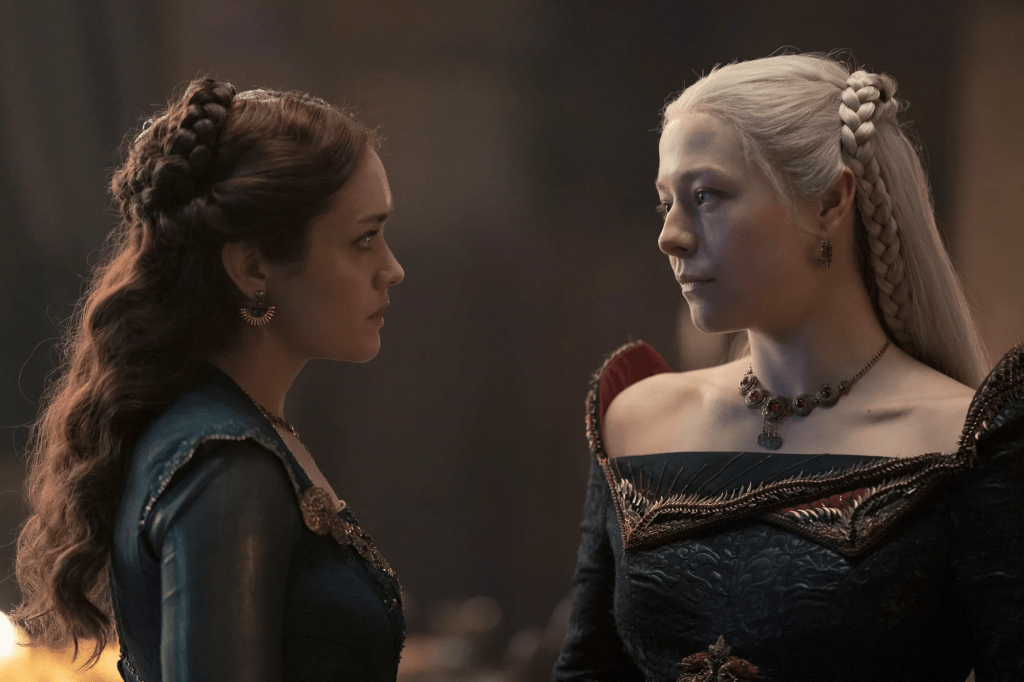
It should be noted that in Fire & Blood, the book that George R.R. Martin wrote that’s the basis for House of the Dragon, has no implied love between the pair; they’re very much enemies. A few months ago, Martin blogged that he was tired of writers and producers thinking they could adapt source material better than the original author, stating:
“No matter how major a writer it is, no matter how great the book, there always seems to be someone on hand who thinks he can do better, eager to take the story and ‘improve’ on it. ‘The book is the book, the film is the film,’ they will tell you, as if they were saying something profound. Then they make the story their own. They never make it better, though. Nine hundred ninety-nine times out of a thousand, they make it worse.”
At the time, I assumed he was referring to Rings of Power or The Witcher, but seeing how drastically changed Alicent is compared to Martin’s own work, I have to wonder if he’s not talking about House of the Dragon, especially after he blogged, “The writers’ room for HOUSE OF THE DRAGON season 3 is also meeting in London, but I have no plans to attend.”

Now, change isn’t a bad thing. Sometimes adaptations find something new to add to the show that only heightens or enriches the lore. While not a straight-up adaptation, the backstory of the Vault Boy in the Fallout show was a great addition to the canon that wasn’t ever mentioned in the games. I also really liked the Bill and Frank backstory episode in The Last of Us. So showrunners and writers adding their own spin to adaptions can certainly work to make things feel fresh, offering new perspectives that may have been overlooked originally. But it should never be done in such a way that it tramples on what’s already come before in the show, never mind disregarding the source material.
There are plenty more issues I can highlight in season two, from inconsistent writing to cutting the episode count from ten to eight, but this one takes the cake. For perspective, imagine this scene happened between Catelyn and Cersei in Game of Thrones. It doesn’t make sense there and doesn’t here knowing the history between them. Alicent agreeing to open the gates of King’s Landing to let Rhaenyra reclaim the throne is one thing, but to willingly sacrifice her own children to appease her former bestie feels like a huge betrayal of her character and one that ultimately brings season two of House of the Dragon down quite a bit. But that’s just my two cents, do you agree with me or think I misread the situation? Let us know in the comments!


One thought on “Opinion: We Need To Talk About Alicent in Season Two of ‘House of the Dragon’ – ScreenHub Entertainment”