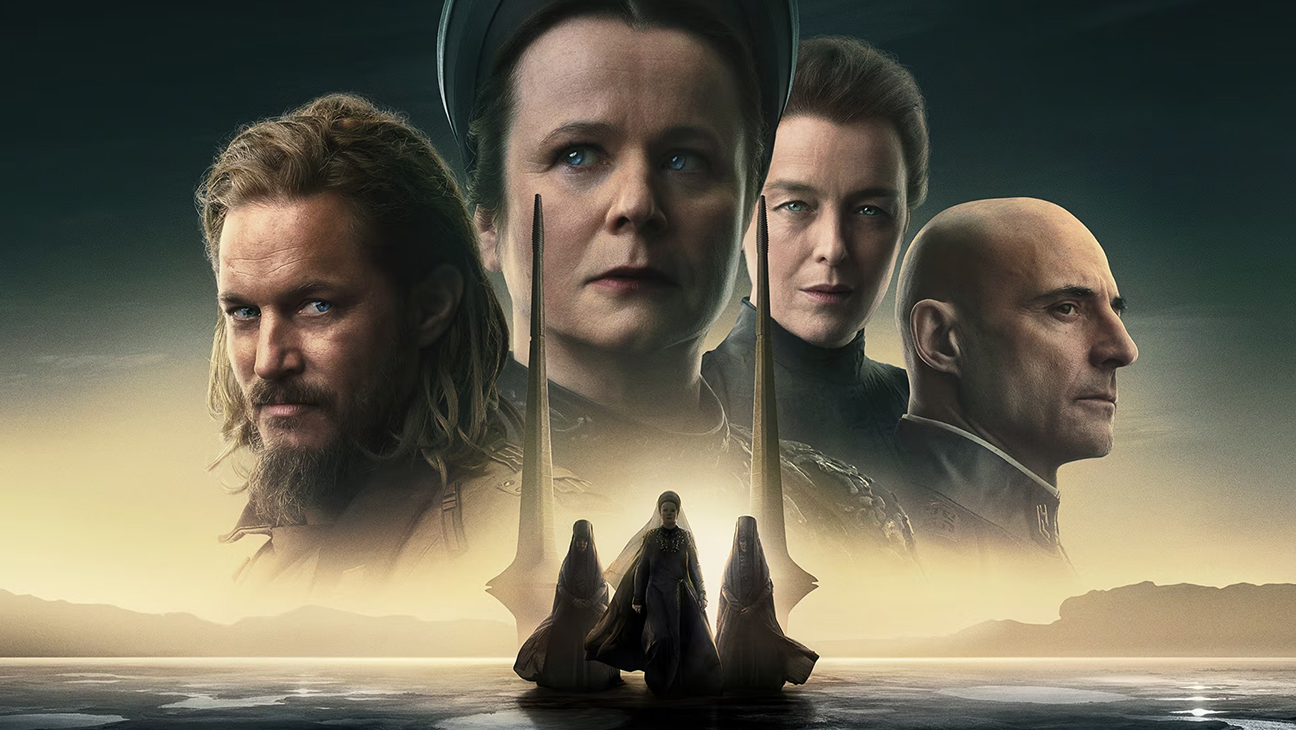
With the conclusion of The Penguin on HBO last week, we usher in a new series that’s also an offshoot of a Warner product. But where the exploits of Oz Cobb sunk its hooks into me in no small part to its stellar writing and top-notch performances, Dune: Prophecy stumbles with its first of six episodes, thanks largely to an inconsistent script and uninteresting characters.
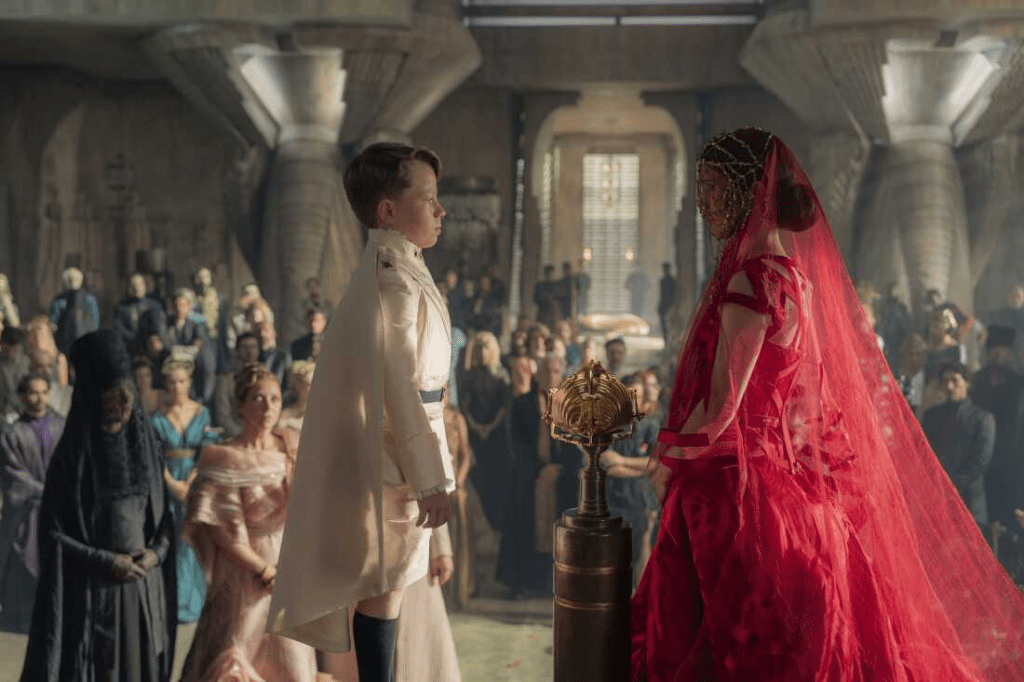
Dune: Prophecy acts as a prequel to the Denis Villeneuve Dune movies and is set some 10,000 years before the time of Paul Atredies. We largely follow one member of the Sisterhood, Emily Watson’s Valya Harkonnen, as she manipulates the Imperium from behind the scenes, cultivating genetics to usher in a dynasty of their creation. We also get a decent amount of minor politics within the Carrino Court and the Sisterhood, with an upcoming marriage of alliance, the training of the women at the coven, and the arrival of a sole survivor from Arakis back at the palace. More on this last bit in a bit.
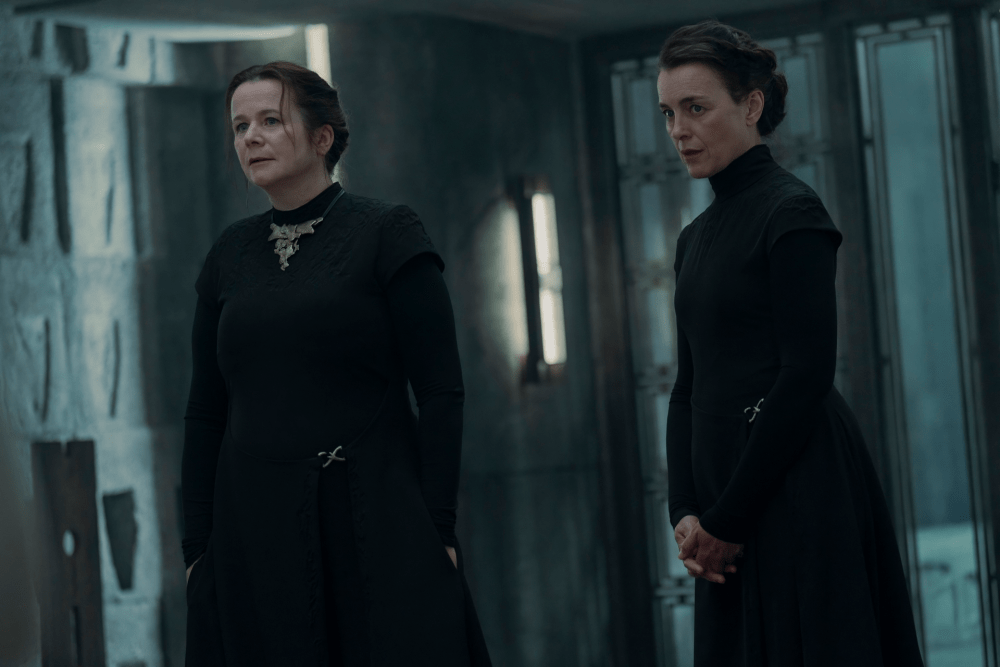
Despite being so far back in time, the world of Dune in this show looks frighteningly familiar to its cinematic counterparts. This may be a byproduct of the novel Prophecy is largely based on, The Sisterhood, failing to create an identity of its own, but I’m still critical that the show had the opportunity to create its own visual language in this universe and opted not to. It’s hard to imagine an intergalactic imperium being so trapped in time for ten millennia, as many of the trappings (and important families) from the original story make their way into this one. And while the visual cues are taken from Villeneuve’s adaption, I found the musical score felt very safe and familiar, borderline Game of Thrones-y at times, which is a far cry from the Hans Zimmer score from the films, where some of the sounds heard in the score had to be created solely from scratch, giving us music we’ve literally never heard before as a species.
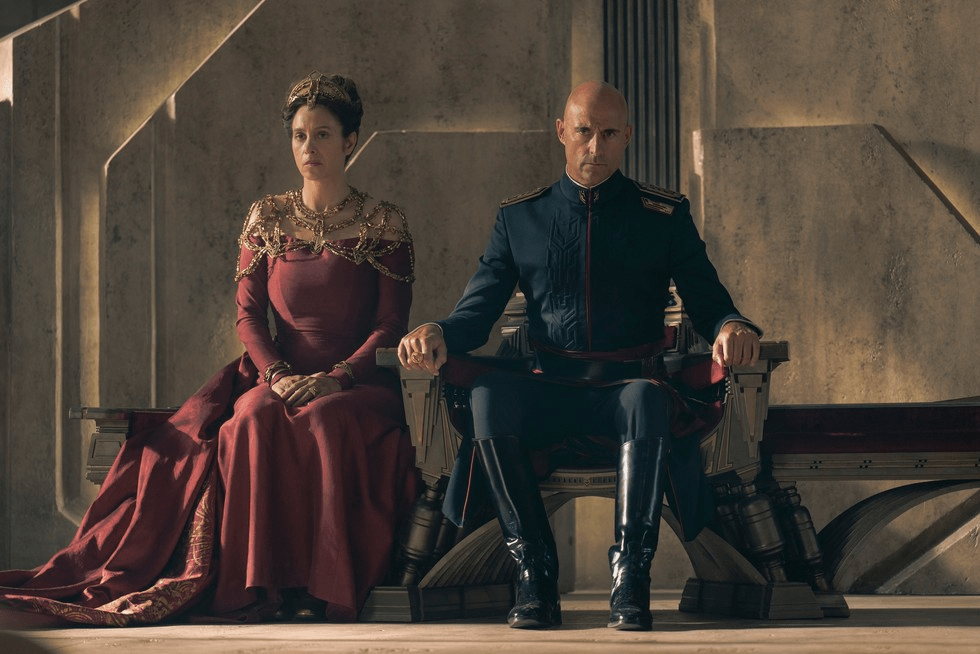
The most frustrating aspect of Dune: Prophecy was the script felt all over the place at times. The opening sequence in particular was quite troublesome, being nothing more than an egregious and very spoon-fed exposition dump. The action moved from location to location at a breakneck speed, which made it hard not only to keep track, but to care. The opening flashback sequence also felt incredibly messy, more so than anything in the rest of the show. Tonally and conceptually, it doesn’t “feel” like the Dune we saw on the big screen, despite originally being developed with Villeneuve, who was set to direct the first two episodes but had to step away from the production. Likewise, the original half of the showrunning team had to back down during production, hinting at a troubled shoot.
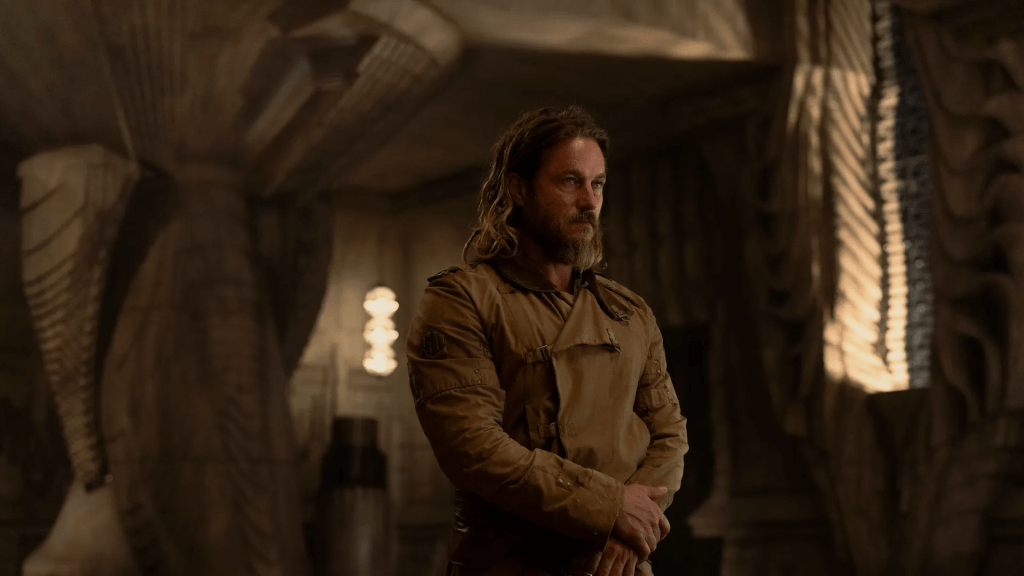
The best scene in the show, to no surprise then, was the sit down between Desmond Hart, the sole survivor of an attack on Arakis played by Viking’s Travis Fimmel, and the Emperor, played by Mark Strong. Whereas earlier scenes spoon-fed us information far too quickly, the scenes between the two of them, especially the scene near the end where just the two of them sat down to talk, were the highlight of the show. Why? It took its time and built up the mystery of Desmond’s character, who enters the court claiming to be the sole survivor of an attack, but also is seemingly gifted tremendous powers, suggesting he may be a male Bene Gesserit or some other kind of heretic (I’ve not read the Dune prequel books by Kevin J. Anderson or Frank Herbert, so I’m in the dark on this story). How and why remain a mystery, but he seeks the Emperor’s favour and is willing to execute the Emperor’s future son-in-law to get what he wants. His story is wrapped in enough intrigue that I want to know what happens next. But for the rest of the story, I’m not so sure. It doesn’t help that despite being a focal point of the show, Valya comes off as incredibly cold and unlikeable in the premiere, which makes it hard to care about her as a character. There’s also a lot of side characters and with so much bouncing around, it’s hard to keep tabs on what’s going on and why we should care about any of this.
Dune Part Two is shaping up to be a favourite in many categories at the upcoming Oscars, but its spinoff show so far fails to yield the same level of intrigue and care. We’ll see if it improves but so far, it feels like a shallow imitator. Perhaps the greatest sin is that it simply does not feel like a quality HBO show.

